Why Two Letters Can Change a Scrabble Turn
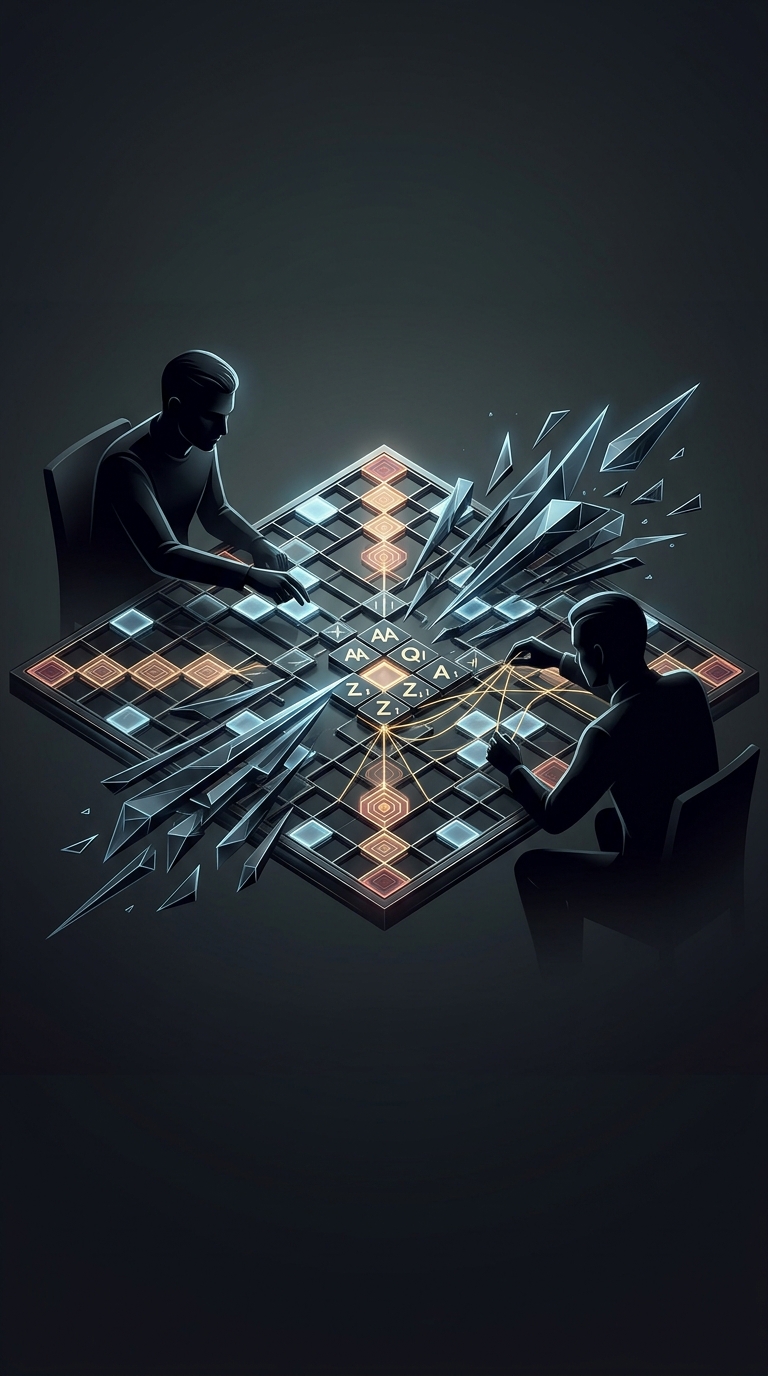
In competitive Scrabble, a two-letter word is not merely a short answer: it is a way to fit a play into a crowded board. A player can place a tile beside an existing word and connect to it, sometimes scoring for both words at once. Short words also make it easier to use a premium square or clear awkward tiles without opening a large stretch of board to an opponent.
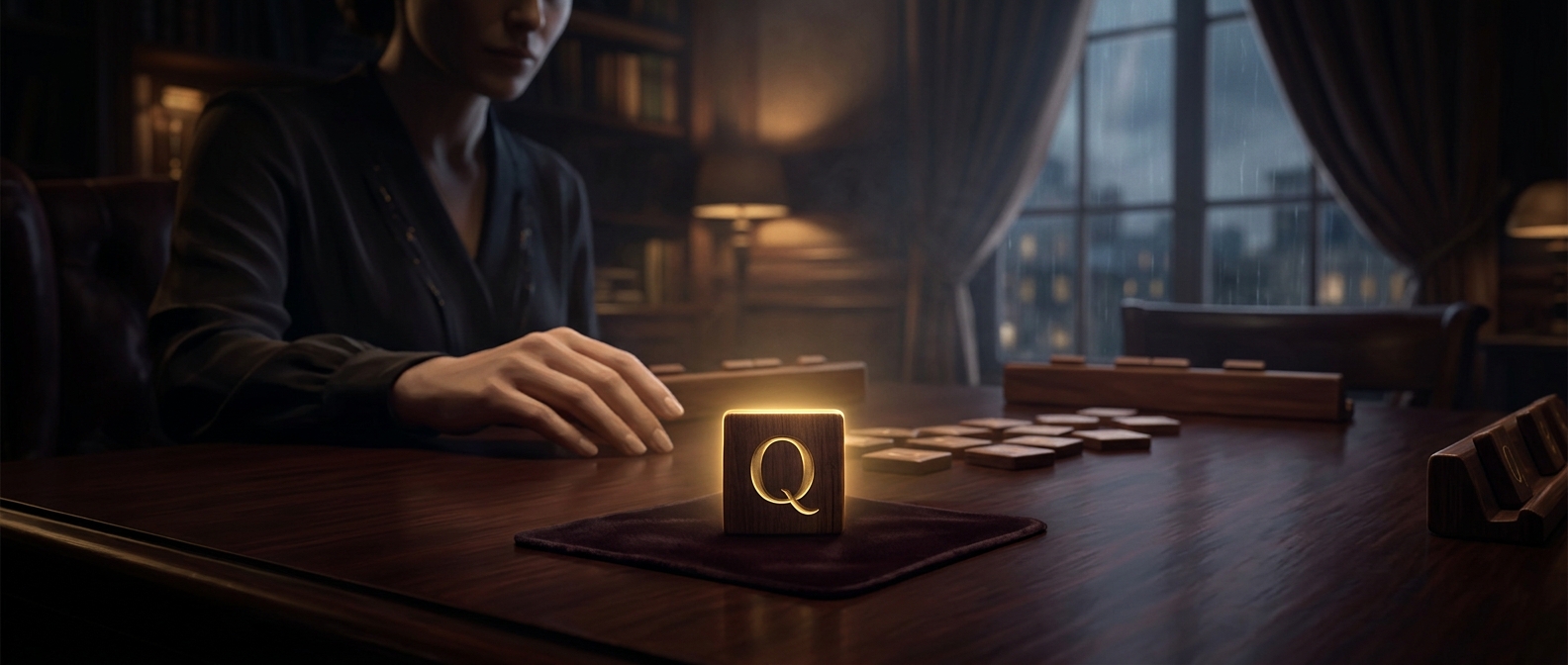
That is why tournament players study compact word lists. Knowing that AA (a type of rough lava) or QI (a term for vital energy in Chinese philosophy) is playable can turn a stranded tile into a legal move. The words may be rare in everyday conversation, but their value at the board comes from their shape: two letters can attach in many places and create useful combinations.
The Blank Tile Is a Tool, Not a Blank Space
A blank tile can stand for any letter, but it scores zero points and keeps that chosen identity for the rest of the game. Using one to make a two-letter word can be worthwhile when it unlocks a strong placement or helps manage the rack—the seven tiles a player holds. But spending a blank on a small play has an opportunity cost: it cannot later supply a hard-to-find letter in a higher-scoring word.
The board’s empty squares matter too. Players must weigh the immediate points against what their placement leaves open, especially near bonus squares that an opponent might exploit. A tiny word can therefore be both an attack and a defensive move: it can claim a narrow scoring lane while blocking a more inviting route.
Memorization Turns Possibility Into Speed
Tournament clocks leave little time to reason through every unfamiliar combination. Memorized lists let players recognize legal options quickly, then focus on the harder decision: which option scores well without giving away a better reply. The accepted dictionary depends on the competition’s rules, so a word that works in one setting may not be valid in another. At high levels, that small distinction can decide whether a clever two-tile placement counts—or costs a turn.