Why Scrabble’s Letters Have Different Values
Butts was solving a design problem: how could a word game reward vocabulary without letting common letters make every play equally valuable? His answer linked two things that are easy to overlook: how often a letter appears in English and how useful it is when building a word.
Letters such as E and A appear often, so players receive many of them, but each is worth little. Less common letters are scarcer and score more. That balance makes a hand of tiles a small puzzle: a rare letter can pay off, but only if a player can fit it into a word on the board. The point values are therefore not just a ranking of letters; they help regulate how often players can score big.
From Word List to Board Strategy
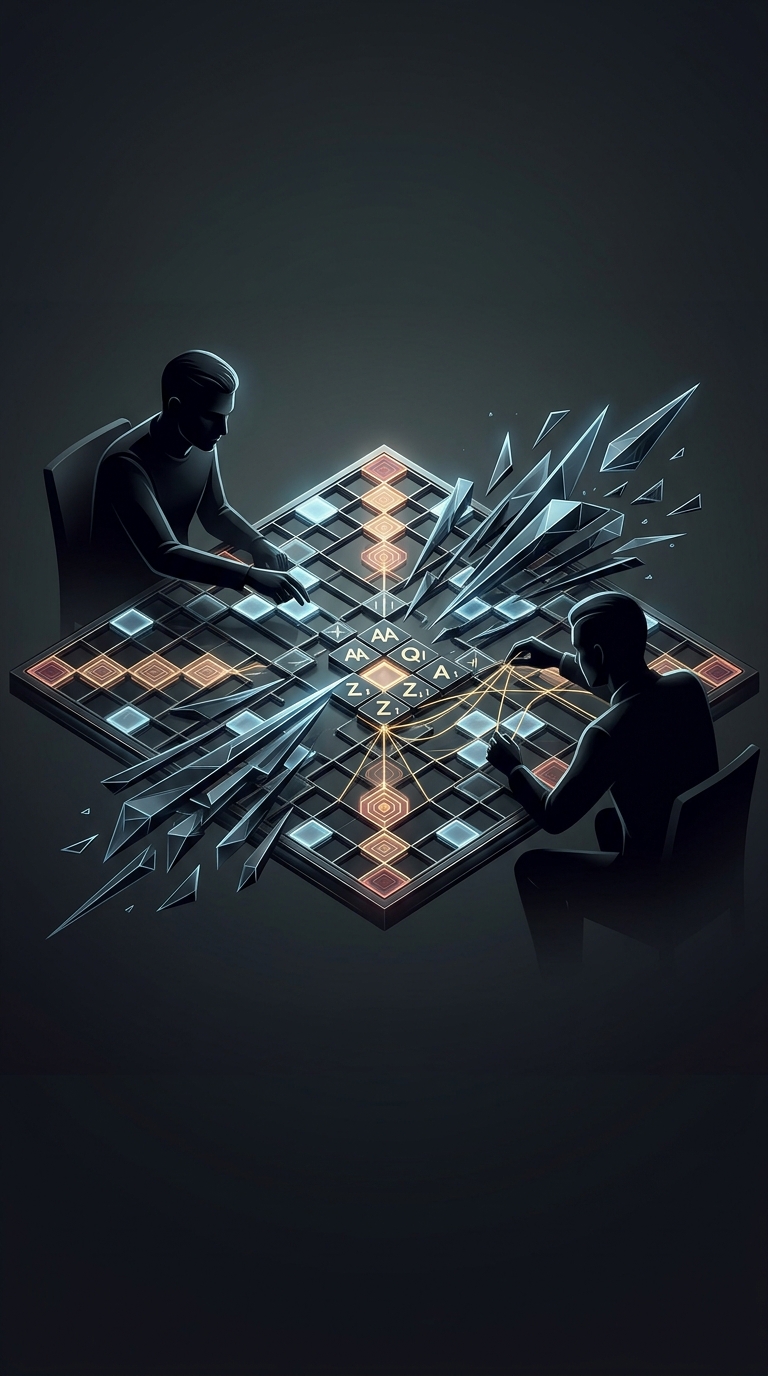
The game’s crossword-like layout adds another constraint. Players must connect new words to those already on the board, rather than simply make any word they can think of. Bonus squares reward placing a letter or word in particular locations, turning the board into a contest over space as well as vocabulary.
That combination gives players choices beyond finding the longest word. A short word can be worthwhile if it uses a valuable letter on a bonus square; a longer one may be a poor move if it opens a lucrative spot for the opponent. The letter system creates the ingredients, while the board determines what those ingredients are worth in a particular turn.
A Design That Outlasted Its First Name
Butts’s early versions went through names and revisions before the game became Scrabble. The enduring design is the interaction between limited tiles, letter values, and a shared board: players are rewarded not only for knowing words, but for judging when and where to spend their letters.