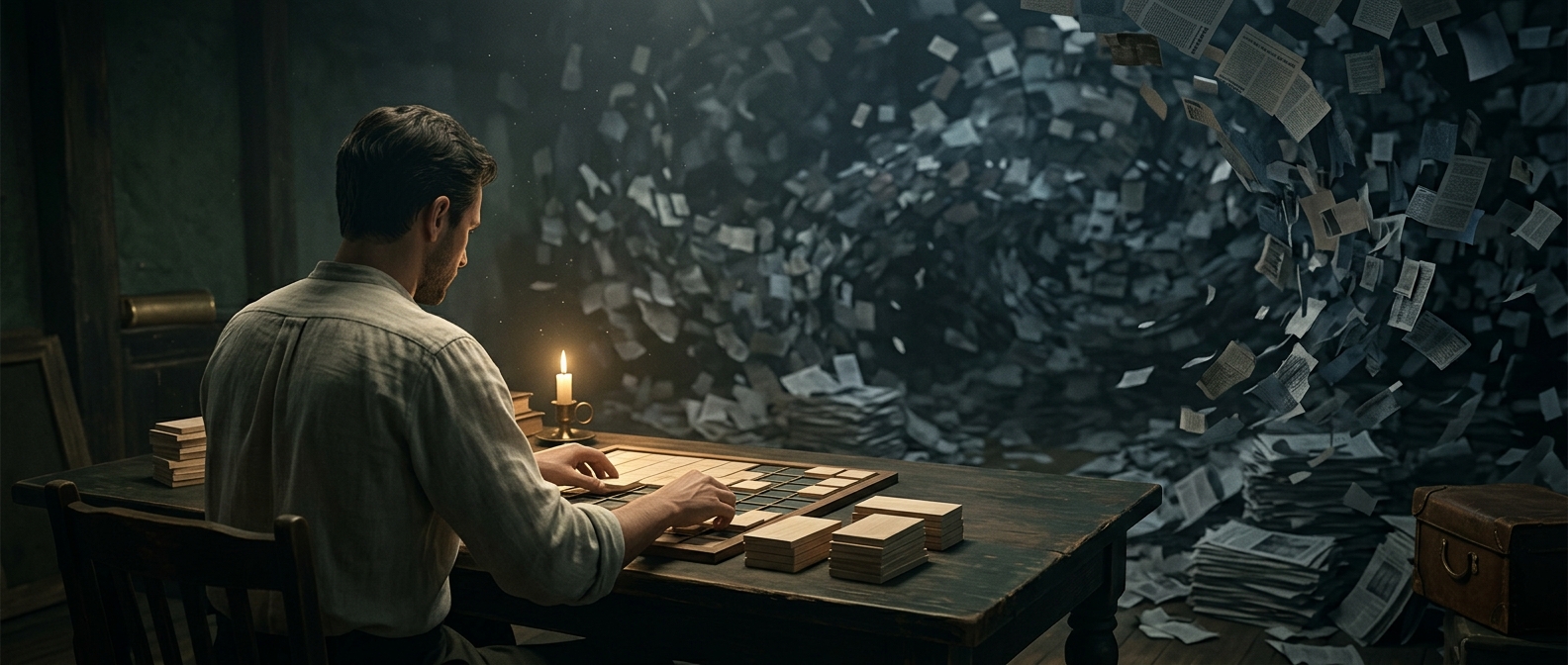
A newspaper became Scrabble’s measuring stick
When architect Alfred Mosher Butts devised Scrabble, he needed more than a way to spell words: he had to decide how often each letter should appear in the tile bag and how many points it should earn. To estimate which letters were common, he counted letters in a newspaper—the New York Times—and used those counts to guide the game’s supply and scoring.
The basic logic is familiar: common letters such as E are easy to use and earn little, while rare letters such as Q are harder to fit into a word and can earn more. The newspaper count gave Butts a practical snapshot of English in print, not a complete model of how letters behave in every word or situation.
A frequency count is not the same as balance
A letter’s usefulness depends on more than how often it appears. Its position matters: English words often follow particular patterns, and some letters pair naturally while others are awkward to combine. In Scrabble, usefulness also depends on the board. A rare letter can be worth a lot when placed on a premium square, while a common one can help build or extend several words.
That is why the resulting values can look poorly balanced from the perspective of modern computational linguistics, which can analyze much larger collections of text and examine patterns beyond simple letter counts. Butts was designing a playable word game, not a statistical model of language. His newspaper-based method helped turn the unevenness of English spelling into a set of tangible tradeoffs: frequent letters made words easier to form, and scarce ones offered the chance of a bigger score.