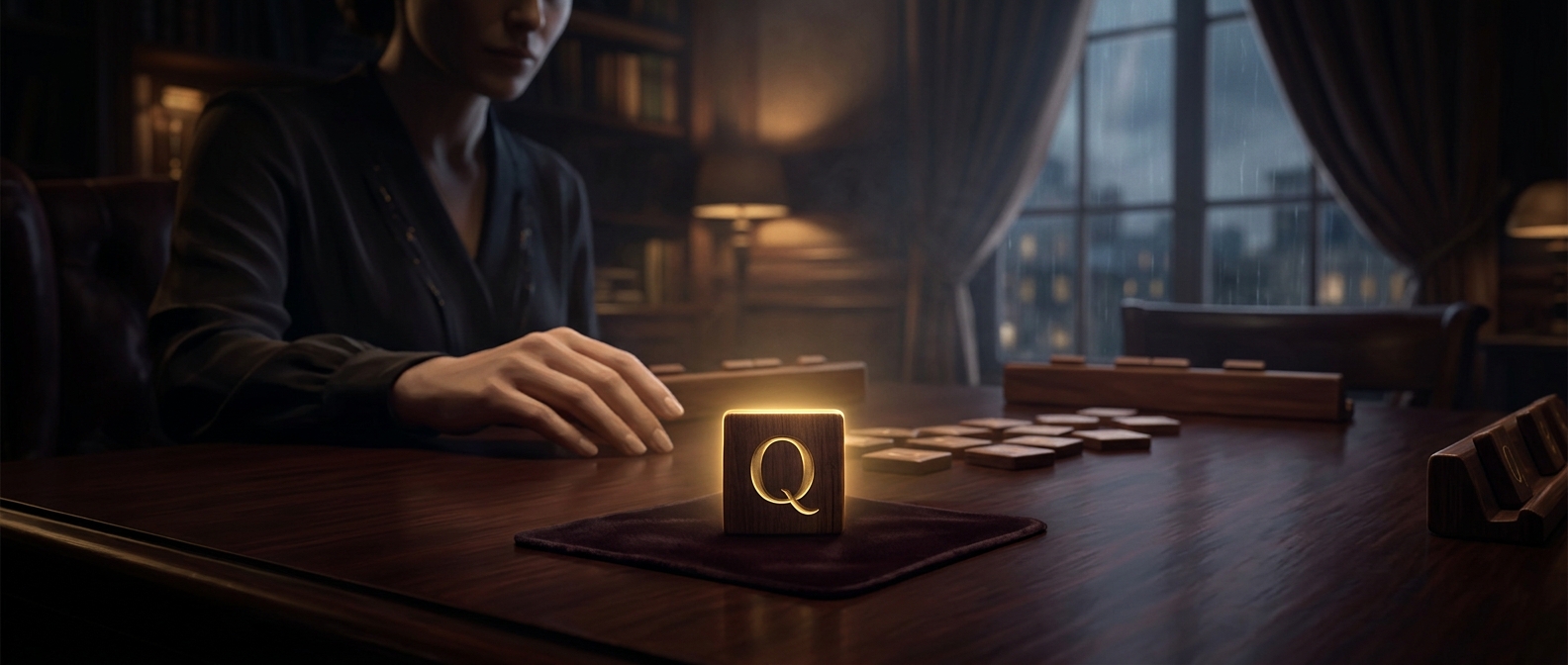
Why the Q carries such a high score
Scrabble’s letter values reflect how difficult letters are to use, not simply how common they look. Q is rare in English, and many ordinary words containing it also require a U. That combination makes the tile harder to fit onto a rack than a common letter such as E or T, so it is worth 10 points when played.
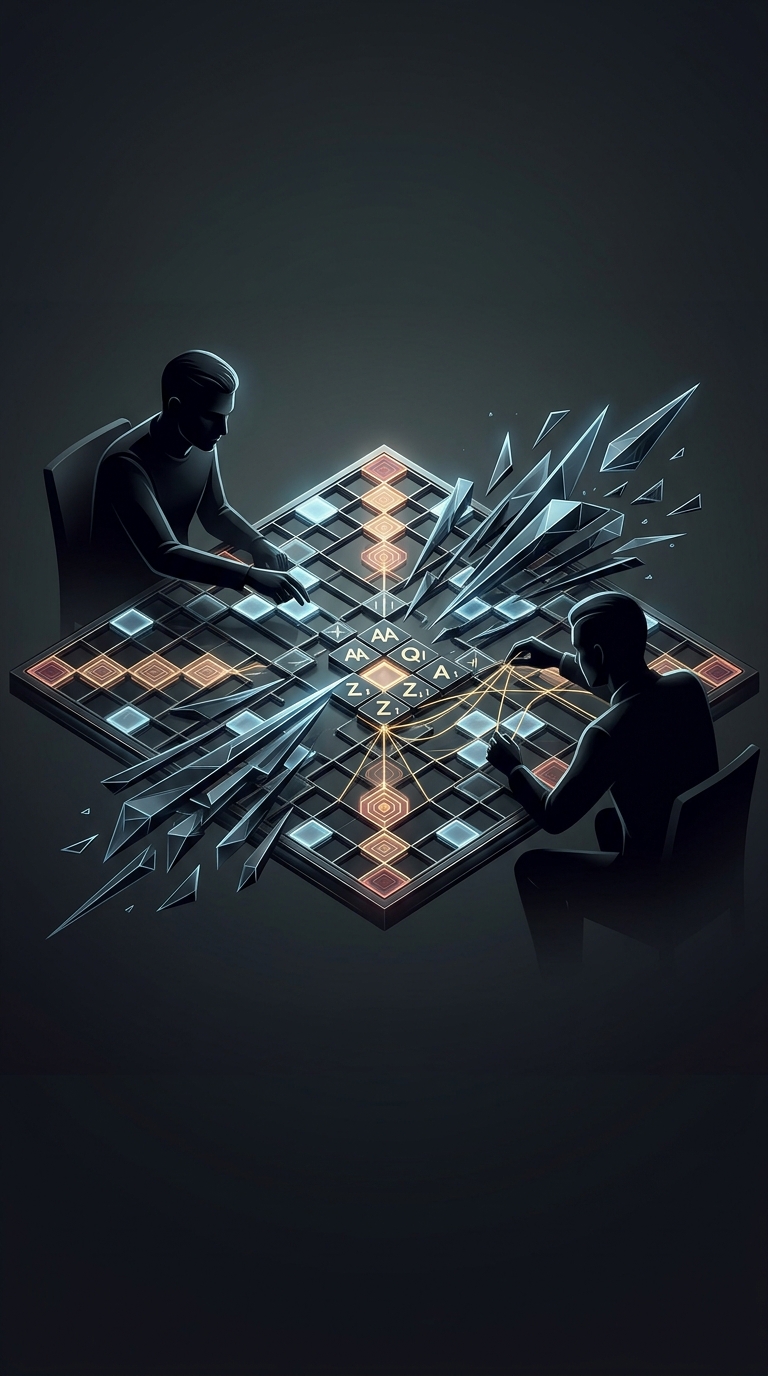
The value is only part of the score. A Q placed on a double- or triple-letter square can multiply its own contribution; a word multiplier can raise the score for the whole word. But a premium square helps only if the player can make a legal word there.
The way around the U
The Q is not trapped whenever a U is missing. Depending on the word list used in a game, short words such as QI and QAT can provide a route to play it without a U. Knowing these options changes the tile from a looming burden into a tactical opportunity—especially when a short word can reach a valuable square or extend a word already on the board.
If no playable word fits, the player must weigh holding the Q against exchanging tiles or making a lower-scoring move. Keeping it may pay off later, but it can also leave the rack crowded with letters that do not work well together. The 10-point reward is therefore a wager: the Q can produce a burst of points, but only if the player finds a place for it.