How Scrabble’s 15-by-15 board shapes a move
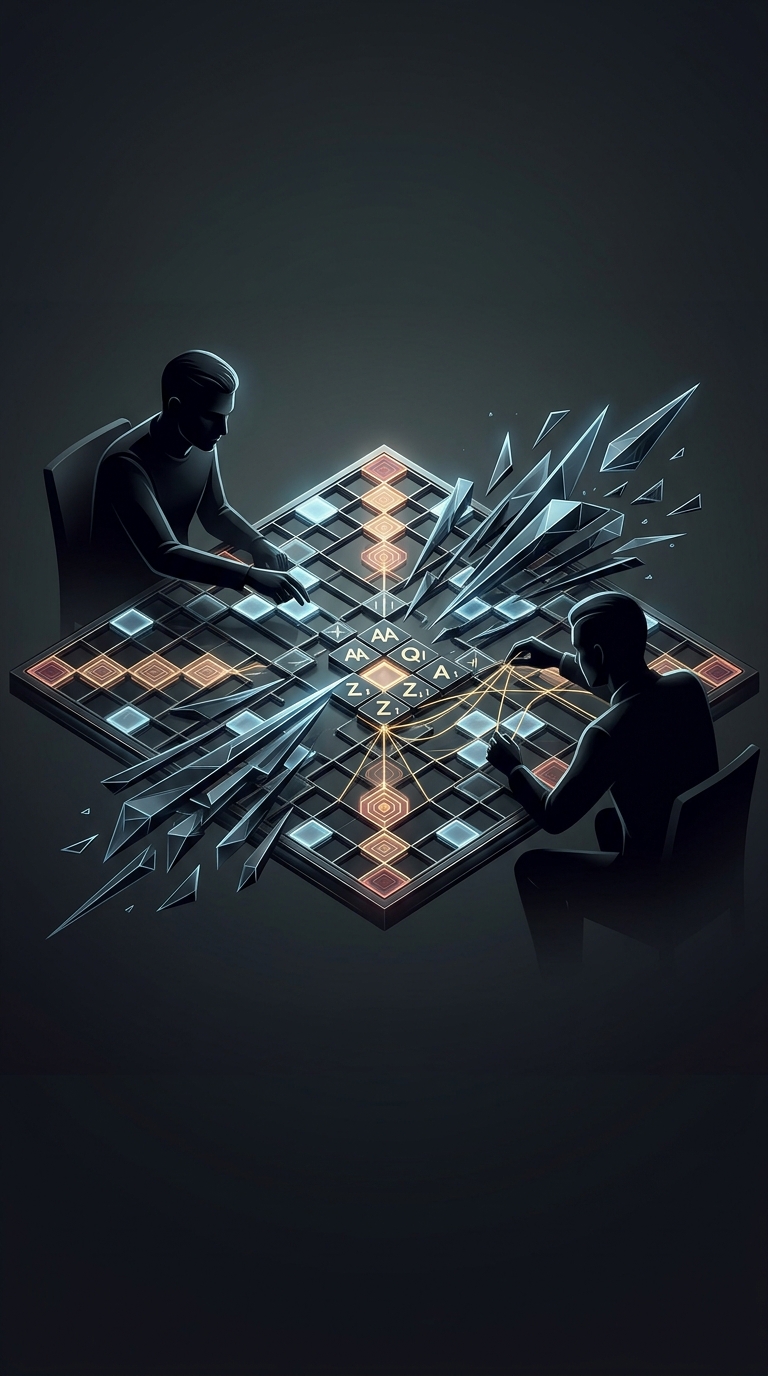
A Scrabble word does not simply occupy any open patch of squares. After the opening turn, each play must connect to tiles already on the board, and the new tiles must form valid words in every direction. The grid therefore acts less like a blank page than a network of crossing routes: one placement can extend an existing word while creating several new ones at once.
Why the center and the bonuses matter
The first word must cover the center star. That rule gives the game a fixed starting point, but it does not dictate which way the word runs or how long it is. The board’s colored premium squares—such as double-letter and triple-word spaces—add another layer of choice. A player may take a modest score now, or position tiles so a later word can reach a bonus square.
As the board fills, empty squares become less useful in isolation. A long word needs a clear run of spaces, while a short word may fit beside existing tiles and exploit a premium. Openings can also help an opponent: a placement that reaches a bonus may leave a valuable route available for the next turn.
A finite grid, many connected possibilities
The 225 squares set a hard limit on where tiles can go, but they do not make the game a search for the longest word. Each move changes the available lanes, intersections, and scoring opportunities. That is why a seemingly small placement can reshape the board: it may close a route, open a crossing, or turn one empty square into the hinge for several words.