From royal sidekick to lead character
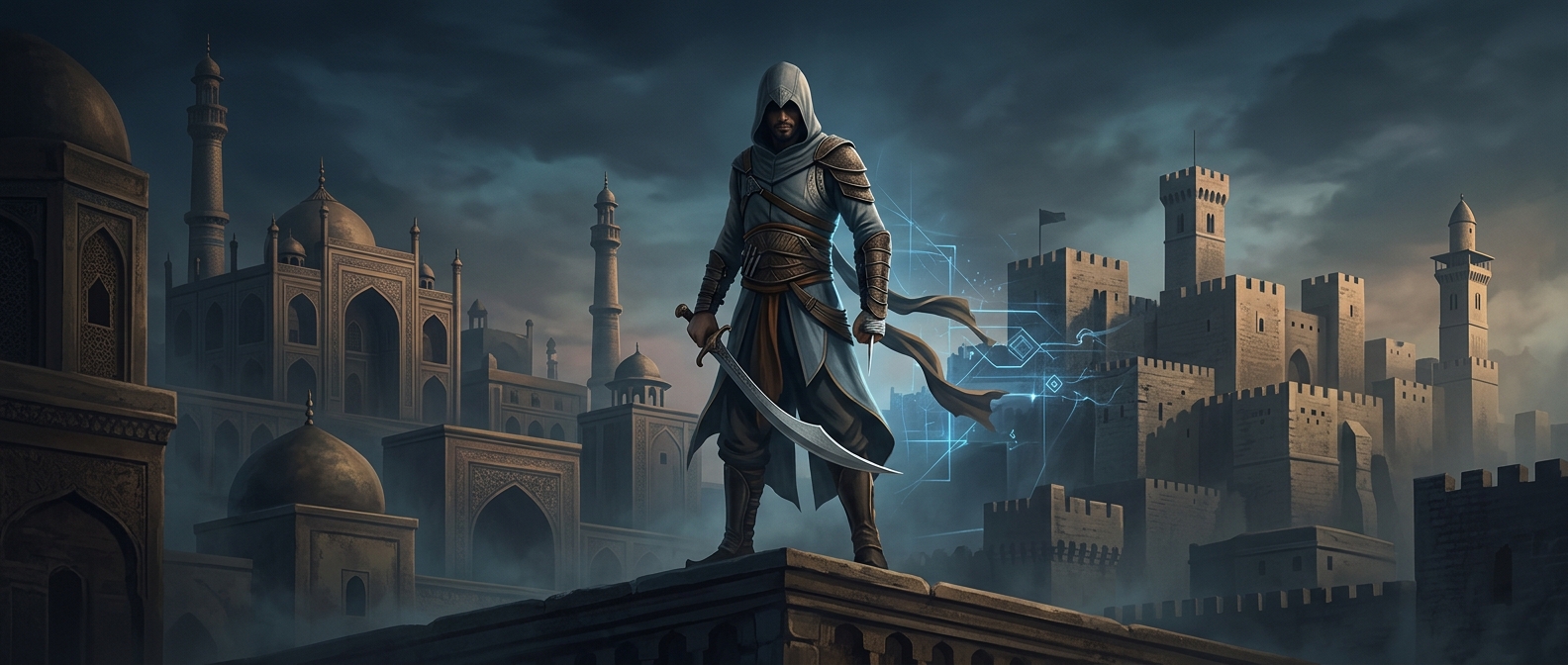
The early idea behind Assassin’s Creed was not a new franchise but a way to extend Prince of Persia: instead of playing only as the prince, players would take the role of an assassin tasked with protecting him. That change in perspective gave the supposed sidekick a job—and a world—of his own.
It also created a design problem. A game built around the assassin’s actions and identity would make the prince less central than the Prince of Persia name promised. As the concept developed, the assassin stopped being a supporting character and became the protagonist.
A premise that could stand on its own
That shift let the designers build the action around the assassin’s particular skills: moving across rooftops, blending into crowds, and choosing when to strike. The prince no longer had to anchor the story, so the setting and conflict could be shaped around the new hero instead.
The result was more than a change of title. A cooperative sidekick idea had become a distinct historical-action premise, one that could support its own characters and continuing series. The franchise began when the character who was meant to assist the hero became the hero.