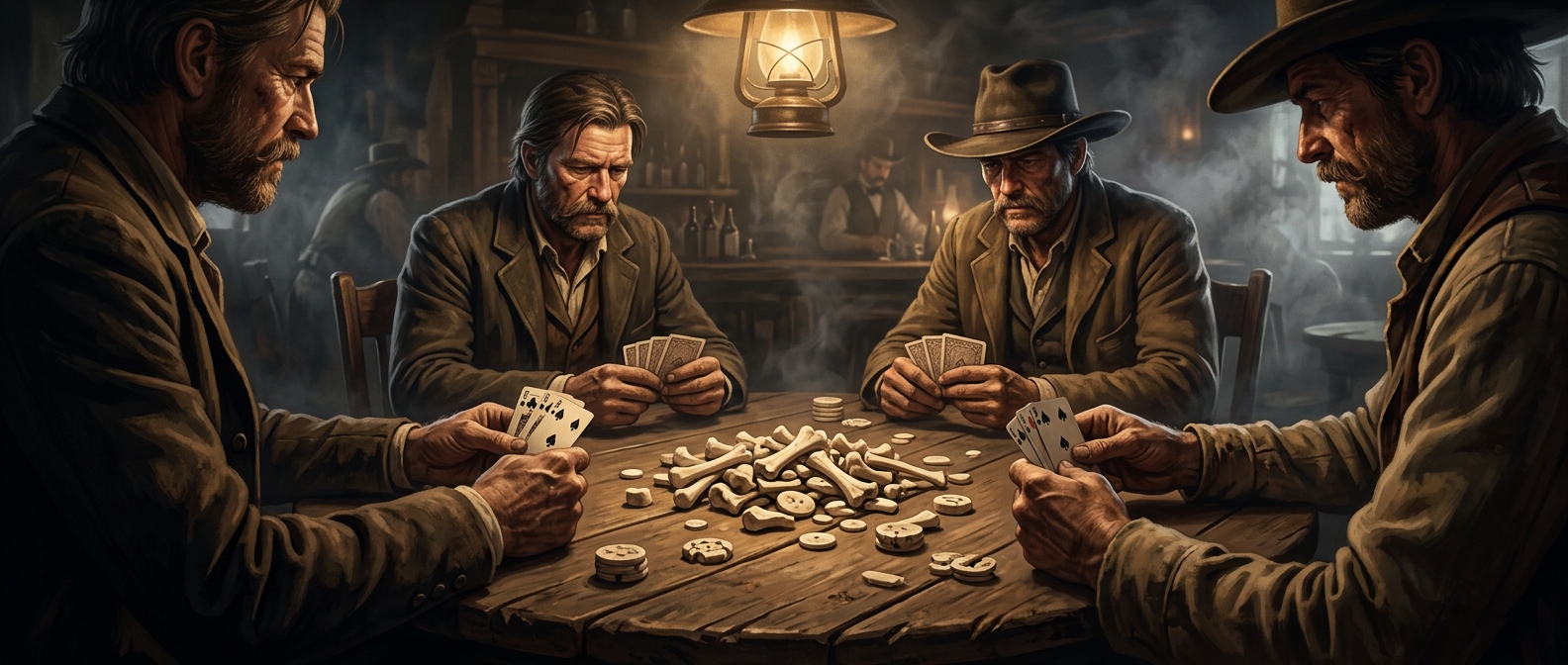
Why Hold ’em Became a Traveling Game
Robstown’s claim to Texas hold ’em’s birthplace matters because the game is built for a table, not a private hand of cards. Each player receives two cards face down, then shares five community cards—cards dealt face up for everyone to use. Players make the best five-card hand they can from the seven available cards.
That shared-card structure makes every round visible and social. A player’s private cards matter, but so do the cards arriving in the middle of the table and the choices opponents make as they bet. The game can accommodate several players without giving each one a separate full hand of cards, while still leaving room for bluffing and strategic risk.
From Local Play to a Texas Name
The game’s early history is difficult to pin to a single inventor or first table. Robstown is recognized as its birthplace, and the name “Texas hold ’em” preserves that connection even as the game traveled far beyond the town. Its format was well suited to shared tables and organized play: everyone could follow the same sequence of community cards, making the action easier to watch than a game in which each player holds a separate hand.
That visibility helped turn a regional card game into a spectator-friendly contest. The cards in the center create common turning points—each new one can strengthen a hand, change the odds, or make a confident bet look suddenly dangerous. Robstown’s place in the story is therefore not just a point on a map; it is the origin attached to a format that made poker’s hidden information play out in public.