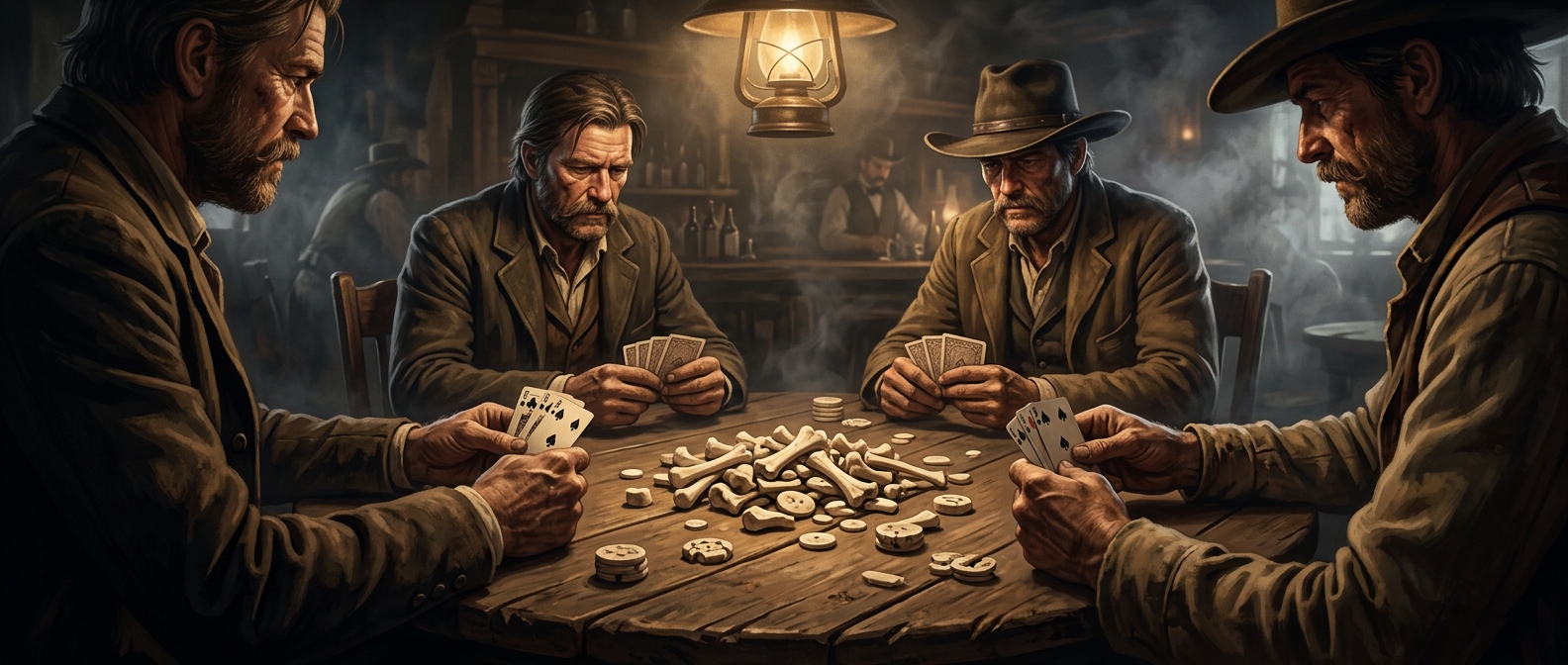
Why folding dominates a hand of Texas hold’em
A player is dealt two private cards, but those cards are only the start of a possible five-card hand. The shared community cards arrive in stages, and each new betting round gives players another chance to decide whether their prospects justify staying in.
That uncertainty makes folding a routine choice, not a dramatic surrender. If a player’s cards look weak, or an opponent’s bet makes the price of continuing too high, the player can fold—give up the hand and lose any chips already committed to the pot. The remaining players continue without them.
The value of not paying to see
Every decision to stay costs something: a player may have to match a bet, or risk more chips by raising. Folding avoids those additional costs. Even a hand that might improve later can be a poor reason to keep paying, because the improvement is uncertain and the other players may already have stronger cards.
This is why the action viewers notice least can shape a game most. Big bets and bluffs draw attention, but they happen against a background of players repeatedly deciding that a hand is not worth another chip. In hold’em, choosing which hands not to play is a central part of playing well.