Why a poker table needed counters
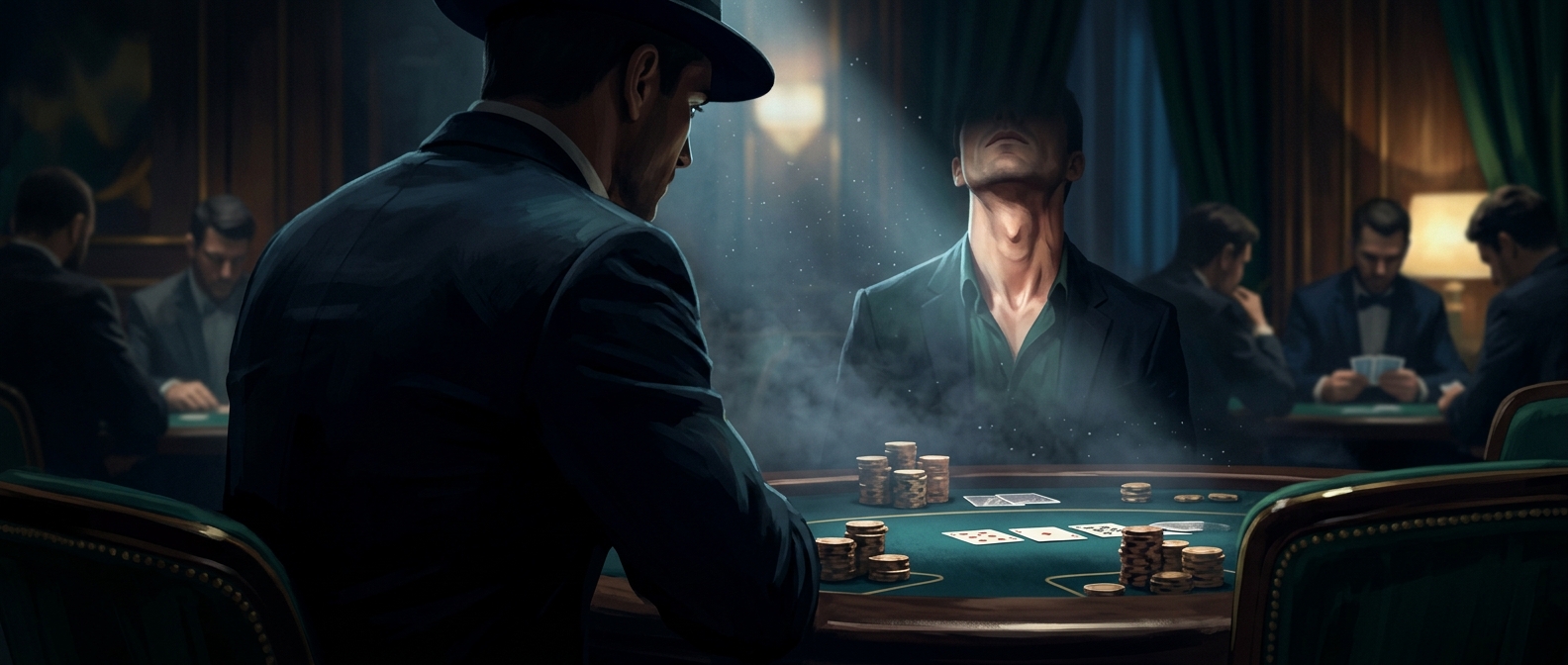
A wager has to be more than a promise: players need a way to show how much they have committed and what can be won. Using coins for every move made the table awkward. Money had to be counted, passed around, and kept distinct from the pot—the pile of stakes in the middle—while play continued.
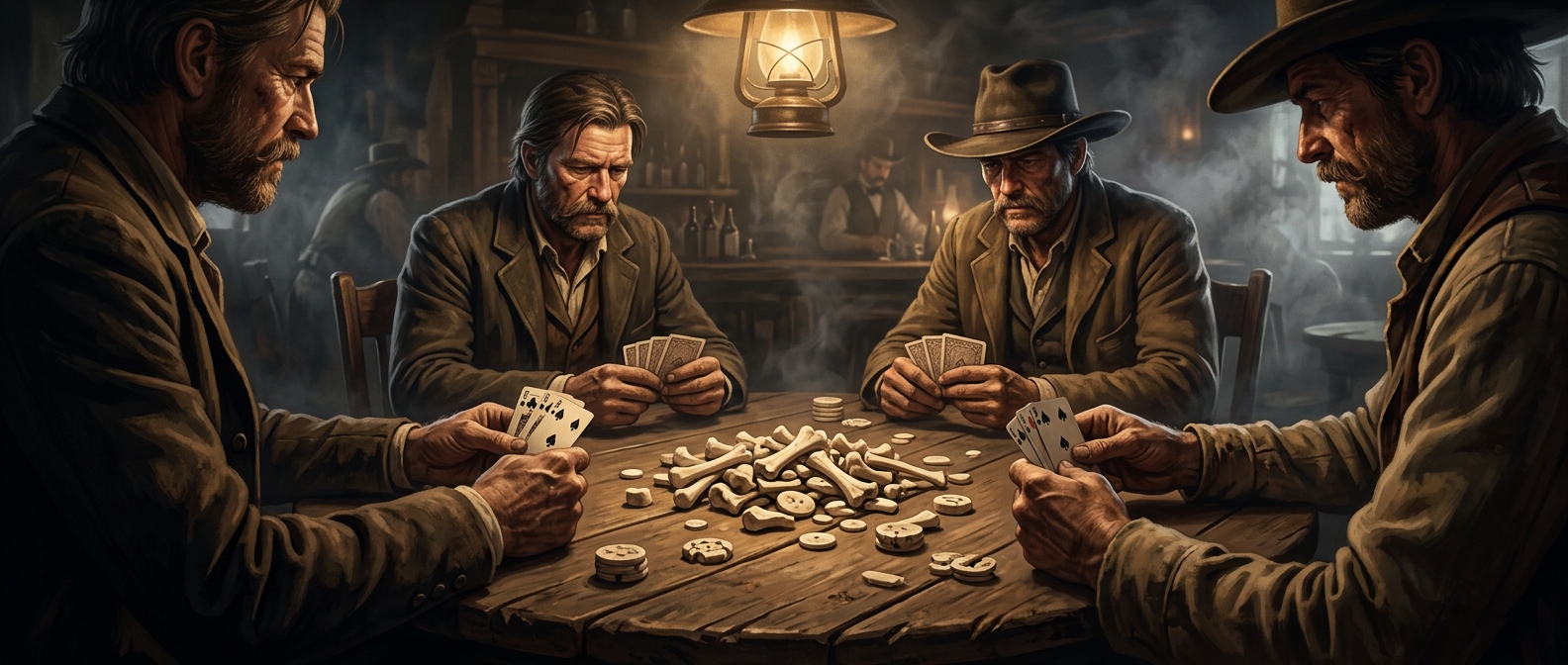
Small counters solved that problem. A piece of bone, ivory, or dried clay could stand for an agreed amount of money. Once the players accepted its value, they could push it into the pot instead of repeatedly handling currency. The counter was not valuable because it was bone; its usefulness came from the shared understanding of what it represented.
From improvised tokens to a game tool
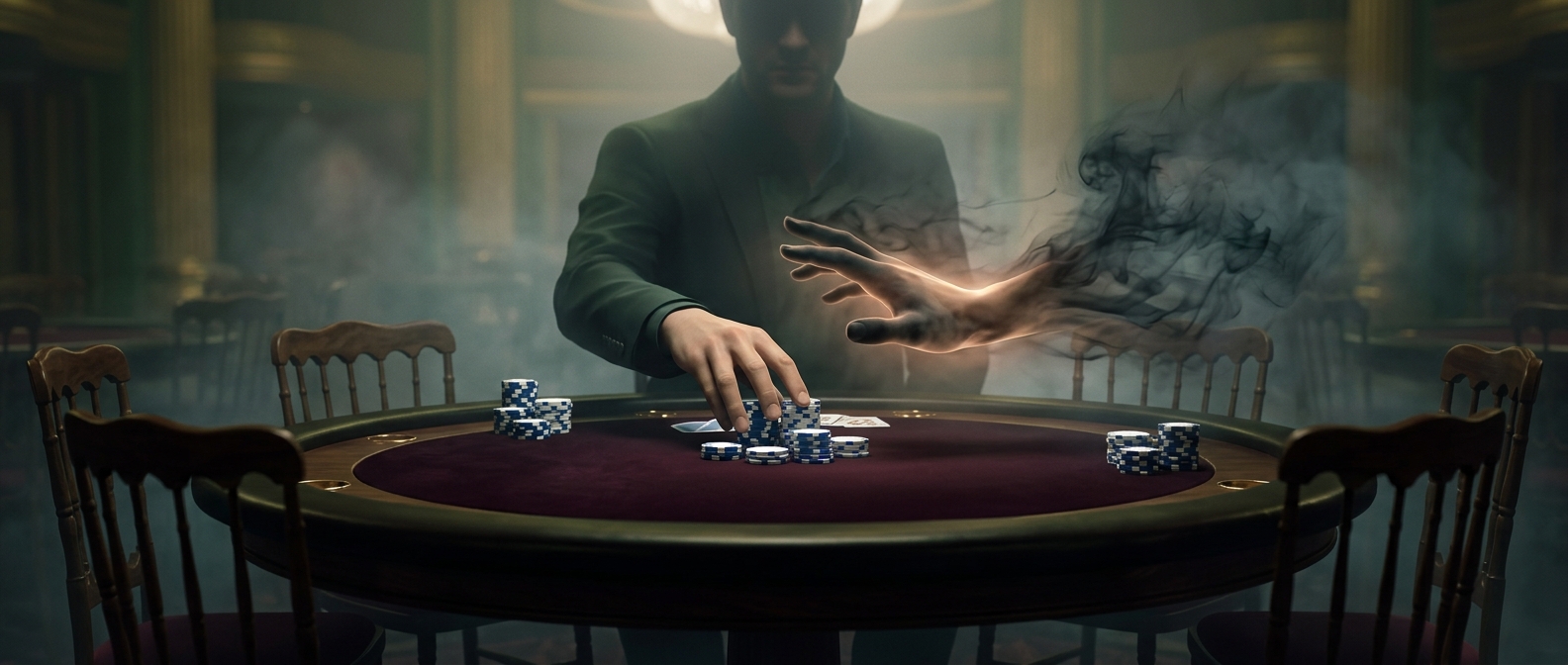
These pieces were practical equipment, not merely decoration. Their compact shape made them easy to stack and move, and a visible pile let players keep track of the contest at a glance. That mattered in a game where each decision changed the size of the pot and where a player’s remaining stake limited what they could risk.
The materials also show how informal the system could be: counters might be made from whatever small, durable objects were available. The essential innovation was treating an object as a stand-in for money. That simple convention helped turn a clutter of coins into a more manageable game of visible stakes.