Cards served play, not just wagering
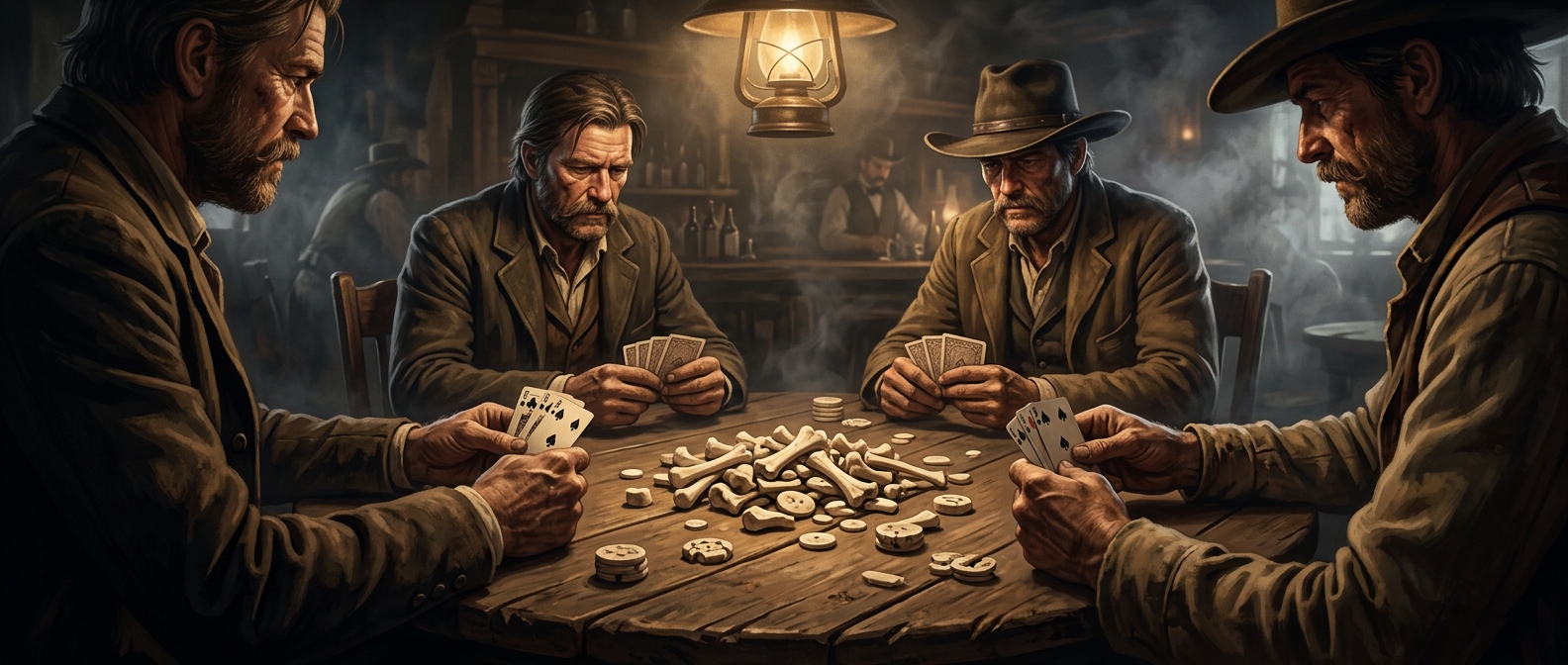
Playing cards are closely tied to gambling because they make bets easy to organize: a shuffled deck creates uncertainty, while shared rules turn that uncertainty into a contest. But the same features also make cards useful for games without stakes. Players can compete for points, practice strategy, or pass time without risking money or possessions.
The surviving record does not establish that cards were invented for one purpose alone. Cards appeared in different forms as they spread across regions, and people adapted them to local games. Gambling became one prominent use, but it was part of a wider life of play rather than proof of a single original design.
The suits are not a reliable class chart
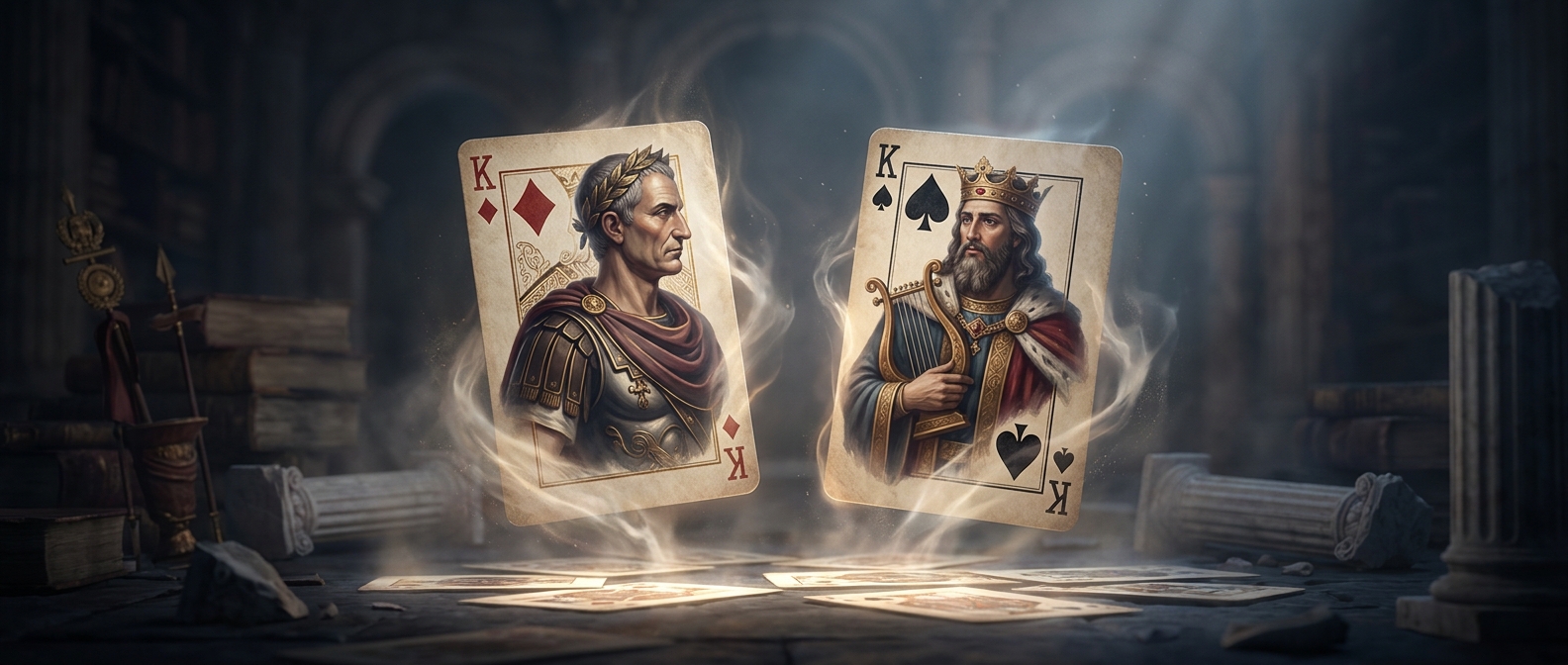
A familiar story assigns the four European suits to social groups—for example, connecting one suit to clergy, another to nobility, and others to merchants or workers. It is an appealing way to turn a deck into a miniature picture of society, but the suits do not consistently support that reading. Their names and symbols vary across card traditions, and the familiar modern suits are not a stable set of labels for social ranks.
That distinction matters: a later interpretation can explain how people made sense of cards without showing what their makers originally intended. A deck could invite gambling and acquire symbolic meanings without having been designed exclusively for either. Its more durable design achievement is simpler: a small, portable set of images and values can generate many different games.