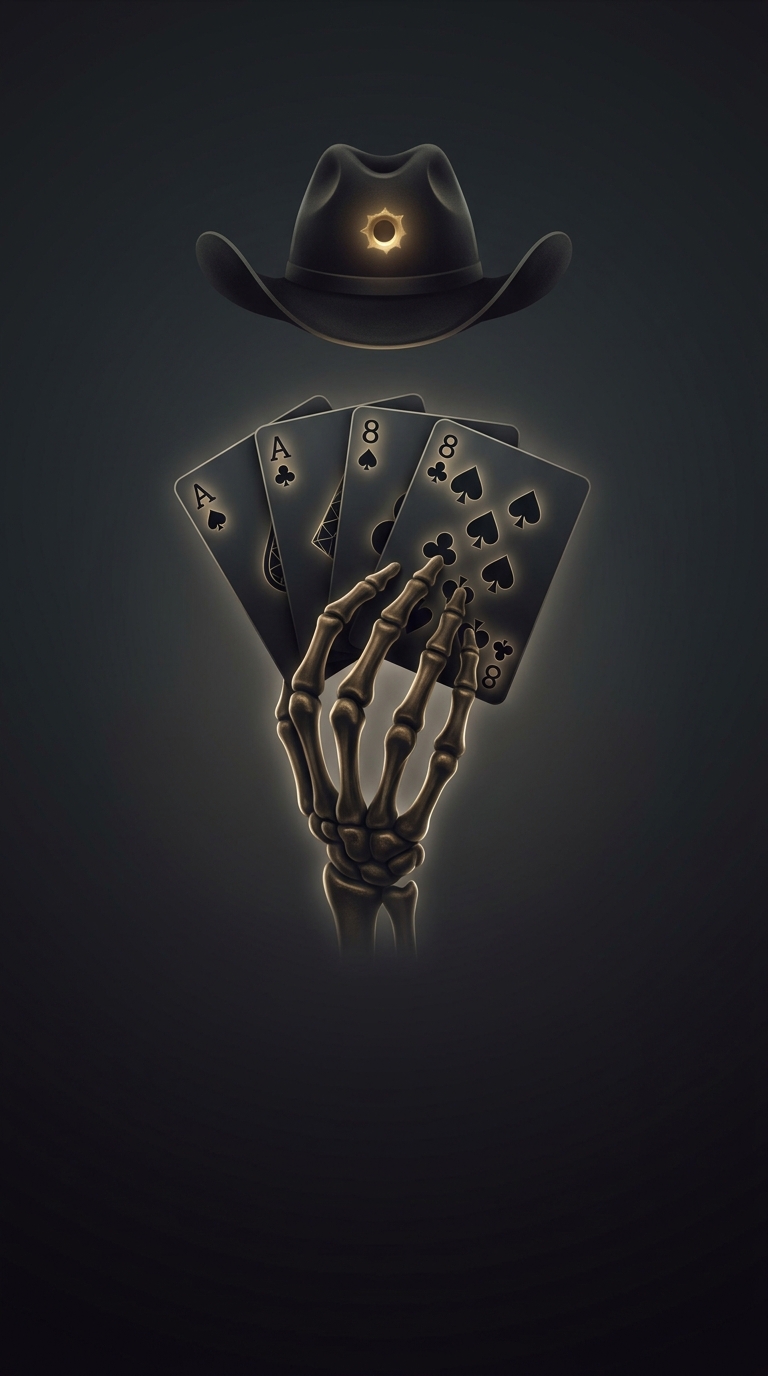
The missing fifth card
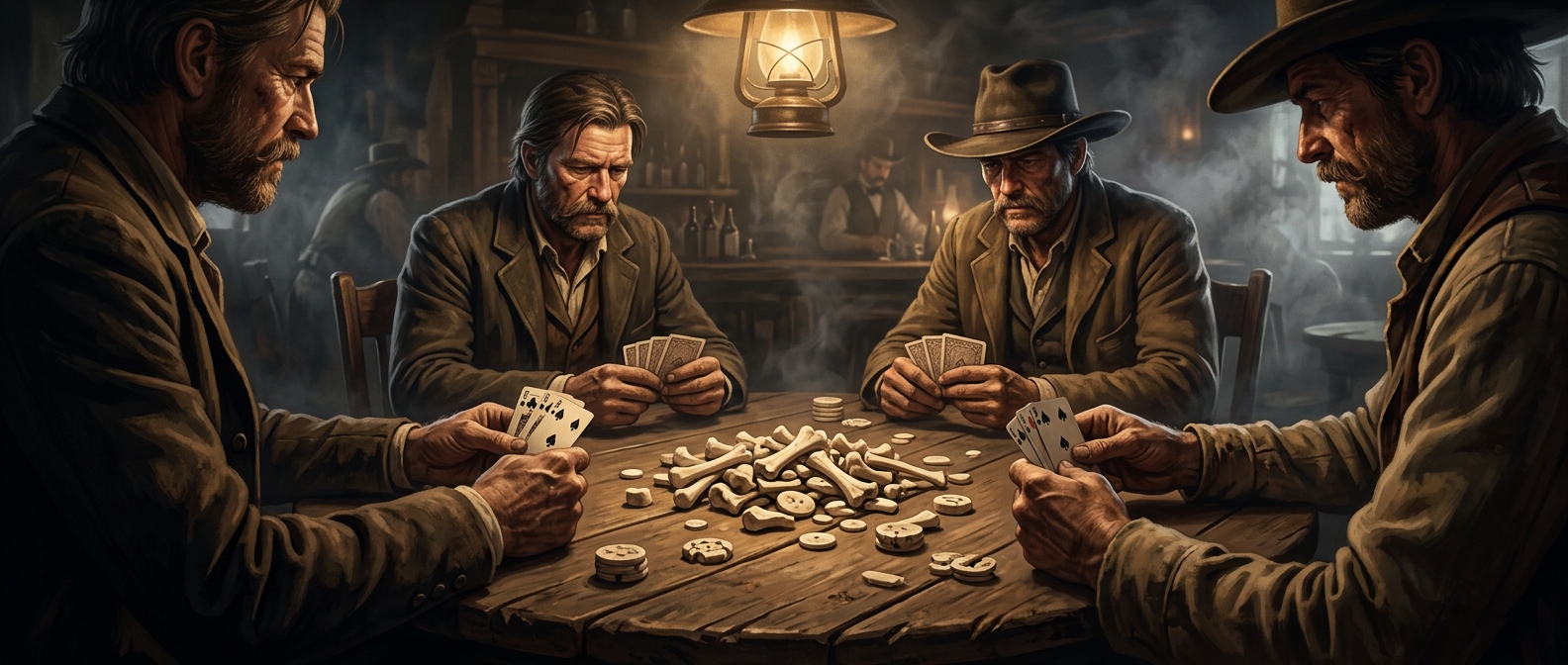
The famous phrase sounds like a complete record, but the Dead Man’s Hand is usually shown as two black aces, two black eights, and an unknown fifth card. The aces and eights make two pair in poker; the fifth card matters to the hand’s full value, yet accounts of Hickok’s cards do not reliably settle what it was. Later versions of the story have supplied different answers.
That gap helps explain why the hand became a legend rather than just a detail in a game report. The pair of aces and eights was memorable enough to identify, while the uncertainty left room for retellings to turn an interrupted poker game into a compact symbol of sudden death.
How a poker hand became an epitaph
In five-card draw, each player receives five cards and may exchange some of them in hopes of improving the hand. Hickok’s cards did not need to be unbeatable to become famous: their significance came from the moment attached to them, not from a dramatic win at the table.
The story’s enduring force lies in that contrast. A routine hand of cards was frozen at the instant a player was killed, and the unfinished fifth card became part of the mystery. The nickname preserves not a complete poker score, but a scene people could remember in four cards.