What sunglasses take out of the read
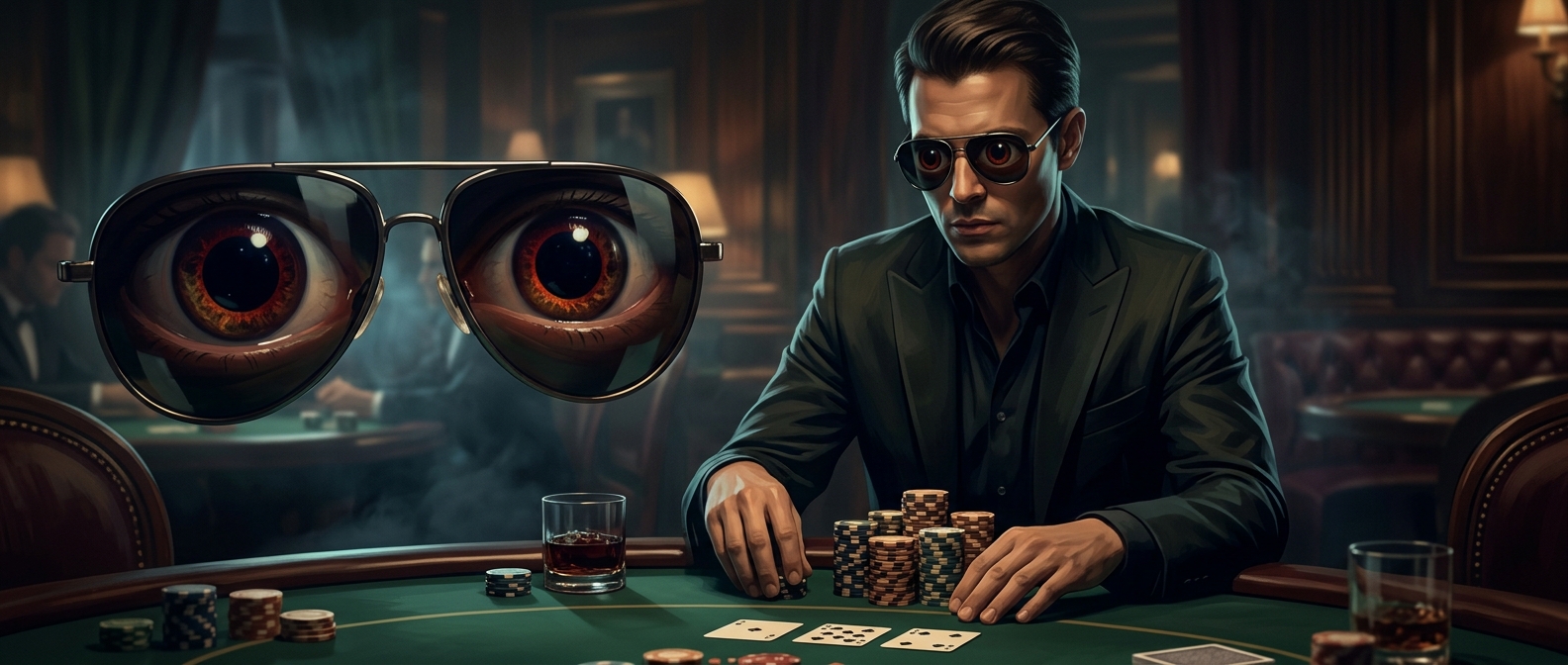
Poker players make decisions with incomplete information, so opponents look for small changes that might reveal how someone feels about a hand. The eyes can offer clues: pupils may widen with emotional arousal, and gaze can shift as a player studies cards, chips, or another player. Sunglasses cover much of that visual information, making one potential source of evidence harder to inspect.
Pupil changes are involuntary, but they are not a secret code for “strong hand.” Lighting, focus, and other reactions can affect the eyes, and a single cue is easy to misread. The practical advantage is more modest: concealment removes one clue opponents might otherwise combine with betting patterns and behavior.
The tradeoff at the table
Poker is also a game of managing what other people can observe. A player who wears sunglasses consistently may make it harder to compare their reactions from hand to hand. But the glasses do not hide every tell: timing, posture, chip handling, and the size of a bet remain visible—and opponents may interpret the choice to cover the eyes as information of its own.
That is why the glasses work best as part of a broader effort to keep behavior steady. They do not make a hand unreadable; they narrow the window through which rivals try to read it.