A Kerbal is a mission marker, not a life-support clock
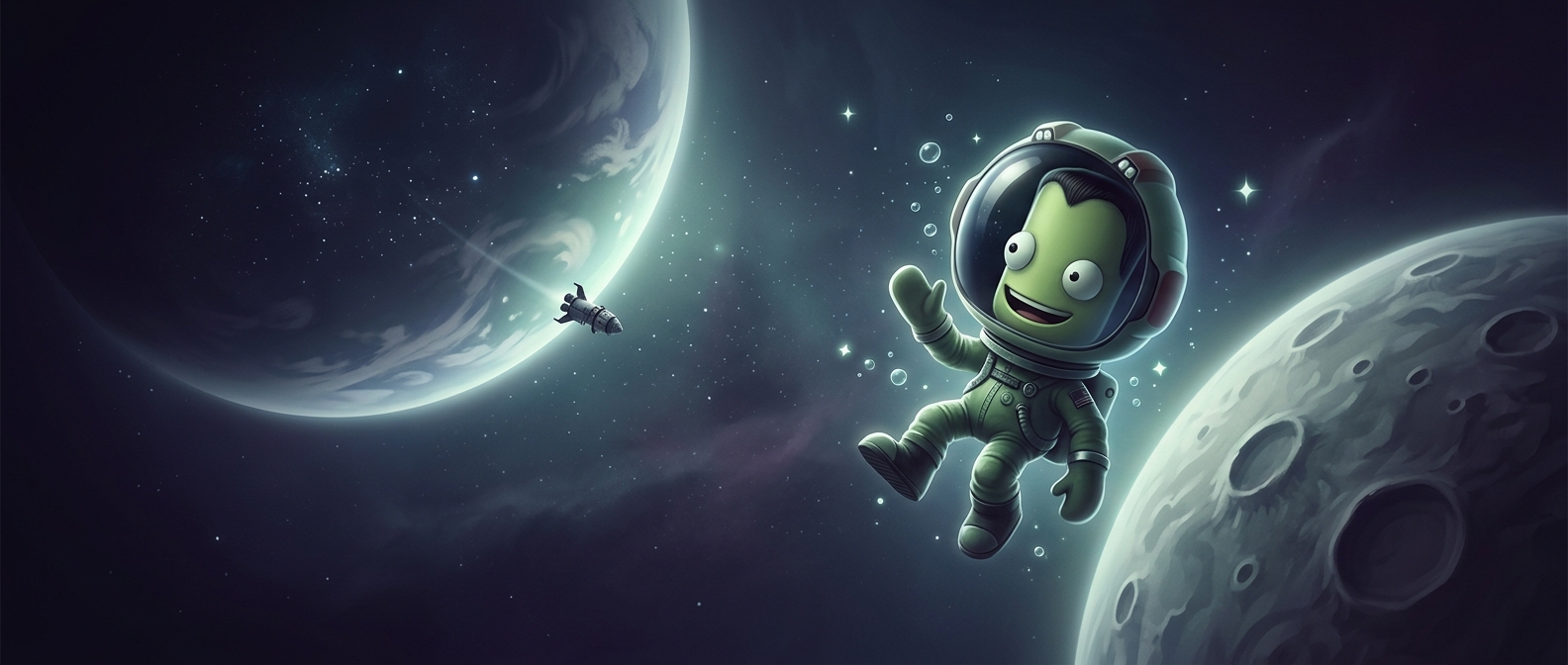
In the game’s standard rules, a stranded Kerbal remains available for rescue rather than becoming a countdown problem. The simulation tracks the spacecraft’s motion and the crew member’s location, but it does not make food, oxygen, or biological deterioration part of the rescue challenge. So elapsed game time can separate a crew member from home without automatically turning the delay into a death sentence.
That choice keeps the challenge centered on rocketry. A rescue still means designing a craft that can reach the right moon, meet the stranded vehicle or Kerbal, and get back—or at least bring help. Players must solve the orbital and fuel problems, not pack supplies for an uncertain wait.
Waiting turns a mistake into a future mission
This changes the meaning of a failed landing or an under-fueled launch. In a survival simulation, running out of supplies could close off the story. Here, the stranded Kerbal can remain a persistent reminder of unfinished engineering: a player can build a better rescue craft later, even after years have passed in the game.
The result is a forgiving kind of consequence. The mission can go wrong, and the rescue may demand careful planning, but the crew member is still there when the player is ready to try again.