Fire That Outlasts Its Keepers
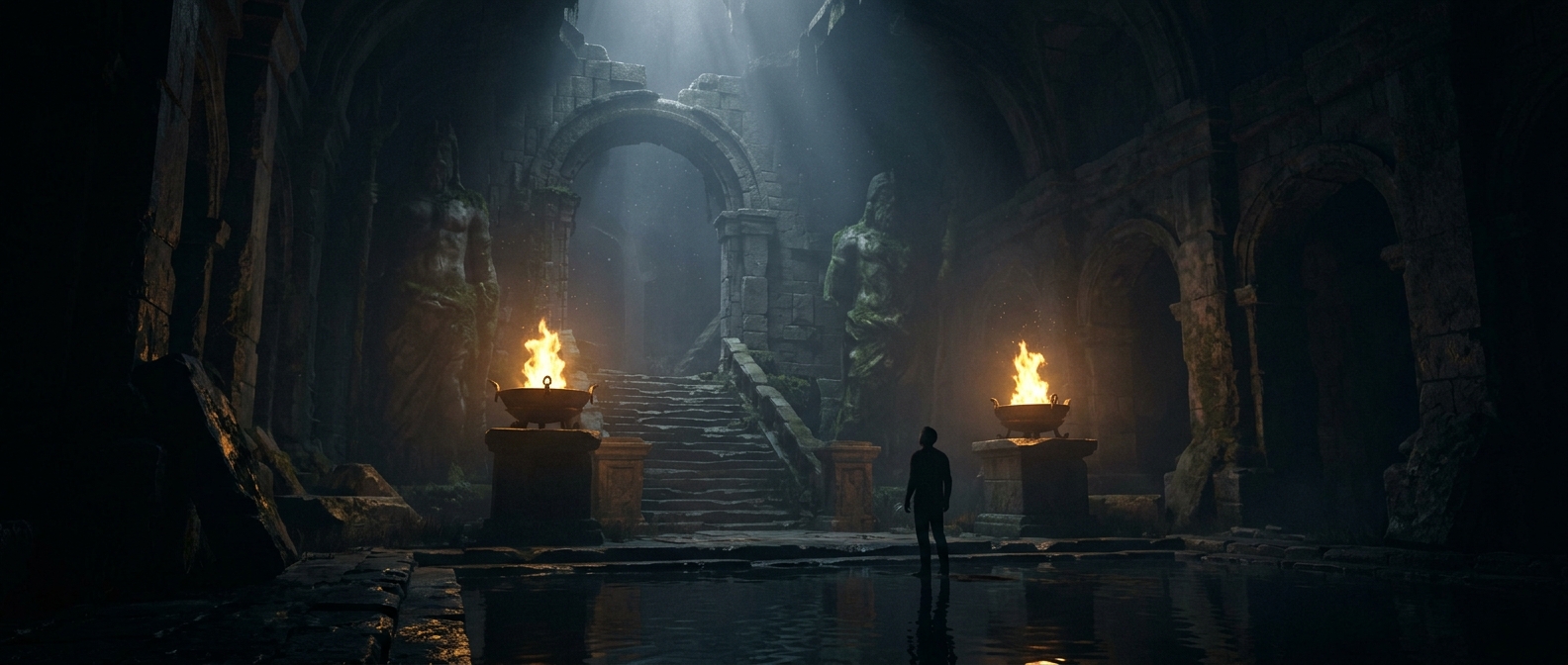
A lit sconce in an abandoned ruin is often less a claim about the building’s history than a piece of level design. A real flame needs fuel and tending; a game can keep it burning because the light does useful work for the player. It marks a doorway, stair, or turn before the player reaches it, turning a maze of similar stone corridors into a route that can be read at a glance.
That makes the flame a kind of visual breadcrumb. Designers can place lights where they want attention to land, while leaving other passages dim or hidden. Repeating the pattern teaches players to look for the next pool of warm light without requiring a map marker or spoken direction. The sconce also implies that the space was built for people, even when its current inhabitants are monsters—or none at all.
A Small Break in the Fiction
The effect depends on selective realism. If every flame obeyed ordinary limits, a level would need to explain who lit it, what keeps it supplied, and why it has not gone out. That explanation could distract from exploration. Games instead preserve the useful part of the image—a flame is visible, familiar, and associated with human spaces—while letting its fuel and maintenance go unanswered.
The result is a quiet tradeoff: the ruin feels old, but its route remains legible. A player may notice the impossibility only after following the lights through a place supposedly untouched for ages—which is exactly when a practical navigation cue becomes part of the atmosphere.