Why the Controls Suddenly Feel Heavy
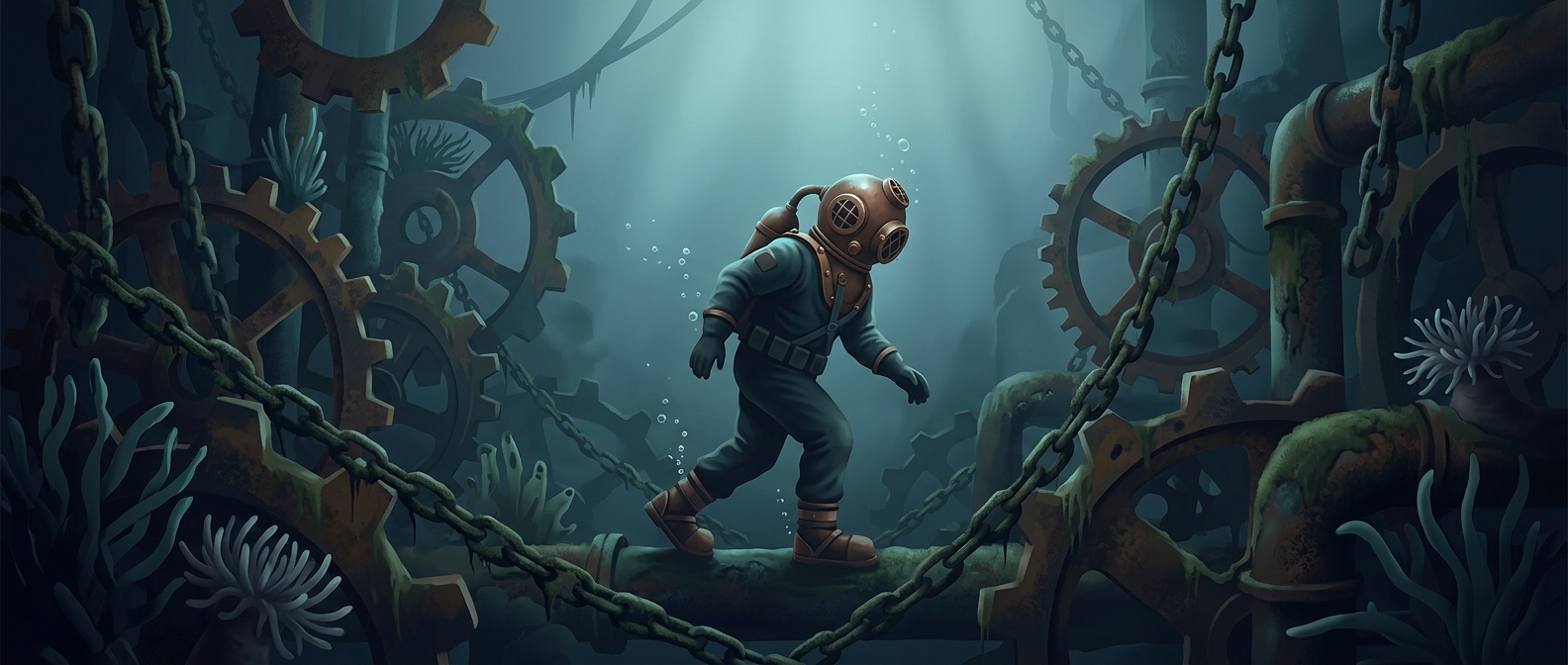
Underwater levels often change the rules that made a game’s ordinary movement feel quick and precise. A jump may become a slow ascent, turning can feel less immediate, and momentum may carry the character past a target. These changes imitate the resistance and buoyancy of swimming, but they also make familiar actions harder to judge: a small input can send a character drifting, while stopping may take time.
That friction is often intentional. If the hero moved and fought exactly as they do on land, the water would be little more than a different-looking backdrop. Slower movement signals that the player has entered a place with different physical limits.
One Level, Several Competing Demands
The challenge is making those limits engaging rather than merely irritating. Designers may ask players to steer in three dimensions, track enemies above and below, and manage a source of air at the same time. Aiming becomes more demanding when both the player and targets can move freely through space; restricting attacks or making them harder to use can make the setting feel consequential without introducing a wholly new combat system.
Air bubbles add a deadline. The player must notice where the next refill is and decide whether to explore, fight, or move on. When movement is already sluggish, that timer can turn navigation into pressure—but if the route is unclear, the same combination can feel less like danger and more like a control problem.
The Tradeoff Behind the “Clunky” Feeling
An underwater stage is therefore a pacing experiment: it interrupts the brisk rhythm of ordinary action and asks players to adapt. The strongest versions make the altered movement, combat, and air supply work together, so that each limitation creates a readable choice. When they do not, the player may spend more effort wrestling the controls than responding to the enemies.
That is why a short underwater detour can feel dramatically different from the rest of a game: the environment changes not just what the hero sees, but what the player is able to do.