Why the Crates Fit the Fight
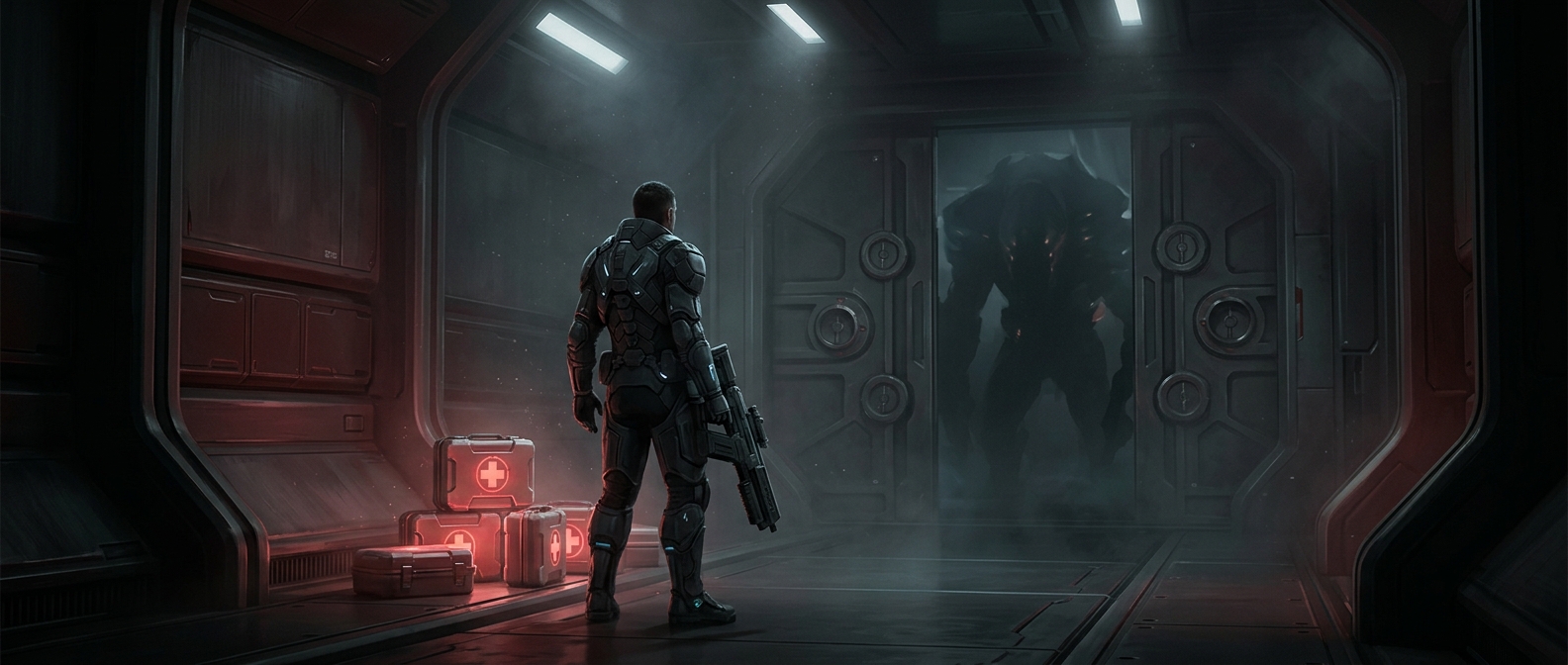
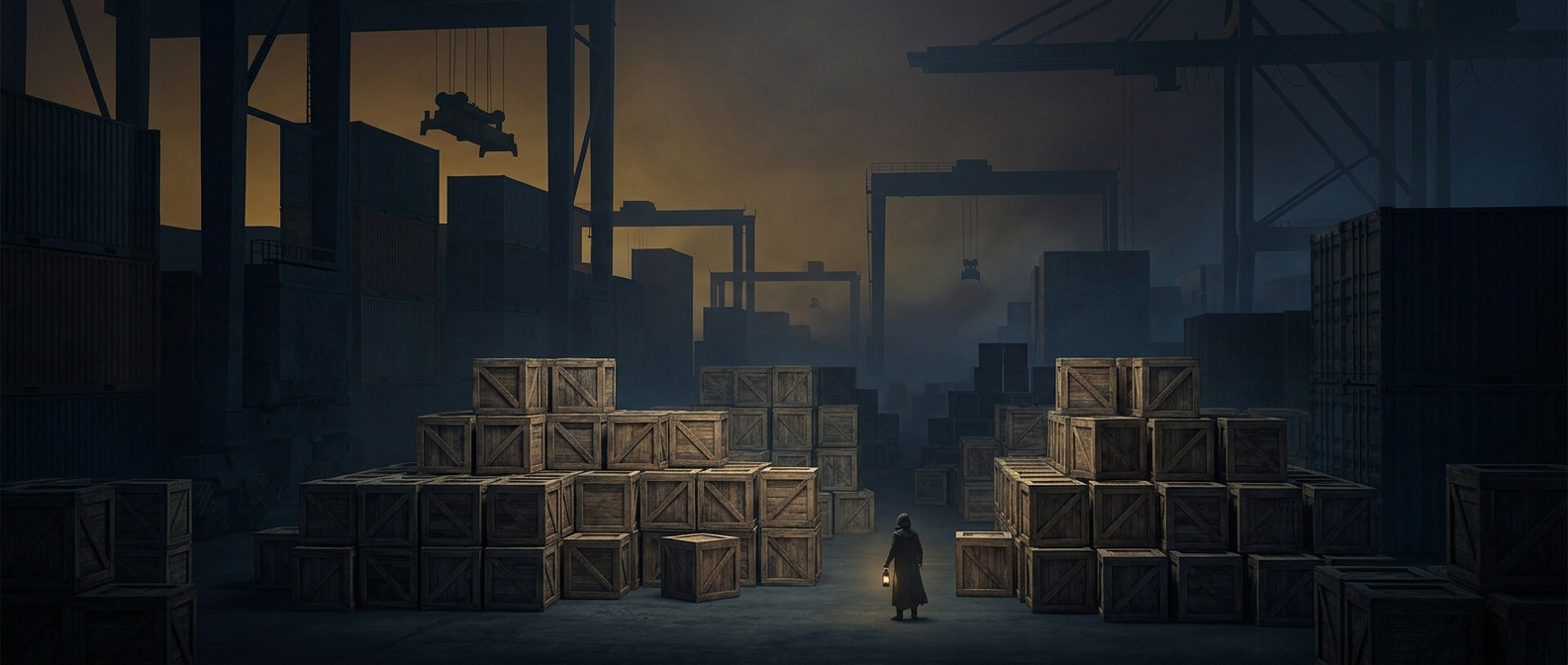
A crate in an action game is rarely just warehouse clutter. Its height and position can determine whether a player can crouch behind it, see over it, or shoot around its edge. Designers use familiar shapes to make those choices legible at a glance: a waist-high box suggests one kind of protection, while a taller stack blocks sightlines and forces a different route.
That predictability is useful in a firefight. Players have only seconds to read a room, spot threats, and choose where to move. A crate placed beside an open lane can offer a quick refuge; a staggered row can create a sequence of short advances. The props turn an empty floor into a set of readable options without needing a tutorial prompt.
A Prop That Also Builds the Room
The same objects help designers control how a combat space plays. By arranging crates, pillars, or machinery, they can break up long views, create flanking paths, and keep enemies from being visible from everywhere at once. Cover also gives the player pauses between bursts of danger, making movement and timing part of the encounter rather than leaving the player exposed in a wide-open arena.
Repeated crates are practical, too: one modeled object can be reused and rearranged across a level. But the arrangement still has to feel plausible enough for the setting. A stack near a loading bay makes sense; a perfectly spaced line in a temple may call attention to the design. When the placement works, players read the room as a place—and use it as a combat plan—almost simultaneously.