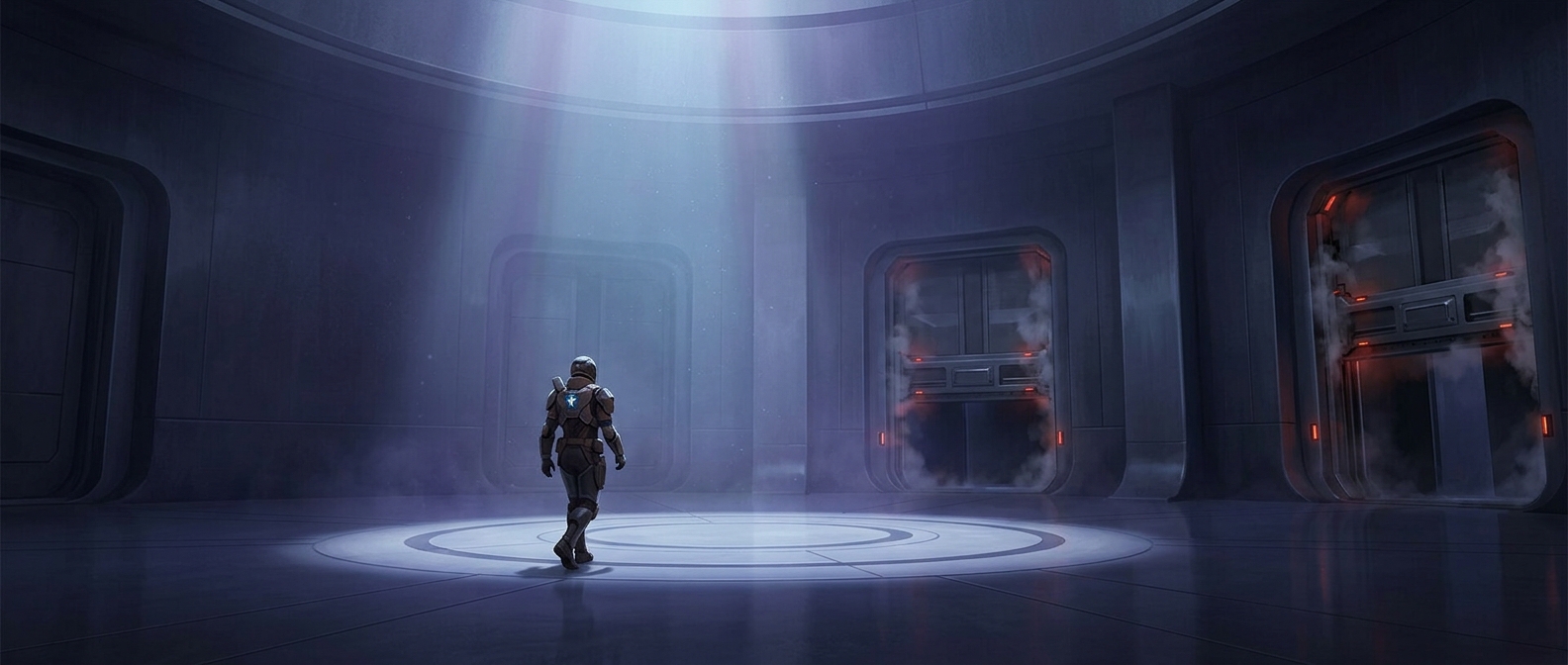
The Arena Door Is a Boundary, Not Just a Barrier
A locked gate turns a patch of floor into a distinct game space. Crossing its threshold tells the player, often without a new screen or instruction, that the rules have changed: the encounter has begun, and moving onward is no longer an option. The bars make that change visible and hard to mistake.
Why Keep the Player Inside?
An arena fight depends on attention. If a player could simply run through an open exit, the creature might stop being a threat and become an obstacle to bypass. Sealing the room keeps the confrontation focused and lets designers build its difficulty around the expectation that the player will engage—dodging attacks, using the space, and learning the enemy’s patterns.
The gate also gives the encounter a clear sequence: enter, fight, then leave. A designer can use that sequence to control when the next area becomes accessible or when a reward appears. The barrier is therefore part of the game’s pacing, not merely scenery.
A Small Signal With a Practical Job
Metal bars are especially legible: players can see that the exits have changed, and the lifting animation confirms that the fight is over. That feedback matters because a locked door can otherwise feel like a bug or an arbitrary restriction. The arena’s closure makes the game’s expectation unmistakable: this space is for the battle, and the way forward opens when it is finished.