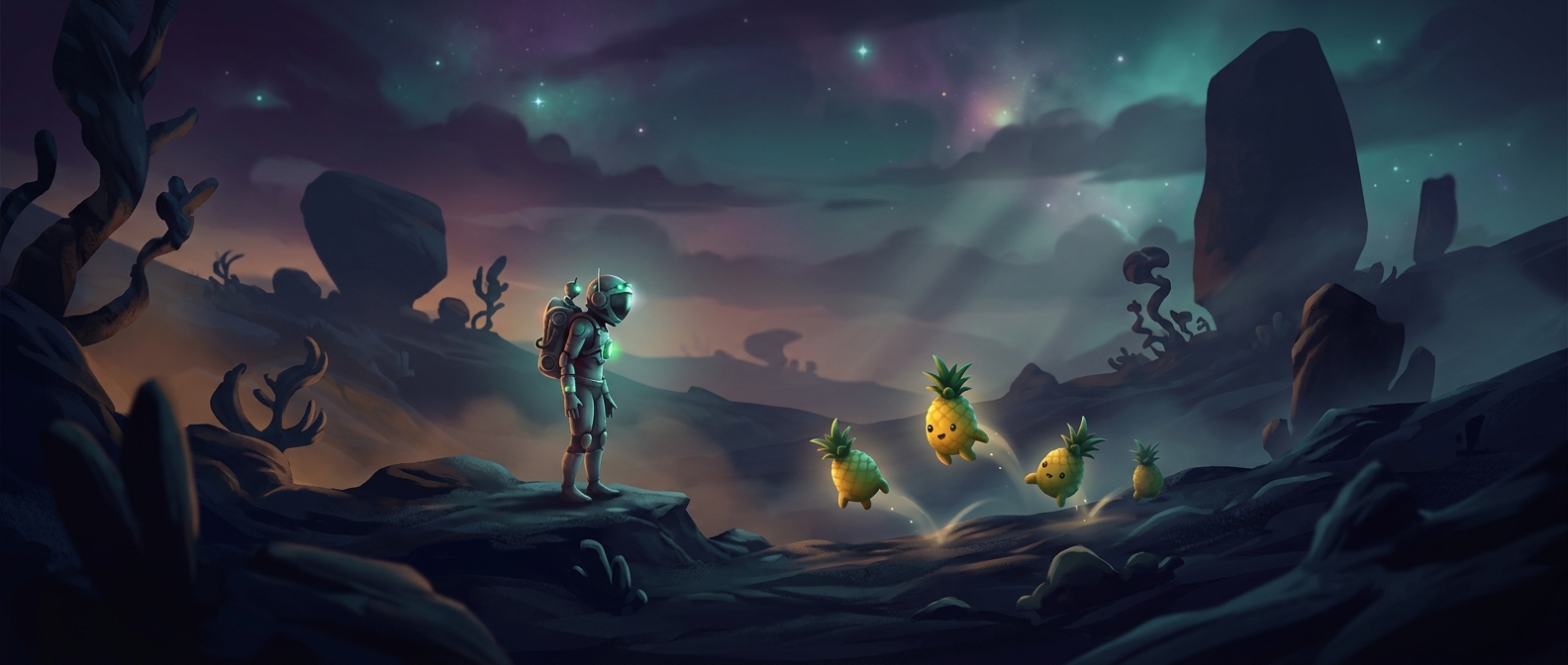
A pineapple is a recipe, not a hand-placed joke
In No Man’s Sky, a planet’s life is assembled by procedural generation: rules use a world’s generated data to produce things such as plants, animals, colors, and movement. The game’s artists provide the ingredients and boundaries; the system combines them into many possible results. That can make a plant look uncannily like a pineapple without anyone having to model that exact pineapple for that exact planet.
The result is not unlimited invention. A generator can only remix the forms and behaviors its rules allow. But when traits that seem unrelated—spiky fruit-like shapes, staring eyes, and a springy motion—meet in one combination, the creature can feel stranger than a deliberately designed mascot. Its bouncing is part of the generated life, not merely an odd silhouette.
Why the oddities make the worlds feel alive
A handcrafted game can give each creature a carefully planned role. A procedural game instead needs a system capable of filling many worlds without requiring a unique creature for every one. The tradeoff is that some combinations will look less like plausible wildlife and more like surreal accidents. Those surprises are a side effect of letting the rules produce variety at a scale that manual design could not easily match.
That is why an eyeball-covered, bouncing pineapple is more than a funny sight: it reveals the game’s design bargain. The same machinery that makes a world feel unfamiliar can also produce life that looks as if nature briefly stopped following its own rules.