Why a game companion jams the doorway
A follower character is usually trying to stay near the player, not make a tactically perfect choice about where to stand. The game’s navigation system gives it a route toward a target—often the player’s current position or a point nearby. When that route passes through a narrow doorway, the companion may head for the same opening you are using.
A tight space exposes the limits of following
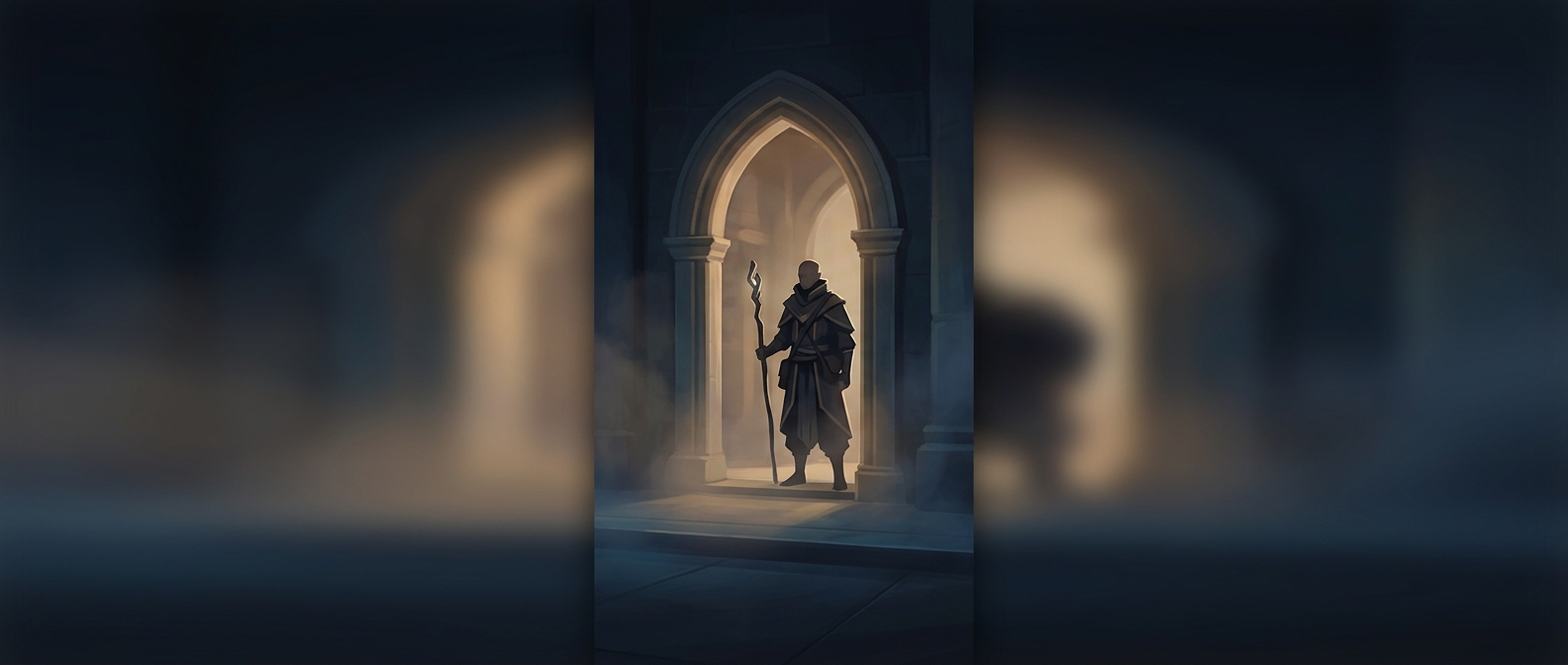
In an open room, small errors in position are easy to miss. A doorway is less forgiving: there may be only one clear path through, and the player can reach it before the companion does. If the follower keeps correcting its position toward you, it can arrive at the threshold just as you try to leave. Some games also make companions pause or gather near the player, turning the entrance into a little traffic jam.
The character may look as if it has chosen the worst possible place to stand, but the behavior can come from a simple priority: keep close and follow the route. That rule works well enough in broad spaces, then becomes conspicuous at a chokepoint—a narrow passage where movement is forced into a single lane.
Why designers let it happen
Making a companion move smoothly through every cramped space takes more than telling it to follow. The game has to keep it from colliding with the player, decide when to wait or squeeze past, and avoid making it wander away or get stuck. A doorway is where those competing goals become visible. The result is a familiar pause: your companion is not blocking the exit on purpose, but its effort to stay with you puts it right in the way.