The World Keeps Its Small Errands
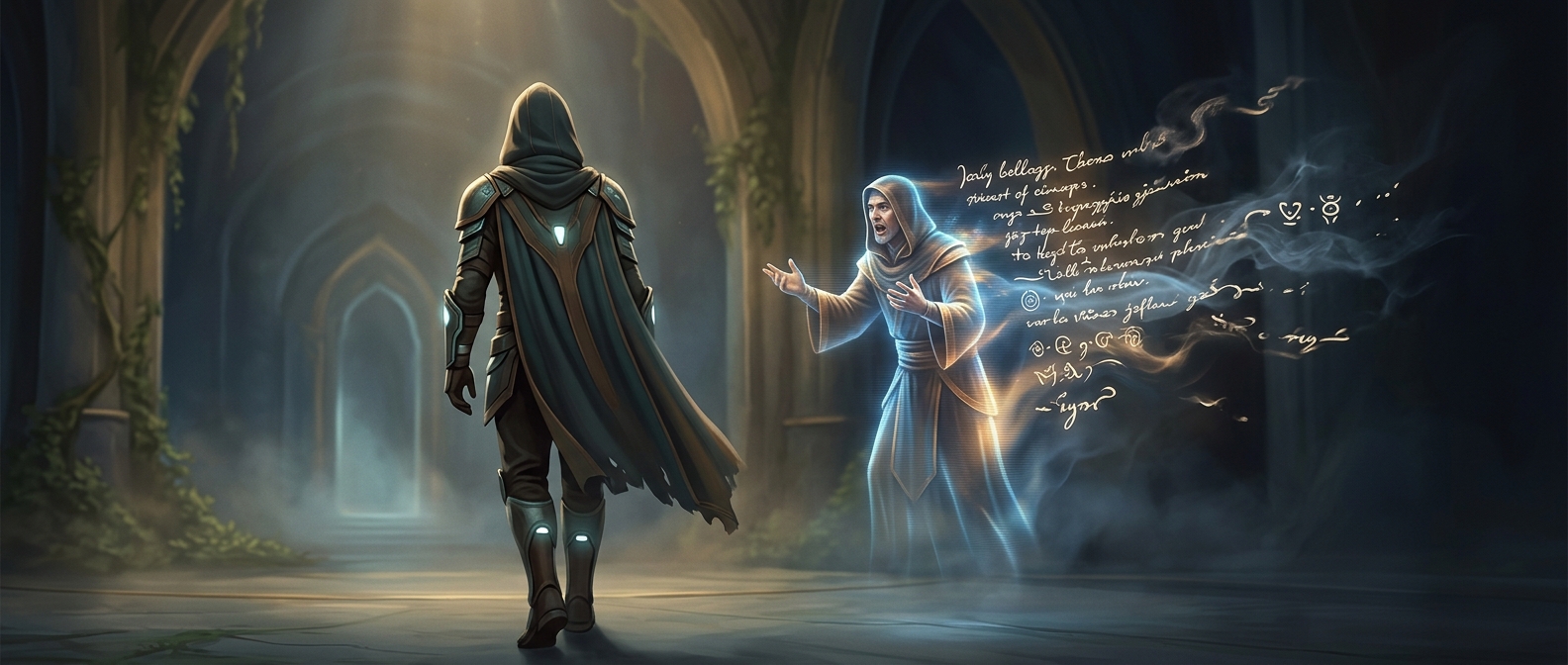
A character may be delivering an urgent warning about the end of the world, but the player is not necessarily trapped in the conversation. If movement remains available, they can step away mid-sentence and turn their attention to something as ordinary as a trash can.
That contrast comes from a design choice: dialogue does not always take control away from the player. Some games pause movement during important scenes; others let characters speak while the player continues exploring. In the latter, even a dramatic line has to share the screen with the world around it.
Urgency Meets Player Control
The interruption is funny because the two activities carry wildly different stakes. The character treats the warning as urgent; the player can treat it as one more piece of information in a space full of things to inspect. Checking the bin is not just a distraction from the story—it is an action the game has made available at that moment.
That freedom changes how a scene feels. A warning can still matter, but it cannot force the player to regard it as the only important thing. The end of the world may be imminent in the dialogue; the trash can is still right there.