How a dropped vase becomes a continent-wide alarm
A vase hitting the floor is a tiny event in the story—but a useful switch for a game’s security system. The sound gives a nearby guard a reason to investigate. Once that guard detects a disturbance, the game can change the whole level’s alert state, making distant officers search, move to defensive positions, or treat the player as a threat.
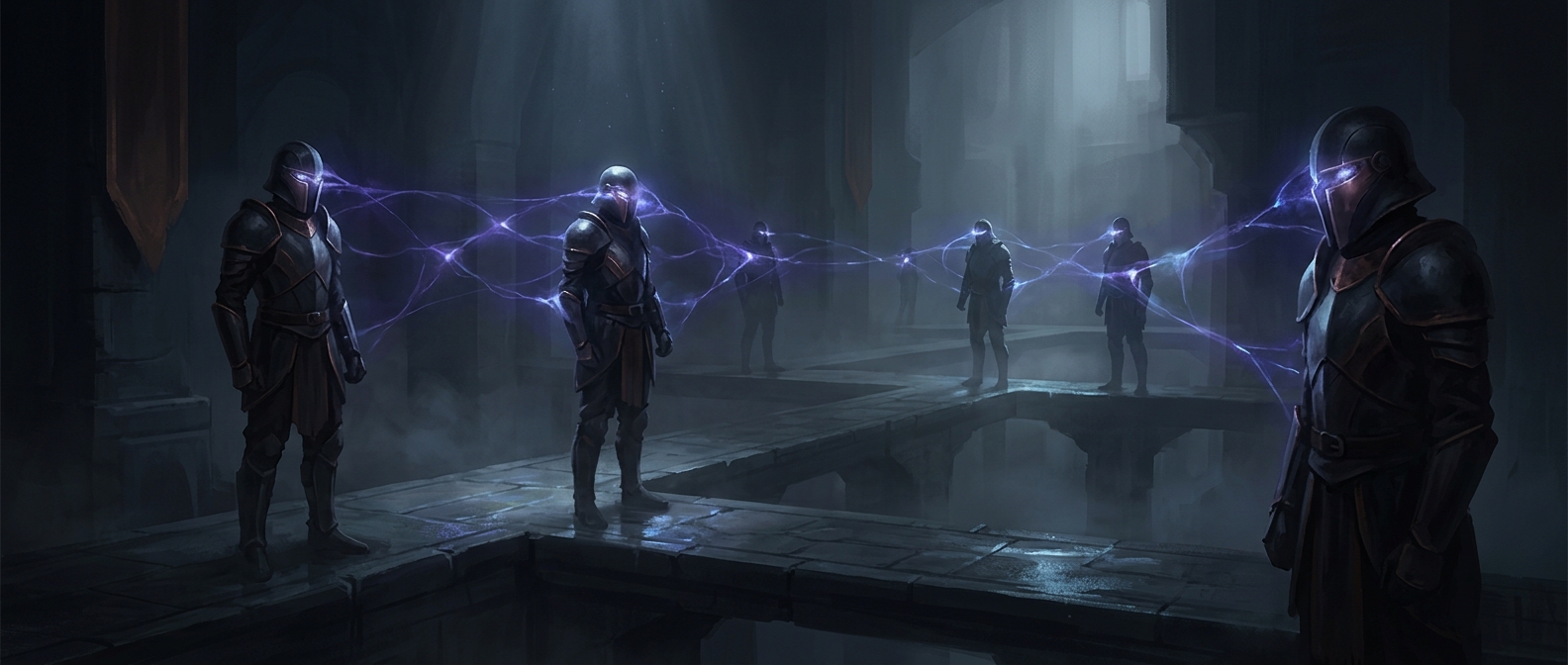
That jump from one witness to many is often less like realistic word-of-mouth and more like a shared setting behind the scenes. Instead of simulating every guard calling another guard, the game can flip one alarm flag that tells many characters to react. The vase is the trigger; the broader response is a designed rule.
Why make the response so broad?
A shared alarm is easier for players to read than a chain of uncertain communications. It also makes noise consequential: a careless bump can turn a quiet infiltration into a scramble. For designers, that creates tension without requiring a detailed model of radios, patrol routes, and who heard which report.
The tradeoff is that the world can feel strangely small. Guards on the other side of a huge map may react as if they received an instant message, even when the fiction offers no clear way for them to know what happened. The game is prioritizing a clear challenge over a literal account of how information travels.
That is why a fragile prop can seem more powerful than the player: it may not merely attract one guard’s attention; it may activate the rules that govern the entire security network.