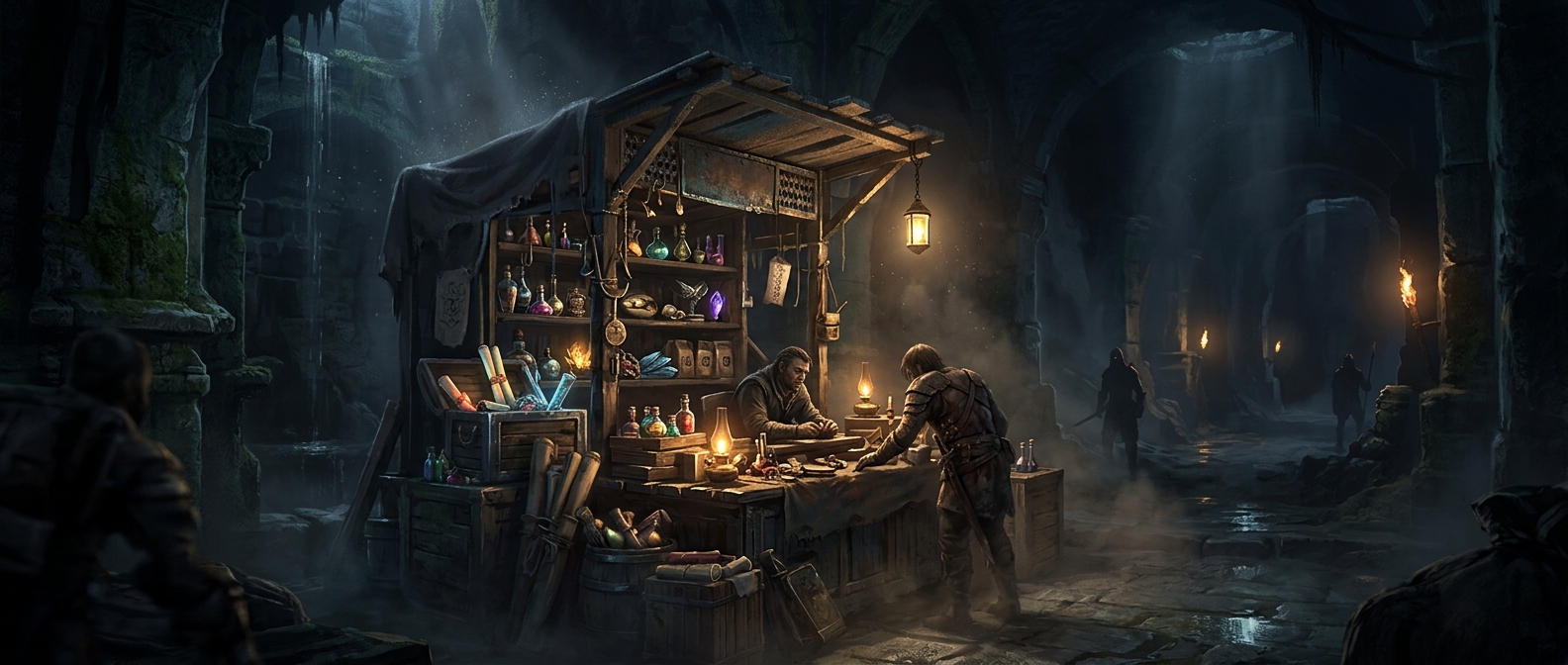
The Shop Is a Safe Room Disguised as a Shop
A dungeon shop is less a realistic business than a carefully placed pause in the action. After fighting through hostile rooms, players can stop, compare equipment, heal, and decide what to carry next. That break gives a long stretch of combat a rhythm: danger, recovery, then danger again.
The merchant’s safety usually comes from the game’s rules, not from a hidden explanation about how the shop survives. The shop may occupy a protected room where enemies cannot follow, or it may be a menu that appears when the player reaches a particular point. Either way, the game separates shopping from combat so a purchase does not turn into an accidental fight.
A Shop Makes the Dungeon’s Economy Legible
Merchants also turn exploration into choices with visible consequences. Defeated monsters and discovered treasure provide resources; the shop lets players exchange some of those resources for supplies or stronger gear. Spending now may make the next battle easier, while saving may pay off later. The player is not just collecting rewards but deciding how to use them.
That arrangement helps designers control difficulty without interrupting the adventure to explain every adjustment. A well-timed shop can offer a chance to prepare for what lies ahead, while limited money or stock keeps the choice meaningful. The seller’s improbable immunity is part of the bargain: the dungeon gets to feel dangerous, and the player still gets a reliable place to regroup.