Food Turns Recovery Into a Readable Game Action
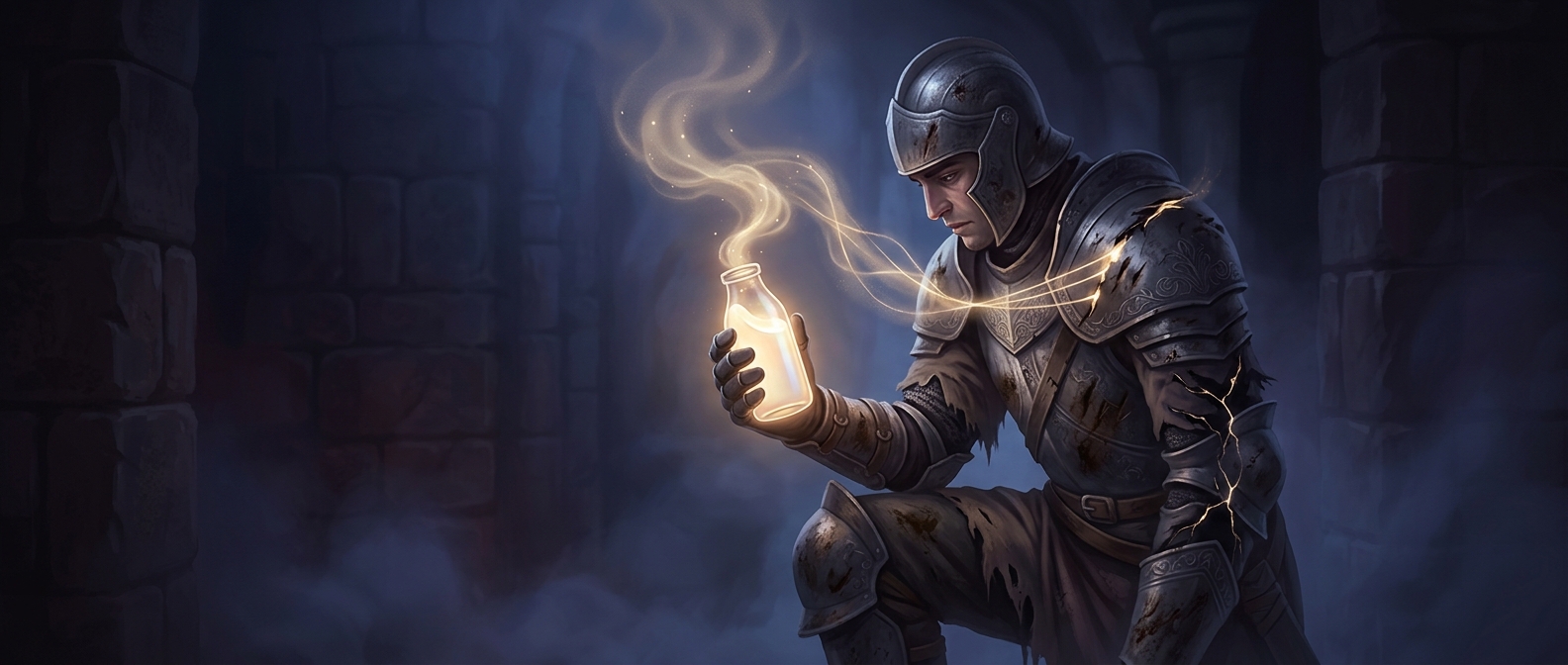
A game has to make a character’s changing condition visible and give the player a way to respond. Food is an intuitive signal: eating suggests replenishment, even when the thing being replenished is an abstract health bar rather than the body’s actual energy. The game compresses recovery into a simple exchange—use an item, see health rise, keep playing.
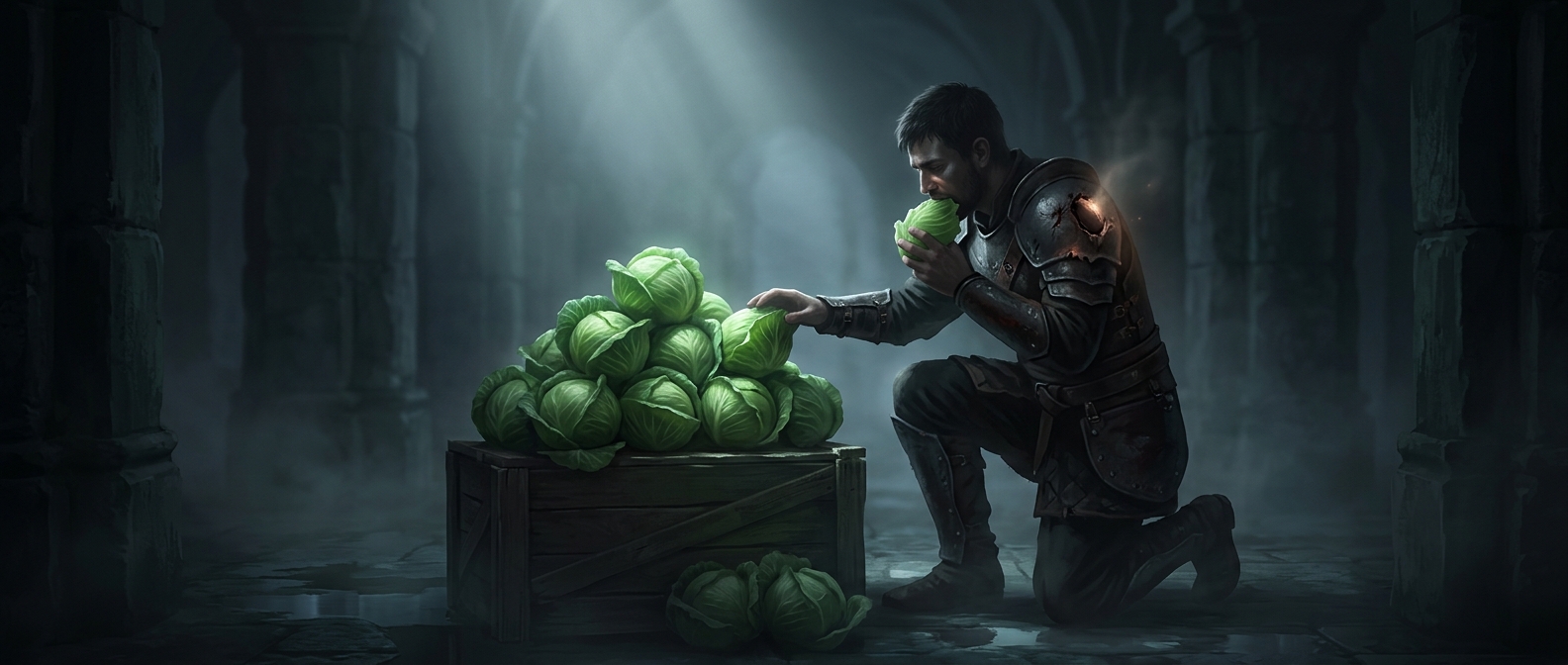
That shorthand is especially useful during combat. A meal or snack is easy to recognize as a limited resource, and its effect can be communicated with a quick animation, sound, or change in the health display. The player does not need a medical explanation or a long pause in the action. A comically large piece of food makes the interaction even more legible: this is a game item with a clear function, not a realistic treatment plan.
The Rule Serves Play, Not Biology
In real life, eating cannot close a gunshot wound in an instant. In a game, however, “health” usually bundles many things—injury, stamina, luck, or a character’s ability to remain in the fight—into one convenient meter. Restoring that meter is a design rule. It lets players manage risk: spend a recovery item now, or save it in case a harder encounter comes later.
The absurdity can also fit a game’s tone. A world that treats a wheel of cheese as battle equipment signals that its systems are playful or deliberately simplified. The joke works because players understand the underlying bargain: the food is not physically healing a wound; it is a compact, memorable control for restoring the character’s capacity to continue.