A Meal That Needs No Fire
Beans in a can are already cooked and preserved, so eating them cold is safe and requires no preparation. Heating them is mainly a matter of comfort: it takes fuel, time, and a pot—or a way to warm the can carefully. At a camp with little equipment, skipping that step turns a meal into something a rider can eat immediately.
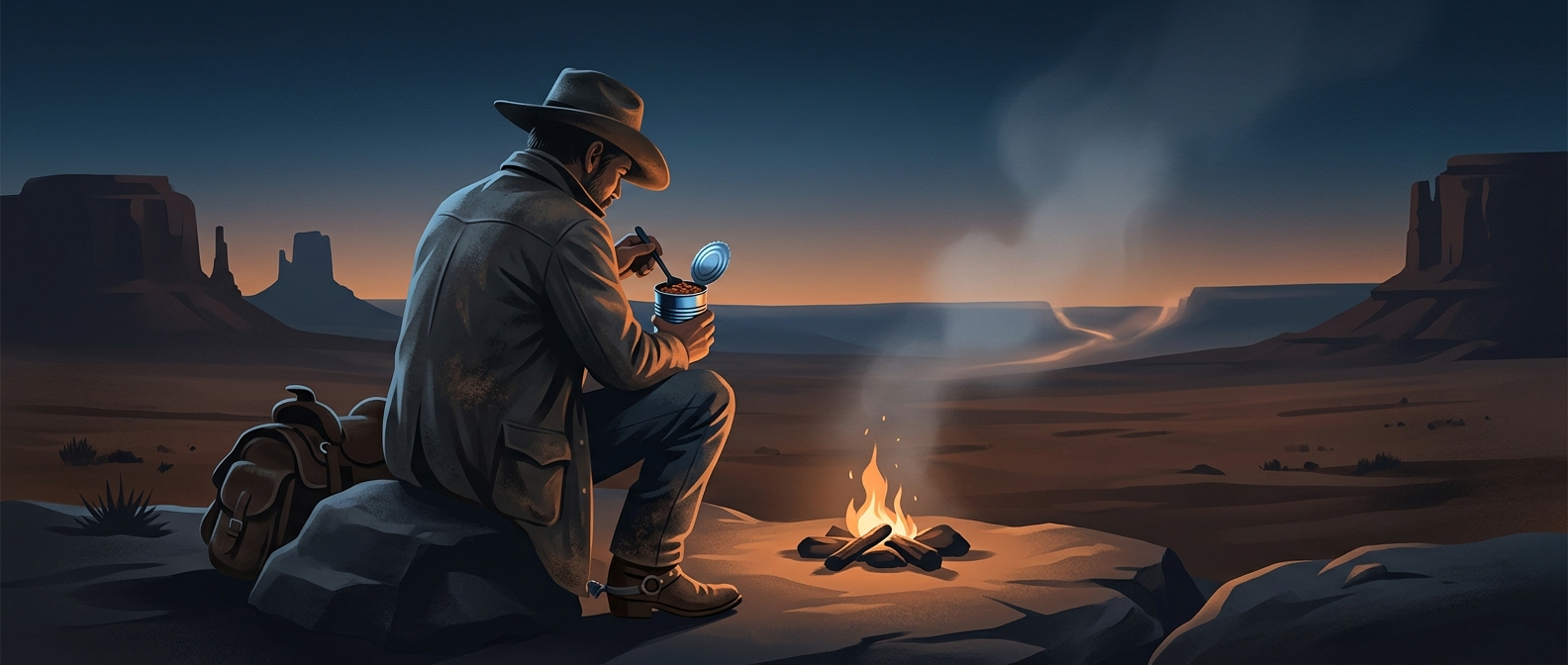
That practical logic is why the image feels plausible, even if it should not be taken as proof that every cowboy routinely ate canned beans. Food on the trail depended on what was available and easy to carry; the familiar scene compresses those constraints into one unmistakable meal.
Why Games Keep the Image
For a game, a can of beans does visual work at a glance. It signals a rough camp, limited comforts, and a character who treats eating as fuel rather than ceremony. The cold beans also make the setting feel tangible: the character does not need a kitchen or a carefully staged cooking sequence to get through the night.
The detail is memorable because it joins a real convenience to a durable frontier image. A meal that can be eaten straight from its container makes hardship legible in a single prop—and leaves the campfire for warmth, not dinner.