Why a raised seat changes the room
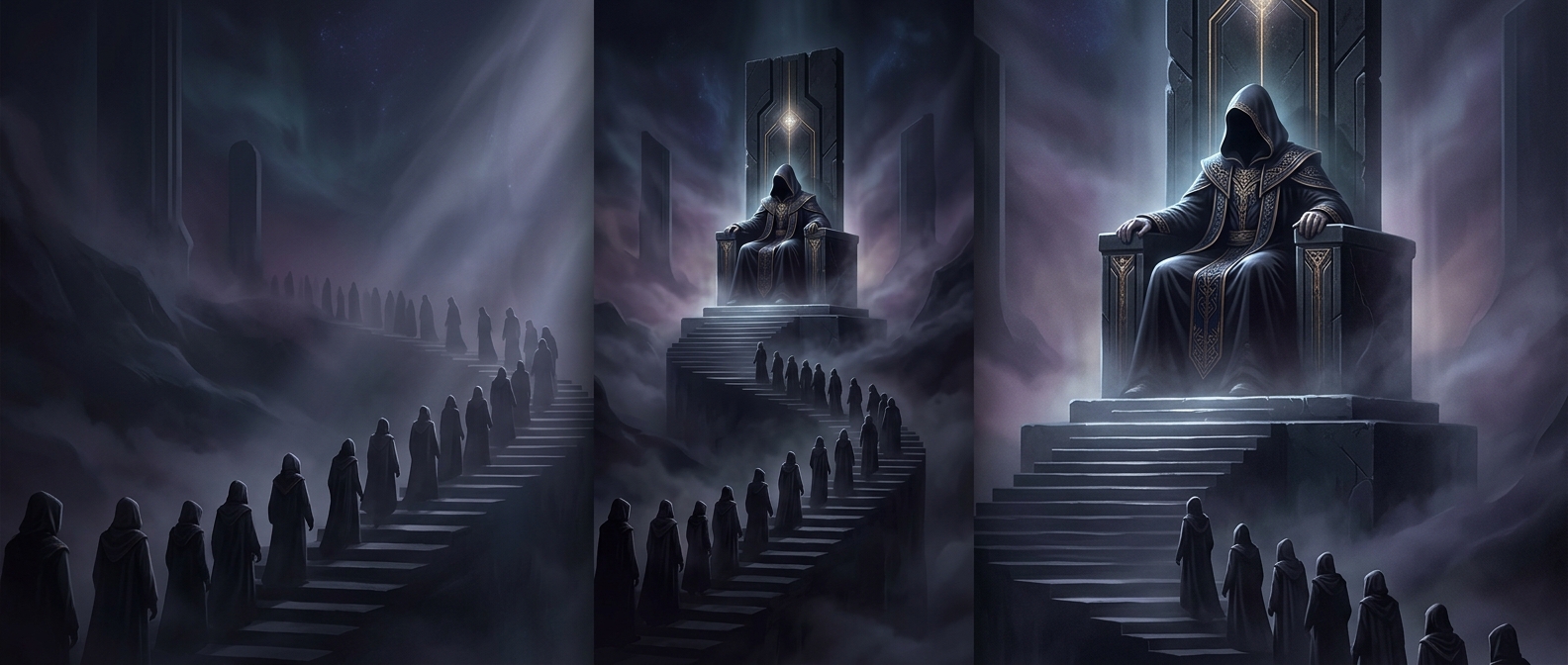
A throne does more than provide a place to sit. Its height and decoration turn the seat into a visual landmark, making the person in it easier to find and harder to overlook. In a ceremony, that can organize attention before the leader says a word: faces and bodies orient toward the elevated figure, while the arrangement makes differences in rank visible.
Authority made visible
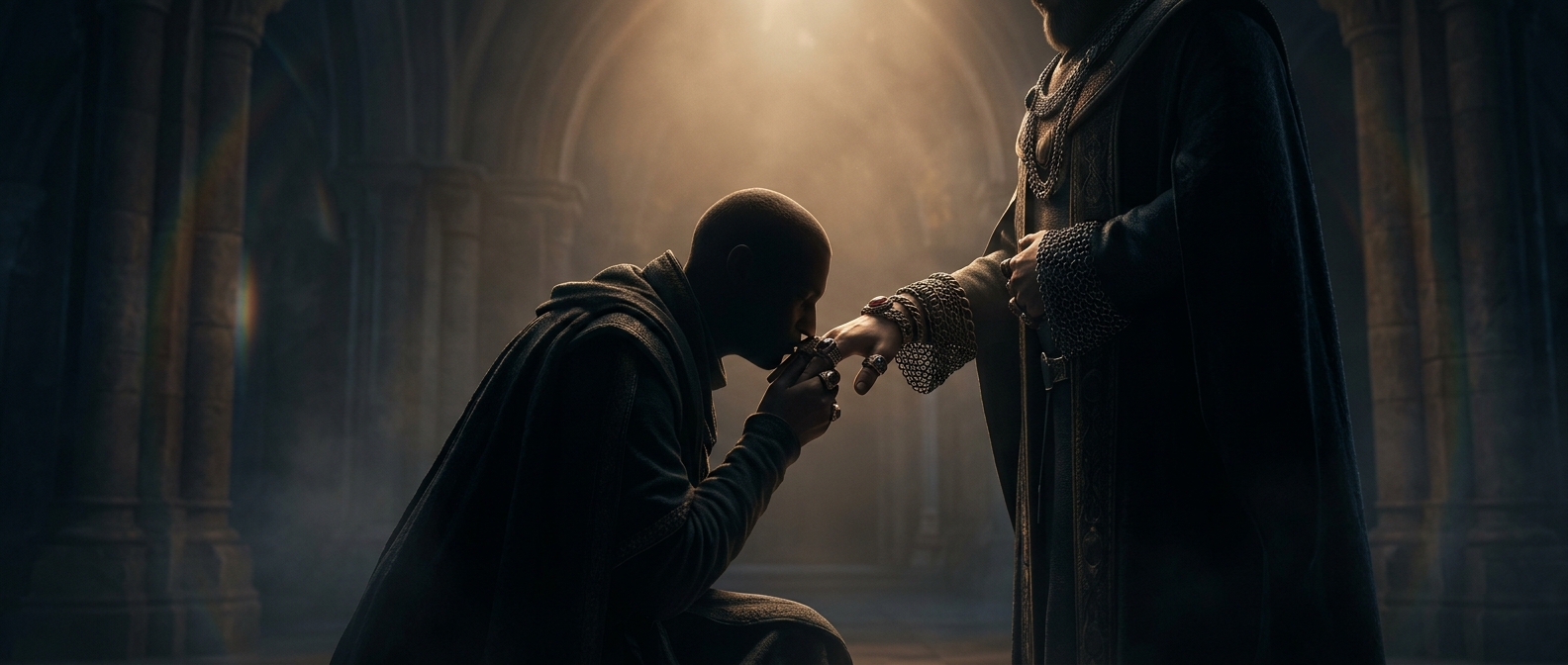
The effect comes partly from posture. People below must lift their gaze to meet the seated leader’s eyes, while the leader can look out across the group. That uneven sightline gives the encounter a clear direction—attention flows toward the throne. Ornament adds another cue, distinguishing the seat from ordinary furniture and marking its occupant as someone with a special role.
In a mystical or religious setting, the throne can therefore connect a person’s authority with the ceremony’s larger sense of order. The staging does not, by itself, establish what anyone believes about the leader. It gives those beliefs a physical form: rank becomes something the gathering can see and experience, not just an idea described in words.