Why a famous staircase needs a different kind of crowd control
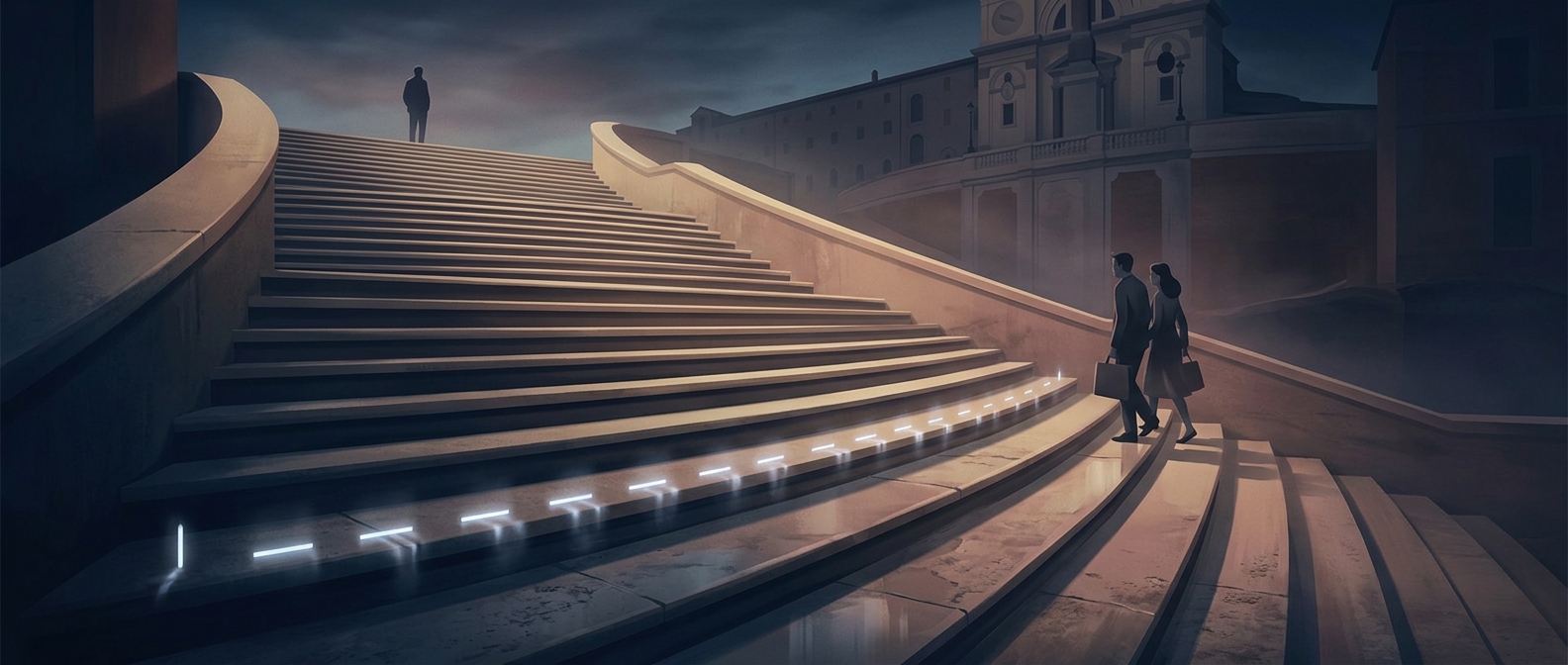
The Spanish Steps are both a monument and a route through a busy part of Rome. That combination creates a conservation problem: when large numbers of visitors treat a historic staircase as a place to pause, the stone is exposed to repeated contact and the steps become harder to keep clear for people moving through.
Wear from one person sitting down is negligible. The concern is the cumulative pressure of many visitors doing it day after day, alongside the ordinary demands of foot traffic. Crowds can also make it harder to inspect, clean, and manage a protected site. A rule against sitting limits one form of use that turns a passageway into a gathering place.
A monument is not automatically a public bench
The distinction can feel counterintuitive because steps invite people to sit. But at a landmark, access does not mean every familiar public-space activity is allowed. Rome’s restriction makes the staircase’s protected status take priority over its convenience as a resting spot; the possible €400 fine gives that boundary practical force.
For visitors, the small adjustment is to keep moving on the steps and choose another place to take a break. At a heavily visited monument, that choice helps preserve the stone while leaving the staircase available for what it was built to do: connect one level of the city with another.