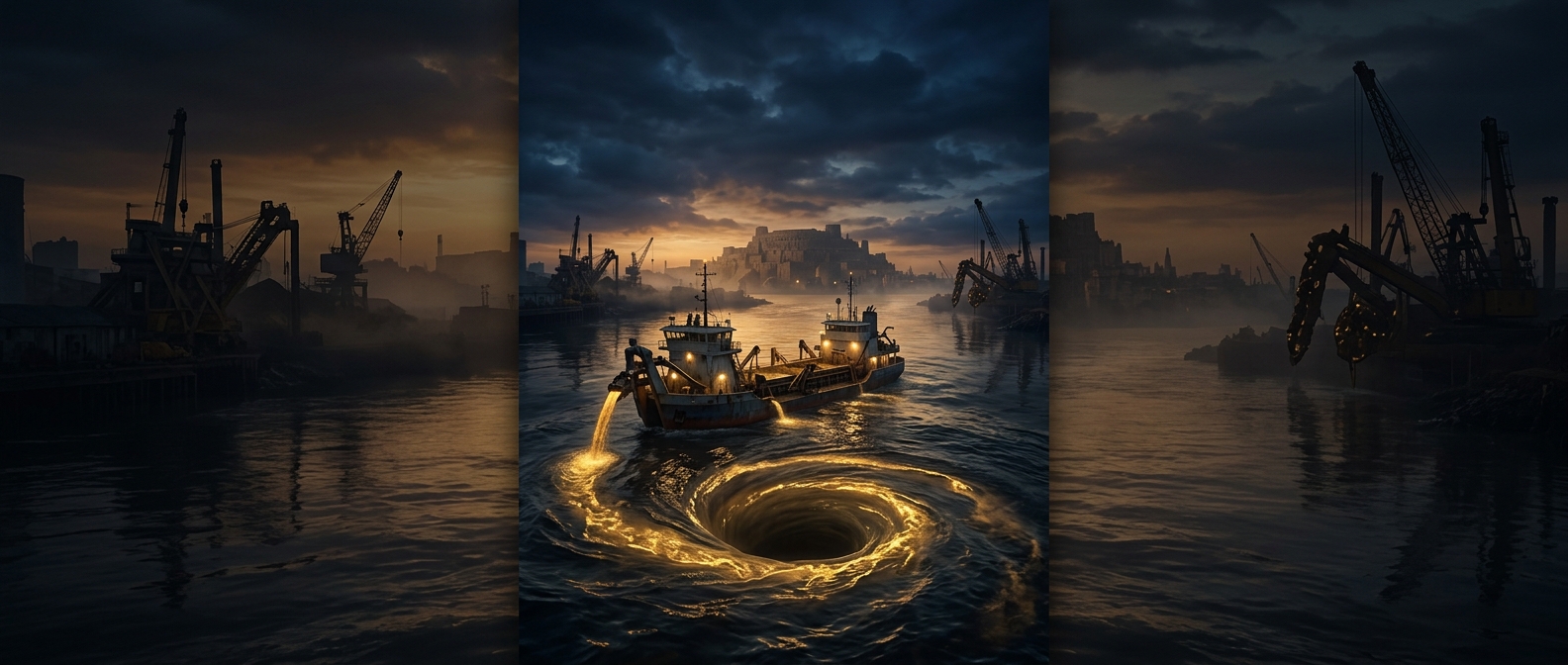
A channel is a depth target, not a finished project
A shipping channel is a managed corridor with enough depth for vessels to pass safely. Rivers keep carrying sand, silt, and other material downstream; when the current slows, some of it settles in the channel. Dredging removes that buildup, but it does not stop the river from bringing more. The work is therefore maintenance, much like repairing a road that keeps wearing down—not a one-time construction expense.
How quickly sediment returns depends on local conditions, including river flow, storms, and the shape of the channel. Crews survey the bottom to identify where depth has fallen, then use dredges to scoop or pump material out. That material must be placed somewhere suitable, which can add transport, handling, and environmental-management costs.
Who pays for keeping the route open?
The bill can fall on port authorities, public agencies, or other organizations responsible for the waterway; the arrangement varies by location. The economic choice is not simply whether dredging costs money. It is whether the expense of maintaining depth is justified by the ships and cargo the route can accommodate, compared with the cost of delays, lighter loads, or using another route.
That creates a recurring tradeoff: deeper channels can serve larger or more heavily loaded ships, but they may require more material to be removed and managed. A channel can look like a fixed piece of infrastructure on a map, yet its usable capacity depends on continual work below the waterline.