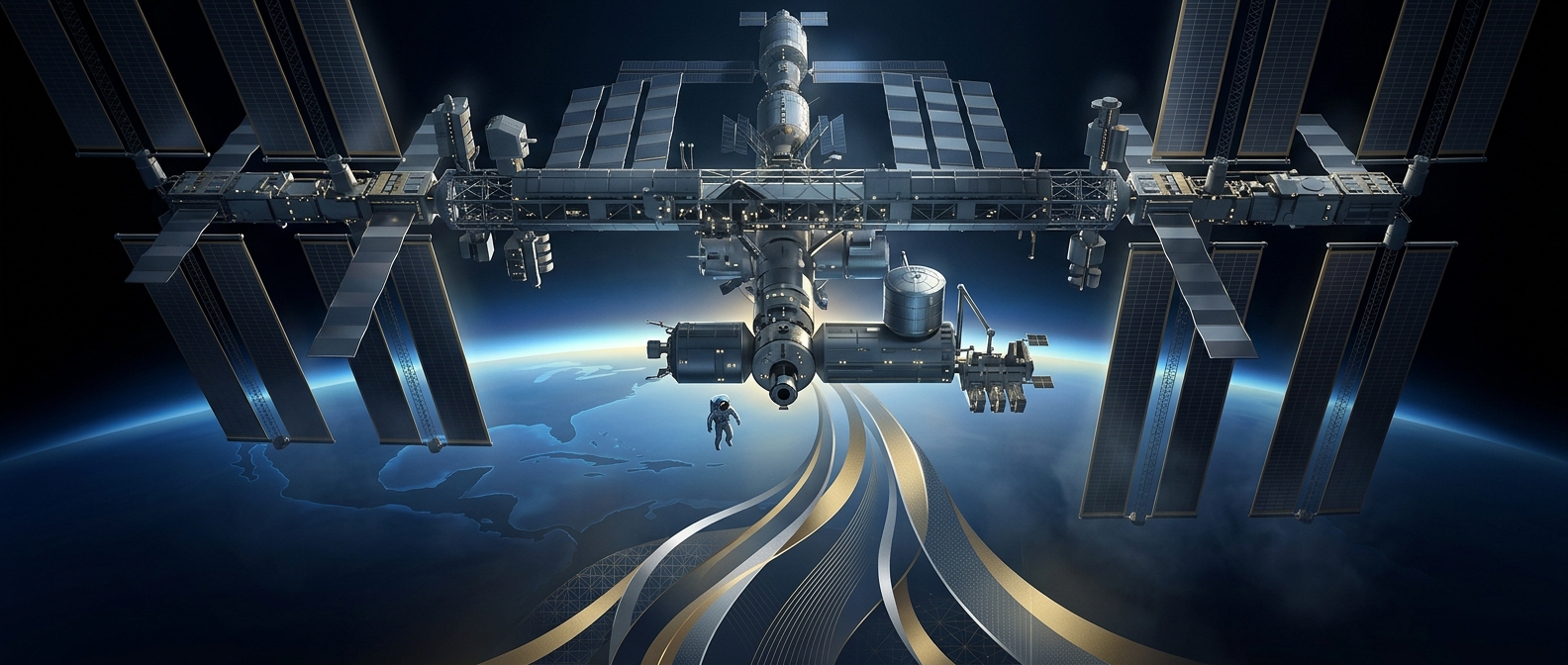
Why building in orbit costs so much
A space station cannot be delivered as one finished building. Its components must fit inside launch vehicles, survive the trip, and connect reliably after arriving in orbit. That makes the project less like ordinary construction and more like designing a set of interdependent machines that must work in an unforgiving place.
Every kilogram sent upward competes for scarce launch capacity. Engineers therefore face a costly tradeoff: make equipment lighter, or add mass for strength, shielding, and backup systems. And because astronauts live aboard the station, critical hardware must support human life—not merely function briefly and unattended. A failure can be difficult or impossible to repair from the ground.
The bill includes a long chain of work
The roughly $150 billion figure reflects far more than materials bolted together in space. It includes years of engineering, specialized equipment, launches, and the difficult process of joining separate pieces in orbit. Each part has to be designed to work with the others, even when those parts were built and delivered at different times.
That complexity also shapes who pays. The station is an international undertaking, so its costs and technical responsibilities are shared among partners rather than borne by a single builder. Sharing spreads the burden, but it also requires coordination: hardware, launch schedules, and plans for operating the station must fit together across organizations and countries.
The result is a structure whose price comes partly from its location. On Earth, builders can move materials with cranes and repair mistakes on site. In orbit, each component must be launched into place and assembled under constraints that make even a small design change consequential.