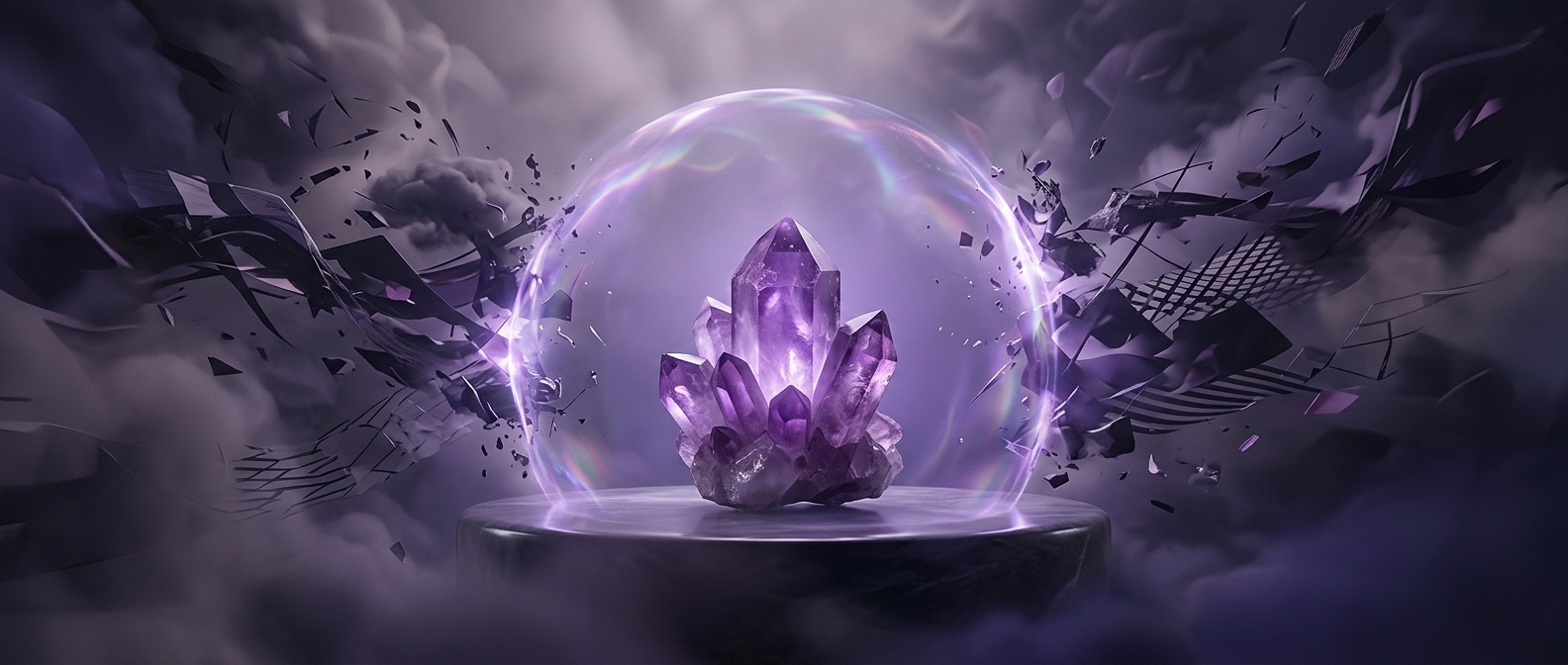
A boundary the mind can picture
A protective bubble turns an abstract intention—“I don’t have to take this in”—into an image that is easy to hold in attention. In a meditation or personal ritual, a practitioner may picture its brightness, shape, or surface, then return to that image when worry or hostility feels overwhelming. The imagined barrier gives the mind a simple focus instead of leaving attention fixed on whatever feels threatening.
Calling the bubble “indestructible” makes the boundary feel steady within the visualization. Its glow can also suggest safety or calm, though the meaning is personal rather than universal. For someone who treats the practice spiritually, the image may express a belief about protection; for someone else, it may be a symbolic exercise in setting emotional limits.
What the image can—and cannot—do
The visualization does not establish that an invisible force is literally blocked. Any benefit is more plausibly understood through ordinary mental processes: pausing, directing attention, and rehearsing a sense of separation from distress. That can help a person feel more composed in a difficult moment, but it cannot make an unsafe situation safe or replace practical boundaries and support.
The useful part of the image is its portability: a person can call it to mind before a stressful conversation or while trying to settle down afterward. The bubble is less a wall around the world than a reminder to choose what deserves attention.