A predator’s bone as a nighttime guard
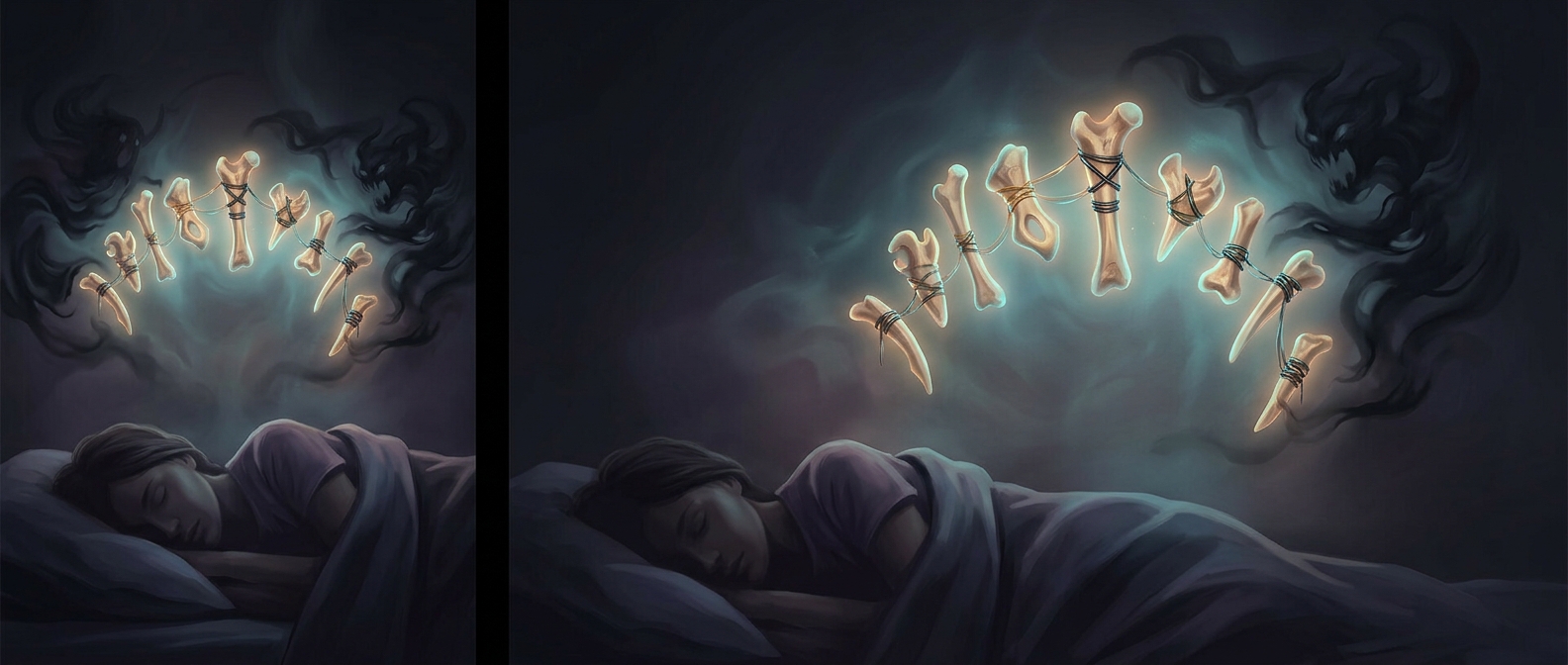
The practice turns a dangerous animal into a protector. A vertebra from a nocturnal predator carried an association with the hours when nightmares were feared; placed under the floor, it was imagined as a hidden guard at the boundary between the sleeper’s room and whatever might threaten them.
The bone was not merely a charm to be worn or looked at. Its position beneath the boards made the protection part of the house itself, close to the bed but out of sight. In this belief, the bone could act on the danger directly, consuming what the sleeper could not face while awake.
A crack made the invisible legible
By morning, a damaged bone could be read as evidence that the night had involved a struggle. The crack gave a visible form to an otherwise unseen threat: something had supposedly approached, and the charm had intercepted it. Shamans interpreted that sign, turning a private, frightening night into something that could be understood within the belief system.
That interpretation depends on the belief, not on a demonstrated physical process. Its striking logic is that the bone’s condition offered a tangible clue about an invisible event—so a small fracture beneath the floor could carry the weight of a warning.