Why the Scarab Became a Sign of Renewal
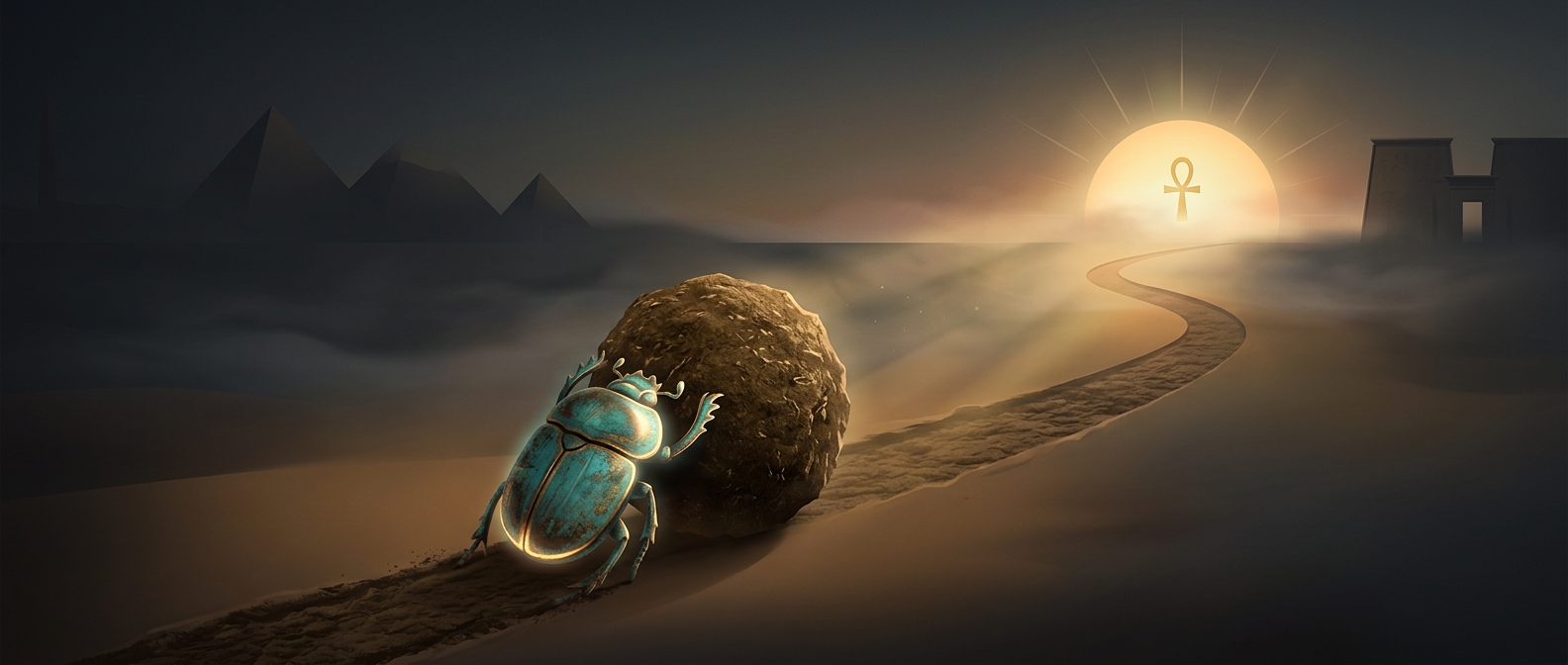
To Egyptian observers, the scarab’s life offered a compact image of transformation. Some dung beetles roll dung into balls and bury them; eggs laid in the buried food give rise to young beetles. The adults seemed to make life emerge from an unlikely source, a pattern that resonated with Egyptian ideas about renewal and becoming.
The connection also had a visible daily counterpart. The beetle’s round ball could be read as an earthly echo of the sun, which appeared to travel across the sky and return each morning. The sun god Khepri—whose name is associated with coming into being—was often represented as a scarab or as a man with a scarab for a head. The image linked the beetle’s apparent act of creation with the sun’s recurring appearance.
From Symbol to Personal Amulet
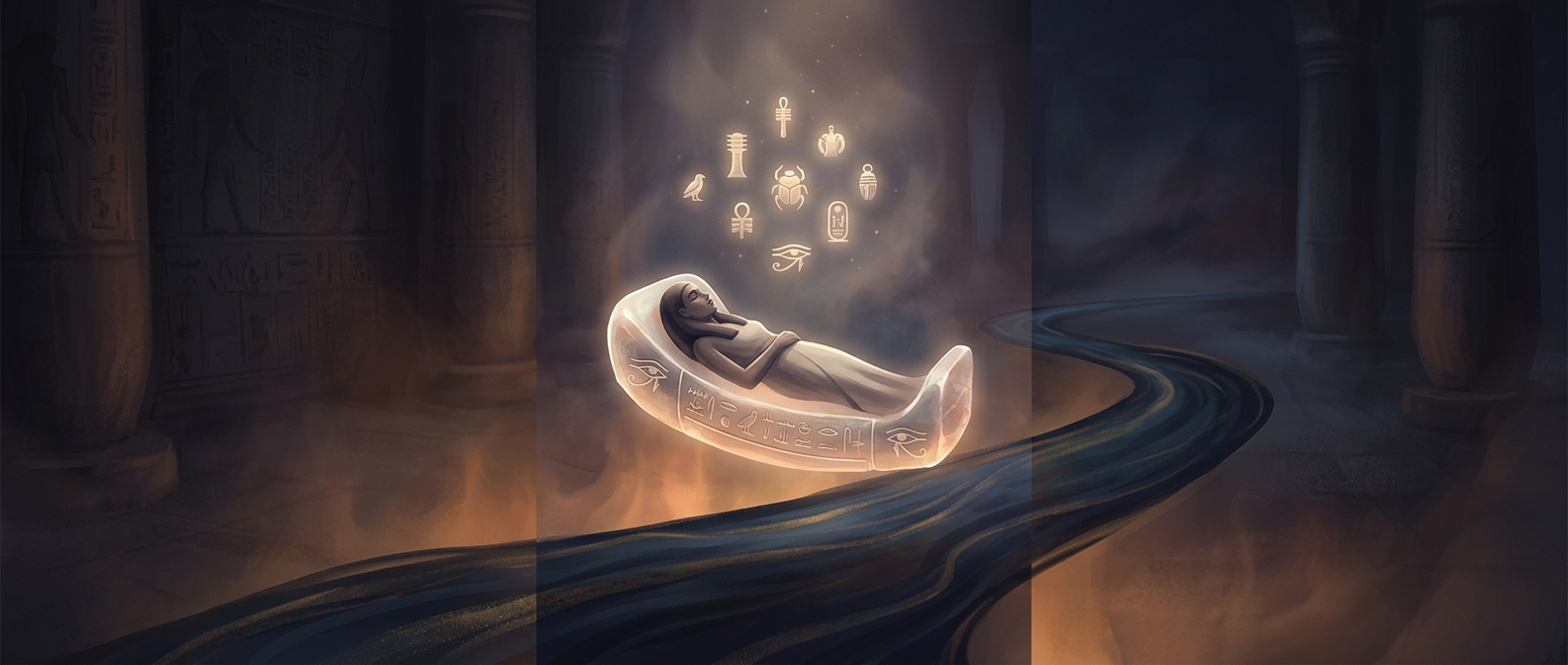
A scarab amulet made that symbolism portable. Egyptians wore and carried small scarab-shaped objects, which could also serve as seals. The shape did more than identify an insect: it invoked a force associated with life beginning again. In funerary settings, scarab imagery could express hope for renewal after death, fitting the broader Egyptian concern with preparing the dead for another existence.
The beetle was not revered simply because it handled dung. Its behavior supplied a memorable visual analogy: a creature appeared to shape a round object, hide it in the earth, and bring forth new life. That cycle made the scarab a natural emblem for a world in which endings could lead to beginnings.