When a Doll Becomes More Than an Object
A doll can carry two histories at once: the ordinary history of who made or owned it, and the unsettling story later attached to it. In some European collections, owners have said they heard dolls breathe or saw their faces change in the dark. Such accounts turn a familiar toy into something people may approach with fear—or treat as a presence that needs to be contained.
What Blessed Glass Means
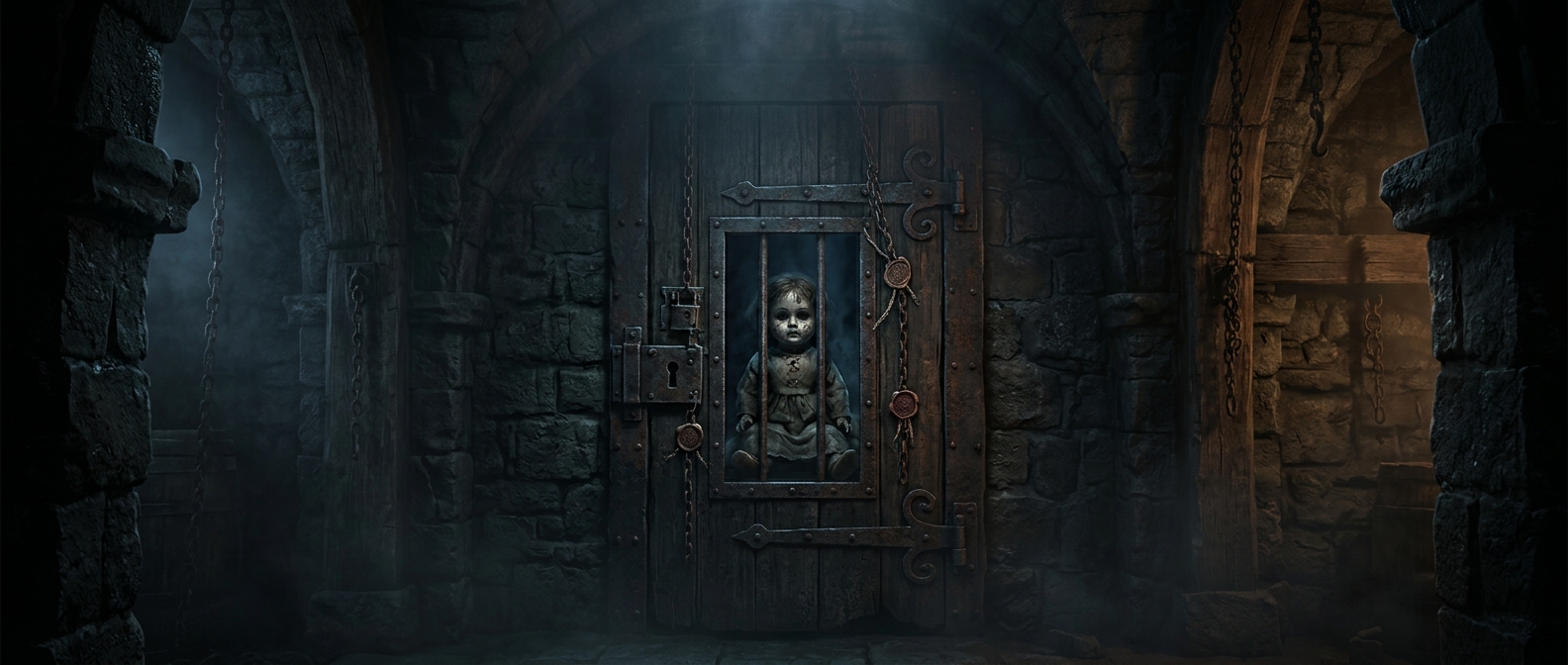
Keeping a doll behind glass creates a visible boundary: visitors can look, but cannot touch. The glass also helps protect a fragile object from handling and its surroundings. When glass is blessed, the act reflects a religious request for protection; it does not change the glass’s physical properties. The practice brings museum display and personal belief into the same space, without requiring every visitor to accept the story as fact.
That boundary is part of what makes the display compelling. The doll remains plainly visible, yet sealed away—as though the collection is preserving not only an object, but also the unease that has gathered around it.