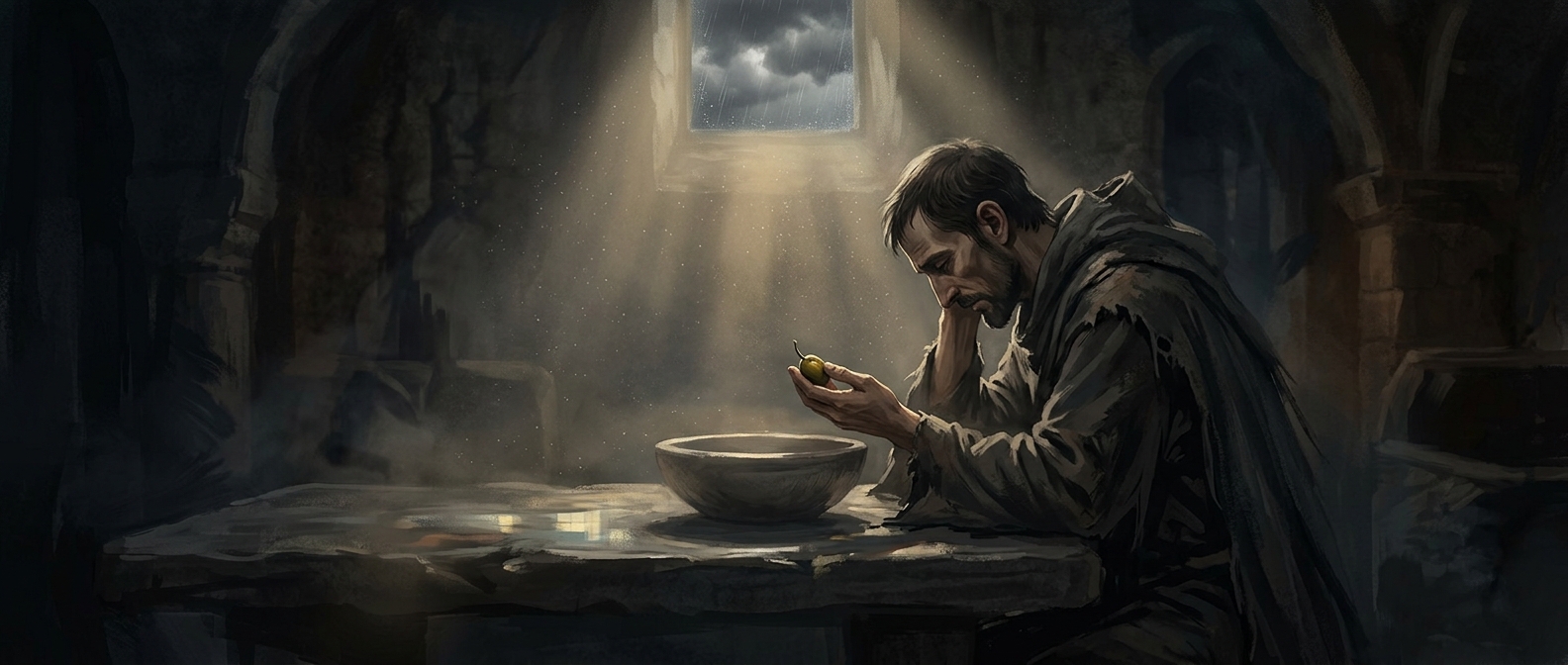
Silence Was Part of the Discipline
Columbanus’s monastic rule treated speech and laughter as matters of spiritual training, not merely etiquette. In a monastery organized around prayer, work, and obedience, noisy or playful behavior could disrupt the shared routine and draw attention away from religious practice. The rule therefore made even ordinary lapses—such as laughing or speaking loudly—subject to physical punishment.
A Rule for Restraining the Self
The logic was characteristic of severe early medieval monastic discipline: small, visible actions were treated as opportunities to practice restraint. A monk was expected to govern not only major choices but also impulses that might seem harmless, including the urge to joke or call out. The whip made the rule’s boundary unmistakable and turned correction into a bodily consequence.
That does not mean every monastery followed Columbanus’s rule in precisely the same way. It was a demanding code associated with his communities, and its penalties show how far their ideal of obedience could reach. A casual grin, in that setting, was not simply a private expression; it could be read as a failure to maintain the discipline expected of the whole community.
The striking consequence is how thoroughly the rule brought everyday behavior under spiritual authority: even a moment of amusement could become an offense to be corrected.