Why the village oven belonged to the lord
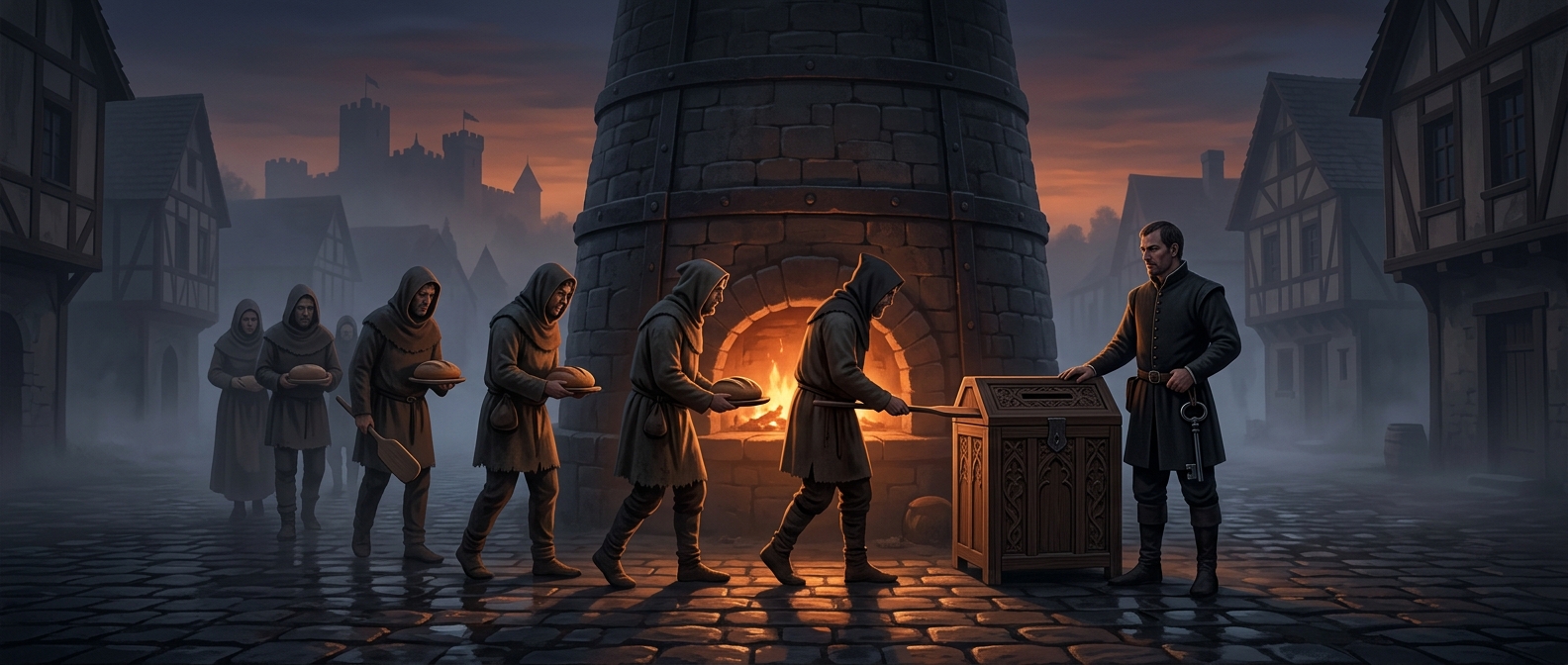
In parts of medieval Europe, banalités were the lord’s rights to control certain essential facilities and require people on his land to use them for a fee. A bake oven could be one of them. Instead of building and firing an oven at home, a household might have to bring its dough to the lord’s oven and pay for baking.
The arrangement turned a basic piece of infrastructure into a source of income and authority. A large communal oven took materials, space, fuel, and upkeep; concentrating baking there also let the lord enforce his claim to the service. For villagers, the obligation could mean paying in money or in kind, depending on local practice.
A fee built into making bread
Bread was a daily staple, and baking required more than mixing flour and water: an oven had to be heated and managed. A household subject to the rule could prepare dough at home, but the final step—and its cost—was not necessarily its choice. The fee made the lord’s right tangible at the point when food became ready to eat.
Banalités varied by place and period, so this was not a universal rule for every medieval peasant. Where it applied, though, the communal oven was more than a convenience: it was a controlled bottleneck. Even a meal made from a family’s own grain could carry a charge because the household had to use someone else’s oven.