How tiny image changes can redirect a diagnosis
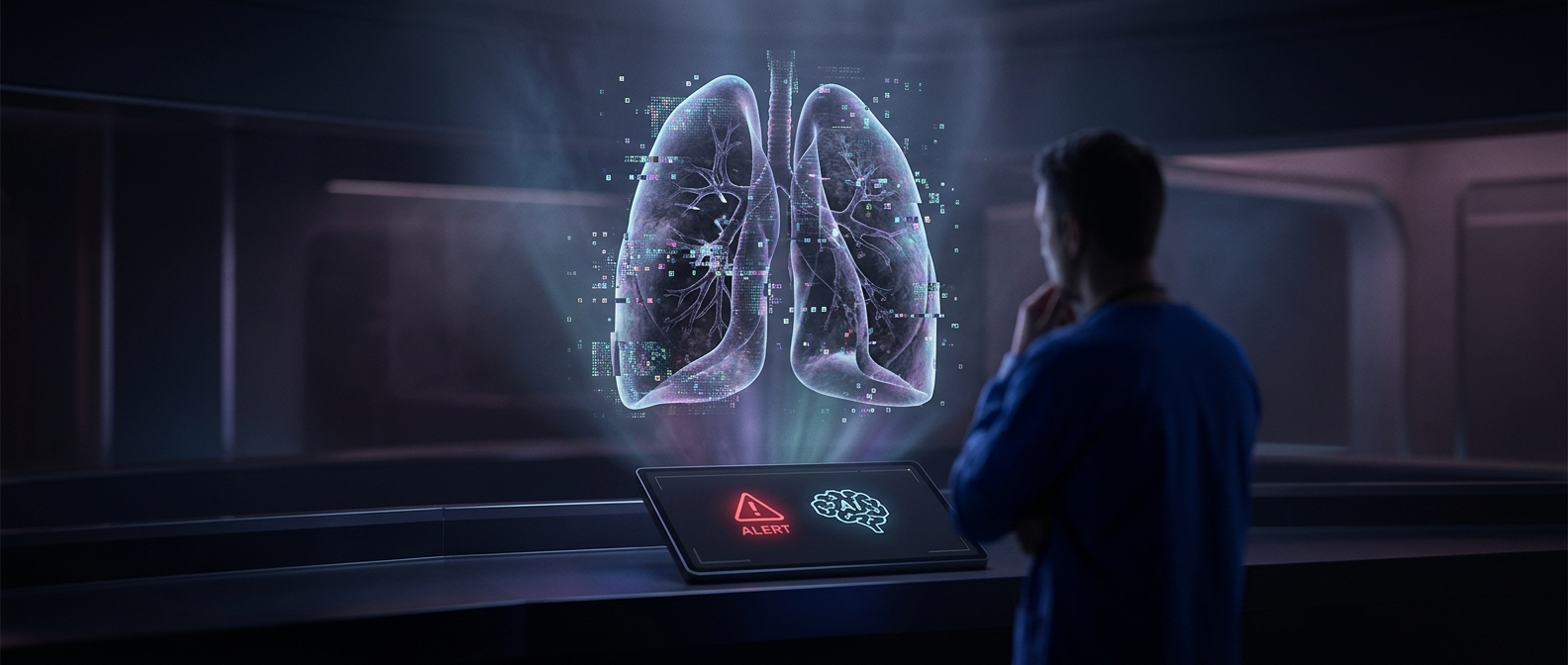
An image-recognition system does not see an MRI the way a radiologist does. It converts the scan into a grid of pixel values and uses patterns learned during training to assign a label. A mathematical noise pattern can alter those values by small amounts, arranged so they collectively push the model toward a different answer—even when the changes are too subtle for a person to notice.
This is more than simply making an image look grainy. The pattern is chosen to exploit the model’s decision boundary: the point at which its calculated evidence favors one category over another. A small shift in the input can cross that boundary, while the scan’s visible anatomy appears unchanged.
Why the mismatch matters
People tend to judge whether an image still looks like the same scan. A model, however, may rely on combinations of fine-grained numerical cues that are difficult to interpret. Those cues can be useful in ordinary cases yet make a system vulnerable to carefully crafted inputs. The demonstration exposes a gap between what looks unchanged to a clinician and what counts as evidence to the algorithm.
That gap matters if AI is used to flag suspicious scans or help prioritize cases: an unreliable output could misdirect attention. But a demonstration is not evidence that ordinary scans routinely contain such patterns, or that a deployed system will fail in the same way. Real clinical tools operate within specific imaging and review workflows.
Testing for failures, not just accuracy
A model’s performance on typical test images does not by itself show how it will respond to unusual inputs. Developers can probe that weakness with deliberately altered images and test whether the system remains stable. They can also examine how a model behaves when image quality varies and keep qualified clinicians involved in interpreting results.
The practical lesson is that a medical AI’s answer depends not only on what a scan depicts, but also on how the model converts its pixels into a decision.