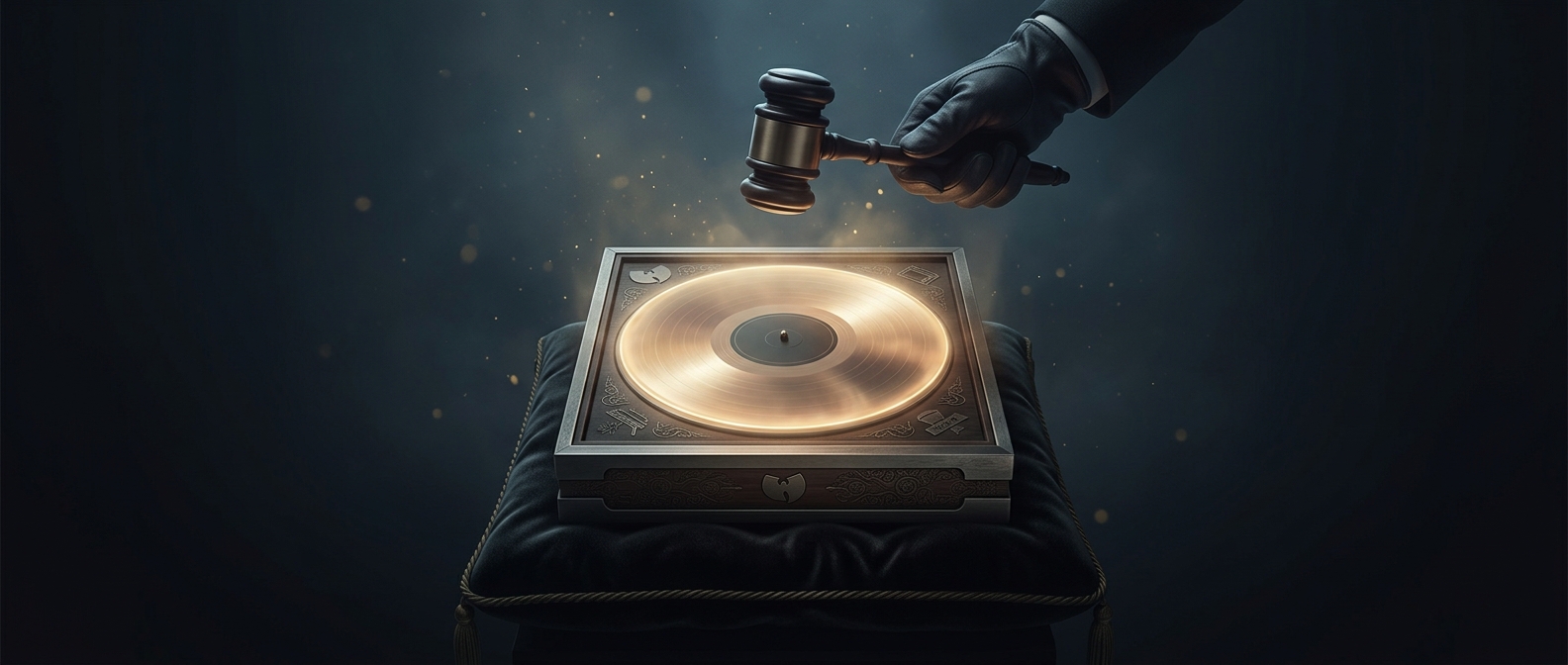
An album designed as an object
Wu-Tang Clan’s Once Upon a Time in Shaolin was conceived as the opposite of a mass-market release. Instead of pressing copies for stores or streaming services, the group made one physical edition, housed in an ornate silver-and-nickel box. The scarcity was part of the work: listeners would encounter it not as an easily copied file but as a singular artifact.
That approach also changed what it meant to buy the album. The buyer would possess the one copy, but the purchase did not grant ordinary permission to publish or sell the music. The contract barred commercial release for decades, while allowing the owner to listen to it privately.
The auction made the constraint part of the story
The album was sold at auction in 2015 and purchased by pharmaceutical executive Martin Shkreli. The unusual terms meant the sale could generate a headline-making price without immediately putting the music on the market. Ownership of the object and the right to distribute its contents were deliberately kept separate.
That distinction turned the album into a test of how value works when music can be copied at almost no cost. A conventional record earns value through access to many listeners; this one sought value through rarity, craftsmanship, and the possibility of private possession. Its legal restrictions were not an afterthought—they were what made the one-copy idea hold together.
Shkreli later forfeited the album after his criminal conviction, and the U.S. government sold it in 2021. The work’s path from a carefully boxed musical artifact to a government auction shows the tension built into the project: a single owner could hold the object, but the contract and the law could still shape what happened to the music.