The Locker Is a Puzzle With Missing Pieces
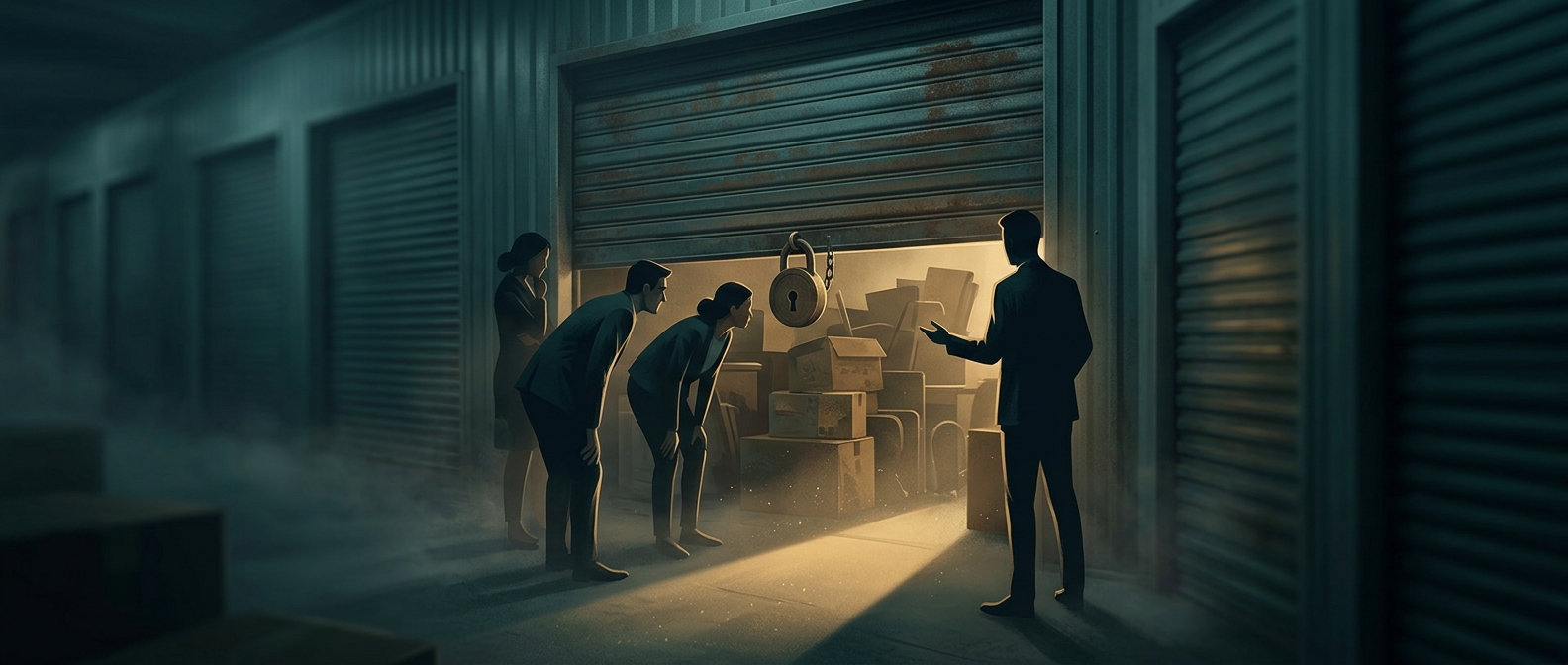
The auction format turns a storage unit into an incomplete inventory. From the doorway, bidders can judge visible objects—furniture, boxes, tools—but they cannot know whether a sealed carton holds something valuable or old receipts. That gap is the central wager: buyers have to assign a price to what they can see while allowing for what they cannot.
A glimpse can be misleading in either direction. A promising object may be damaged or incomplete; an ordinary-looking pile may contain items worth reselling. Dust and tarps make the contents harder to assess, but they do not make hidden value more likely. The buyer is deciding under uncertainty, not solving a puzzle with a guaranteed prize.
Winning the Bid Starts the Work
The bid buys the contents, not a promise of profit. The winner must sort through the locker, identify anything saleable, and deal with what is left. That makes time and cleanup part of the cost, alongside the purchase price. Even a unit with valuable finds can be a poor bargain if its contents are difficult to move or sell.
This is also why the reveal matters as entertainment. The auction creates suspense from a real information gap, while the sorting afterward tests whether the bidder’s judgment was sound. The dramatic question is not just “What’s inside?” but “Was that glimpse worth the risk?” A locker full of paperwork can turn a confident bid into a costly lesson in how little a doorway can tell you.