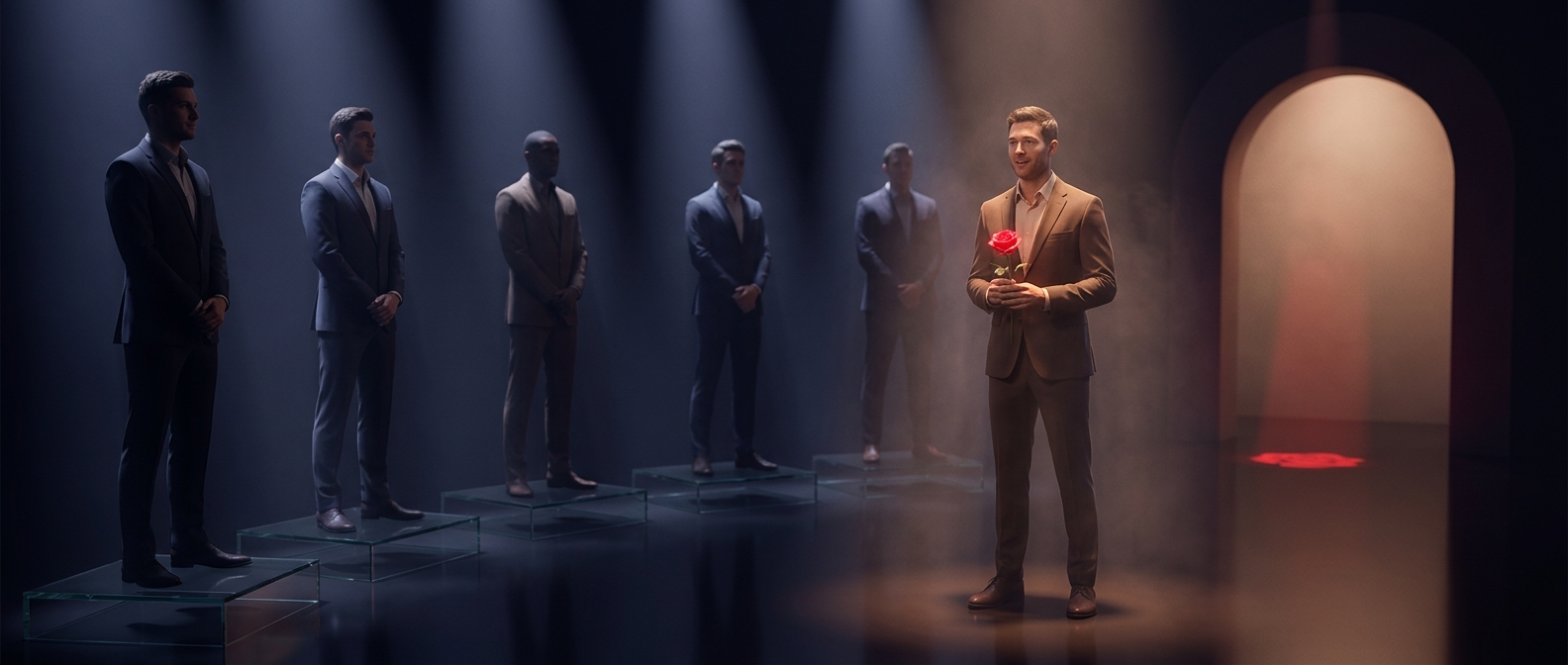
A courtship with two audiences
A televised dating competition asks contestants to do more than pursue a relationship. They are also performing for viewers who may judge their sincerity, charisma, and prospects after the season ends. The promise of marriage addresses the person they hope to win; the cameras make that promise a public statement, too.
That creates a built-in tension. A contestant can genuinely want a lasting relationship and still recognize that appearing on a popular show may bring attention afterward. Those motives are not automatically incompatible, but the format makes them hard to separate: viewers see declarations and decisions, not the private calculations behind them.
The cameras change the courtship
In ordinary dating, two people can build trust gradually and away from an audience. On a competition show, time with the lead is limited, rivals are present, and conversations become material for an edited story. Contestants therefore have reason to make their feelings legible—to the lead, but also to the audience deciding who seems authentic.
The result is a relationship pursued under unusually public conditions. A contestant’s stated goal may be marriage, while the show’s structure also offers a platform that can have value beyond the final choice. The format turns sincerity into something contestants must both feel and demonstrate on camera. That is why viewers can watch the same declaration as a romantic commitment and as part of a public performance.