Why criticism can turn into a fight on Kitchen Nightmares
A restaurant owner hearing that food is unsafe or a kitchen is dirty is not receiving neutral feedback. The criticism reaches the person who chose the menu, hired the staff, and built a business around a particular way of doing things. A blunt challenge from Gordon Ramsay can therefore feel like an attack on the owner’s competence and identity—not just a note about a plate of food.
That helps explain why an argument may erupt even when the problem seems obvious to viewers. Changing a kitchen routine or replacing familiar food can also mean admitting that past decisions were wrong, while the business is already under pressure. Defensiveness can become a way to protect those decisions, at least in the moment.
The camera changes the stakes
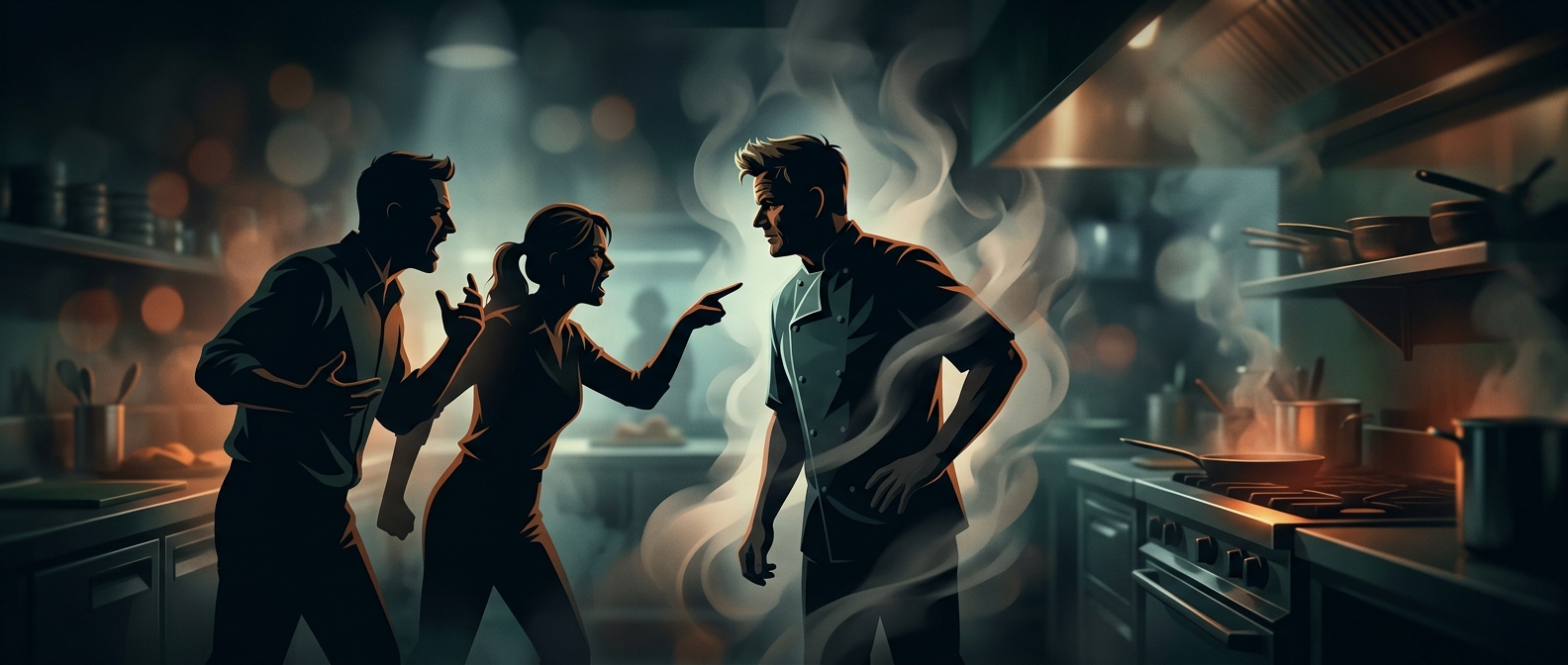
The show makes the disagreement visible to an audience. Ramsay’s forceful criticism and the owners’ responses create a clear clash: one person is demanding change, while the people responsible for the restaurant resist it. In that setting, a correction that might otherwise lead to a quiet discussion can become a confrontation on camera.
The conflict also gives the program a story to follow. Viewers can see the gap between what an owner believes about the restaurant and what the inspection reveals, then watch whether that gap closes. The argument is not proof that the owners do not care; it can show how hard it is to accept criticism when a failing business is also deeply personal. A dirty kitchen or unsafe dish is a practical problem, but admitting it can feel like a verdict on the person who runs the place.