The comeback was part of the game
NBA Jam was built for quick, dramatic arcade matches, not just a neutral test of shooting skill. Its hidden comeback adjustments could tilt the odds toward the team that was behind: shots that had been easy for the leader might start missing, while the trailing side found it easier to score.
That shift made a lopsided game feel recoverable. A player who fell behind could suddenly string together baskets, turning the score into a contest again instead of a foregone conclusion.
Why the flaming ball mattered
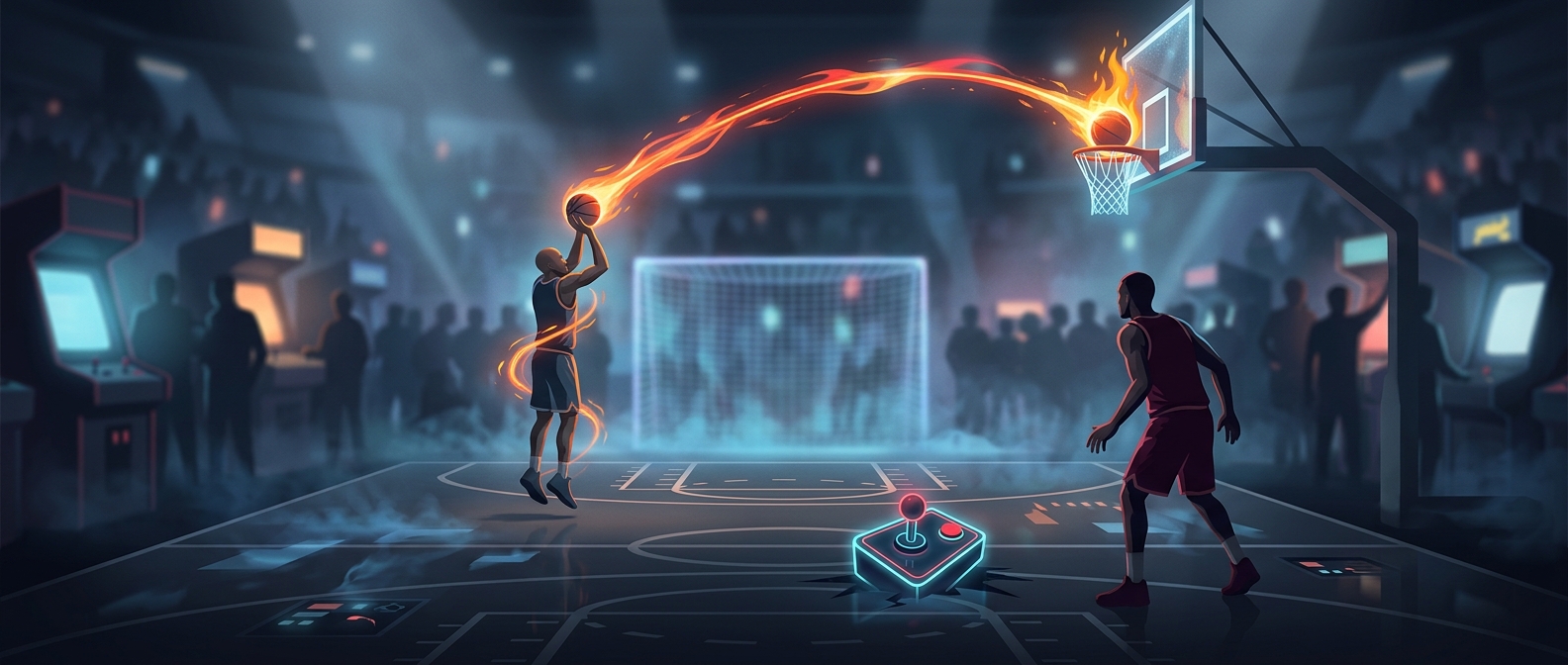
The flaming ball signaled a separate momentum boost. After a player scored several baskets in a row without the other team answering, that player went “on fire.” Shots became much more reliable, including attempts from far beyond the usual shooting range.
Together, the comeback adjustment and the on-fire streak made NBA Jam’s swings feel spectacular. The trailing team might still need to take the risk and make the shots—but the game gave it a better chance to turn a runaway score into a last-second finish.