A license problem became a design problem
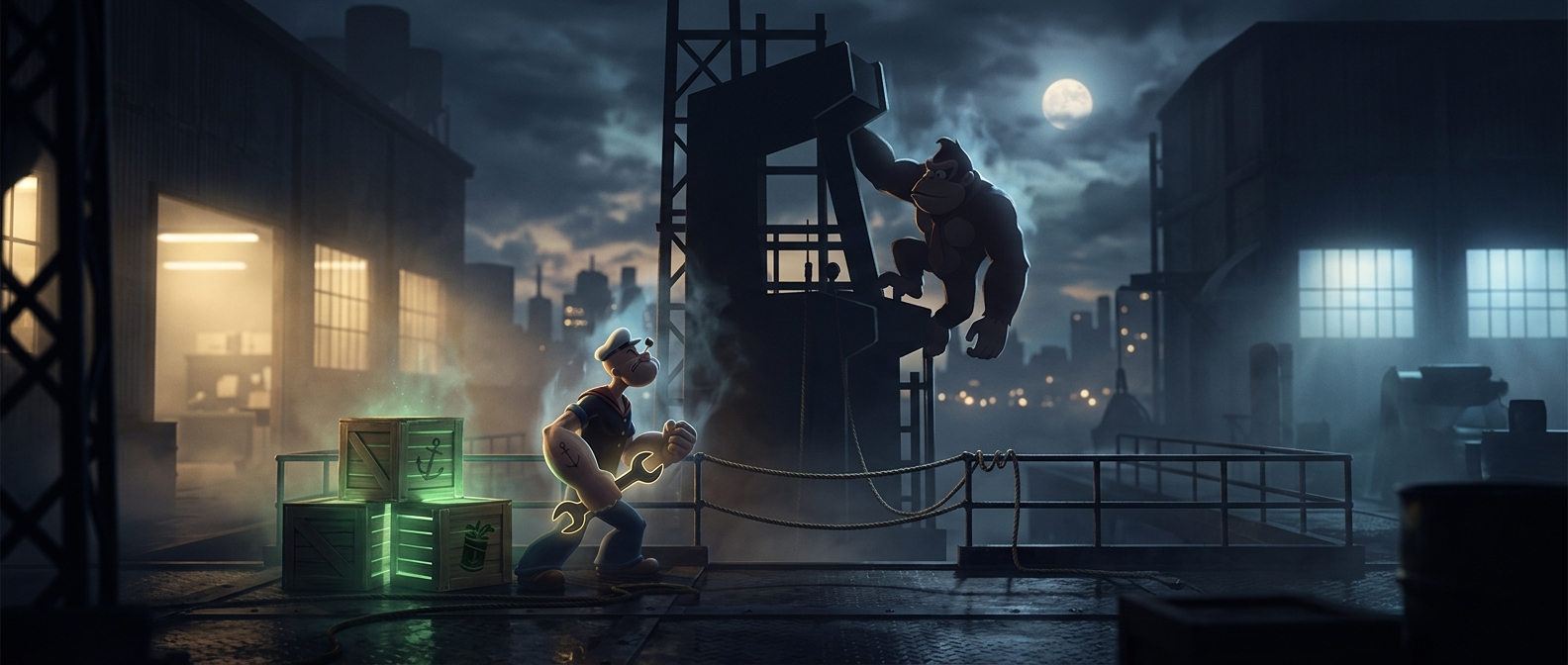
Nintendo had planned an arcade game built around Popeye, Bluto, and Olive Oyl, but the studio could not secure the rights to use those characters. Rather than abandon the project, its designers had to preserve the basic dramatic setup—a hero trying to reach a captive woman while a powerful rival gets in the way—without relying on the familiar cast.
Shigeru Miyamoto, then an emerging game designer at Nintendo, helped create a new trio for that structure: a small hero, a woman in danger, and a hulking ape. The player character was first known as Jumpman; the woman became Pauline, and the ape became Donkey Kong. The characters were not simple visual stand-ins: they gave Nintendo original figures it could develop and reuse.
The constraint shaped the play
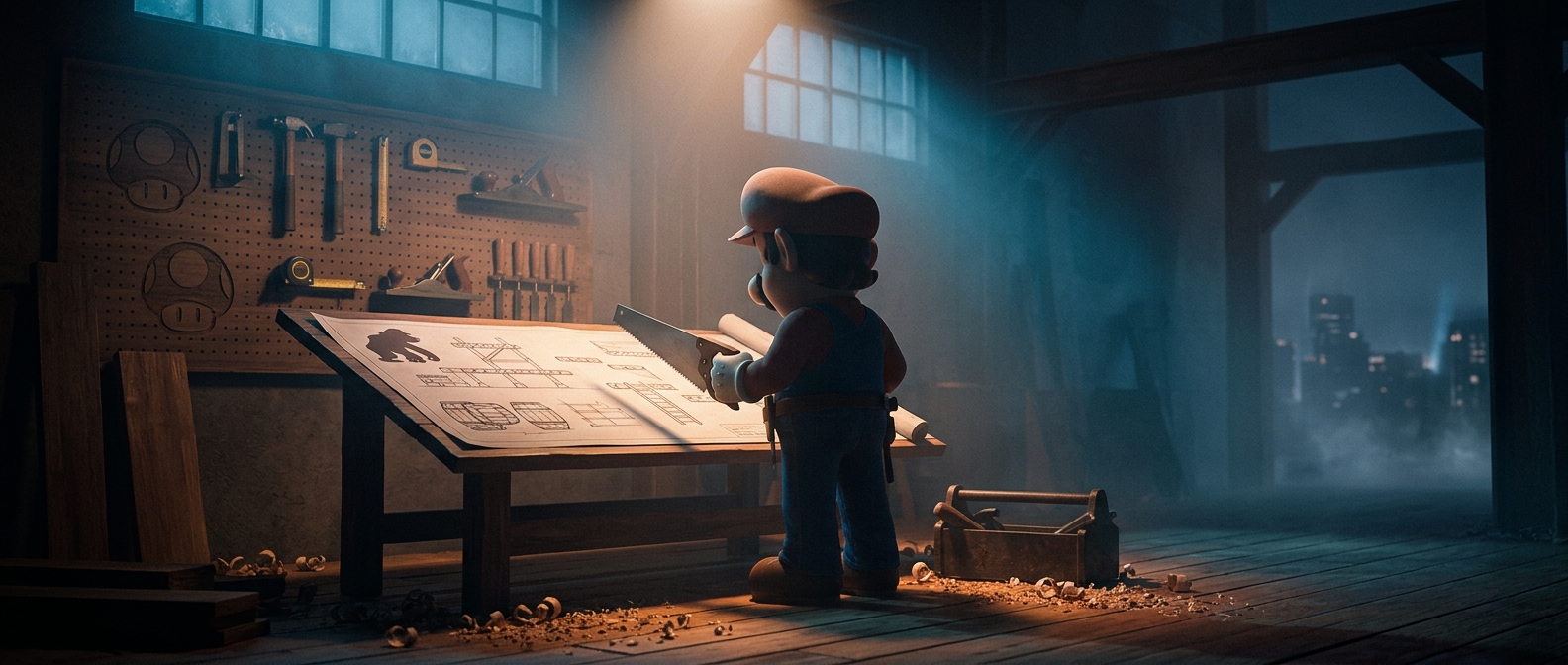
The Popeye premise had suggested a recognizable conflict, but the new game had to communicate its story largely through action and a few arcade images. Donkey Kong’s ladders, platforms, rolling barrels, and jumps made the pursuit legible without dialogue: the player climbed toward Pauline while dodging hazards sent down by the ape. The villain’s size and the hero’s vulnerability did much of the storytelling on screen.
That shift also gave the game a distinct identity. Donkey Kong was not just a substitute title for a licensed cartoon; its characters and obstacles were designed around the arcade’s central challenge. The rights setback helped turn a planned adaptation into the beginning of a durable Nintendo cast—and the hero who started as Jumpman would later become known as Mario.