How Pac-Man Made Eating a Game of Chase
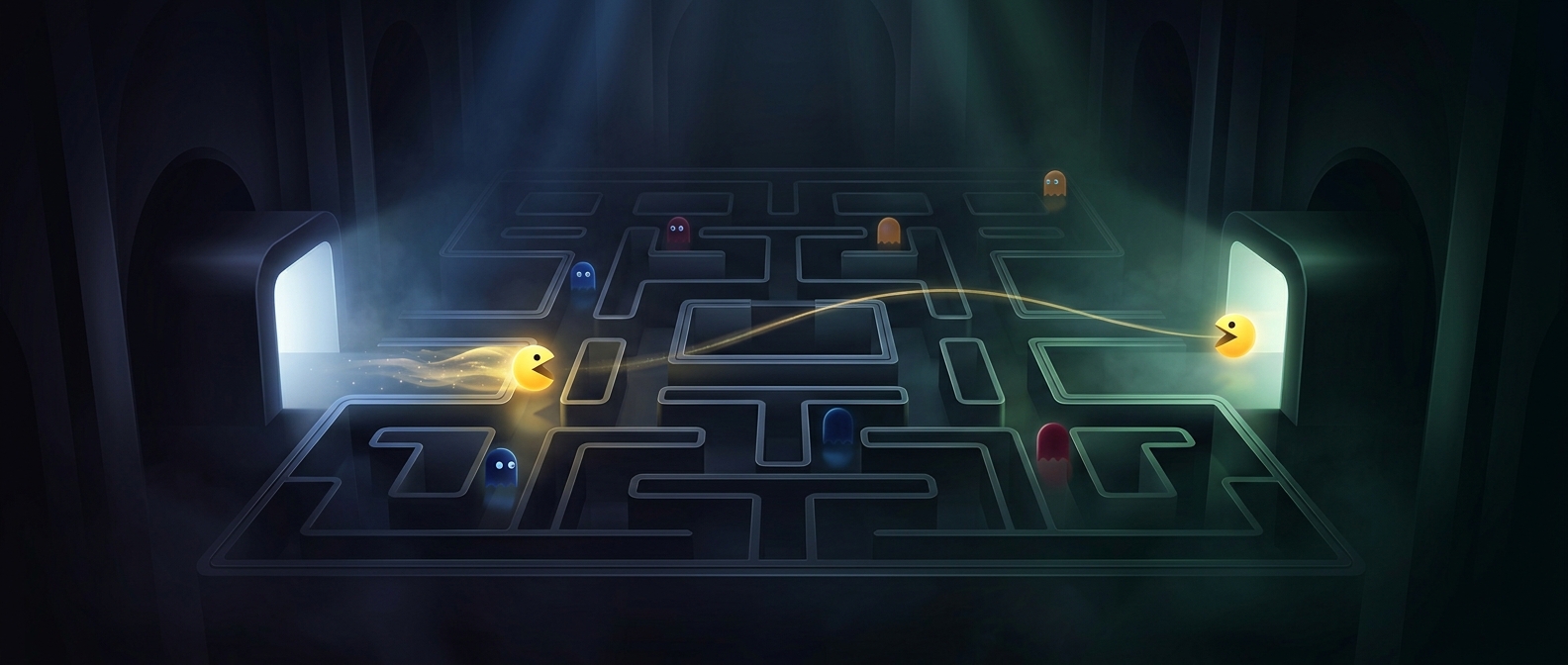
Pac-Man’s central design move was to turn a maze into a route-planning problem. Dots scattered through the corridors gave the player a clear task: keep moving, choose which branch to clear next, and avoid being cornered by pursuing ghosts. The goal was instantly legible without asking players to aim or learn a complicated set of controls.
That simple loop also made every turn consequential. A corridor the player had already cleared offered little reward, while an unfinished stretch still held dots—and potential danger. The maze was not just scenery; it shaped decisions about when to advance, when to change direction, and how much risk to take for the remaining points.
The Power Pellets Change the Balance
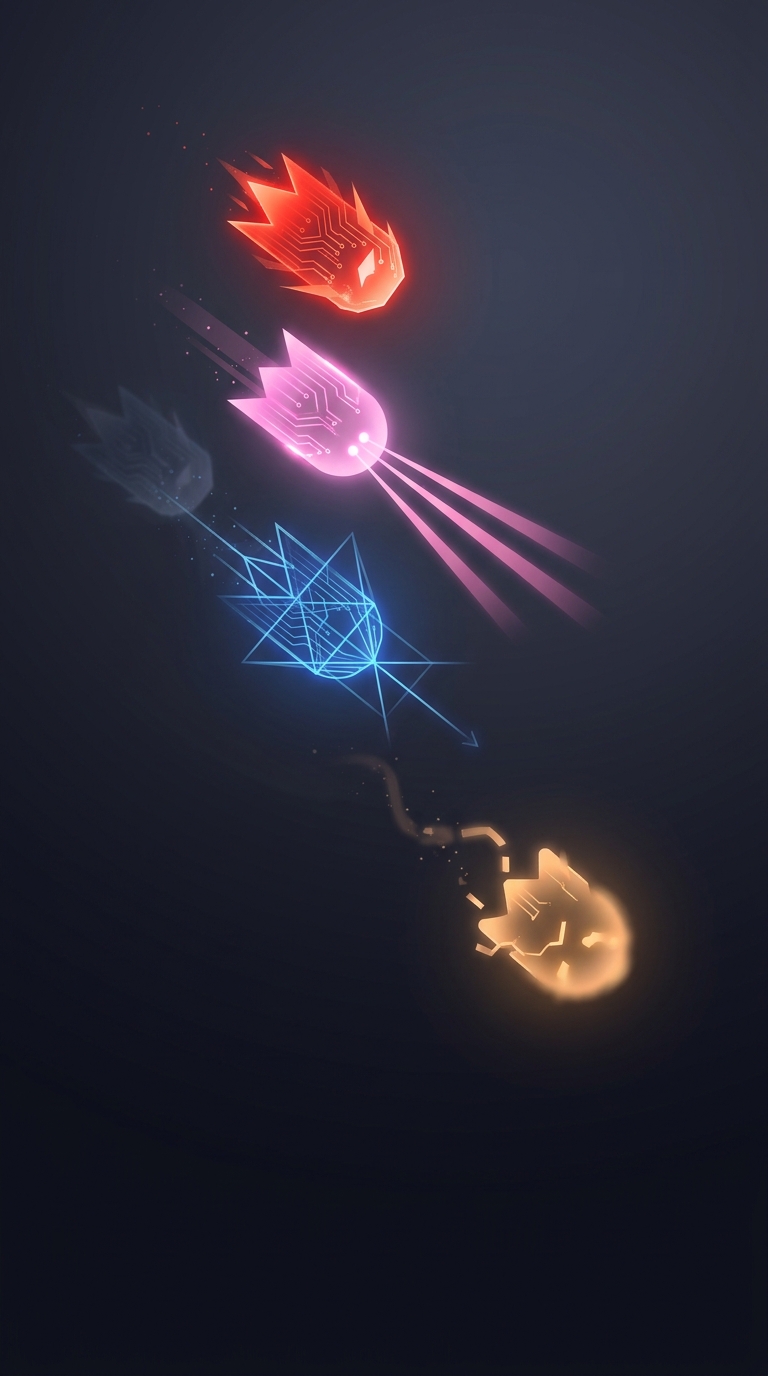
Large power pellets briefly reverse the chase. Instead of fleeing, Pac-Man can pursue the ghosts, turning a defensive maze run into a short opportunity to strike back. Because that advantage does not last, the player must decide whether to use it immediately or make a risky dash toward a better position.
This reversal gives the game a rhythm: steady collection, mounting pressure, then a brief burst of control before the chase resumes. Pac-Man’s appeal comes partly from making one basic action—moving through a maze—feel different as the balance of danger shifts. Its non-shooting approach did not remove tension; it made tension come from navigation, timing, and knowing when the hunter had become the hunted.