Why Pac-Man’s perfect score has a fixed ceiling
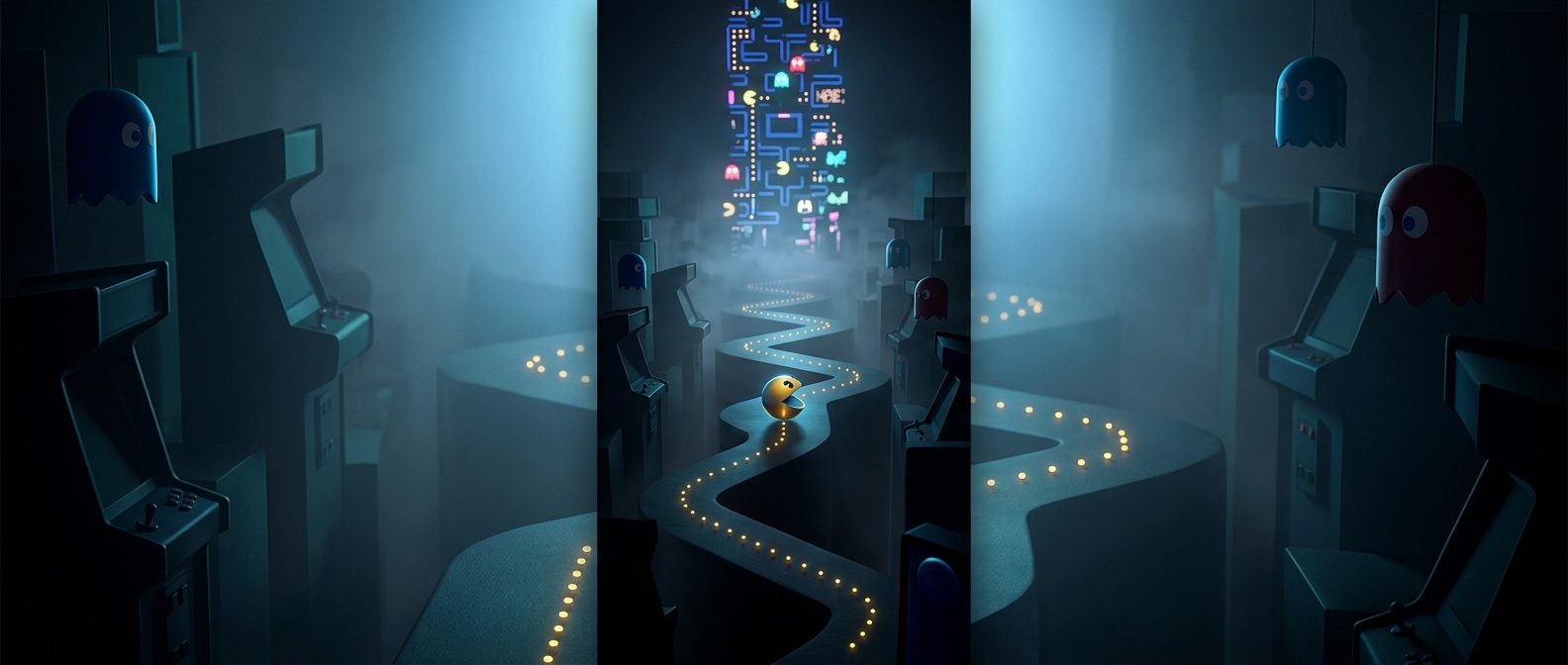
The original Pac-Man does not end with a bonus for finishing the game. Its top score comes from collecting every point the game makes available across a run: maze dots, power pellets, fruit, and the ghosts eaten while a power pellet is active. The ghost bonus climbs with each one eaten in a single power-pellet period, so a perfect run has to manage timing as well as clear the maze.
That score is 3,333,360 points—not an arbitrary target, but the total reachable before the original arcade game’s level progression breaks down.
The level 256 wall
After level 255, the game reaches level 256, famous among players as the “kill screen.” A programming error corrupts the maze’s display: one side appears as a jumble of symbols, while the other remains recognizable. The game still runs, but the corrupted side makes a normal, complete maze clear impossible.
That matters because dots are the foundation of the score. A player can be exceptionally skilled and still cannot keep earning points as if the game continued through ordinary, fully playable levels. The ceiling is set by the game’s structure, not by a score counter that simply refuses to go higher.
What “perfect” demands
Reaching the maximum means squeezing every available scoring opportunity out of the playable run, including the high-value ghost chains and level fruit, while not losing a life. It is a route through the game’s scoring rules, not merely a matter of surviving until the final glitch.
The result is a strange kind of finish: Pac-Man’s ultimate achievement is to play flawlessly right up to a level the game itself can no longer properly render.