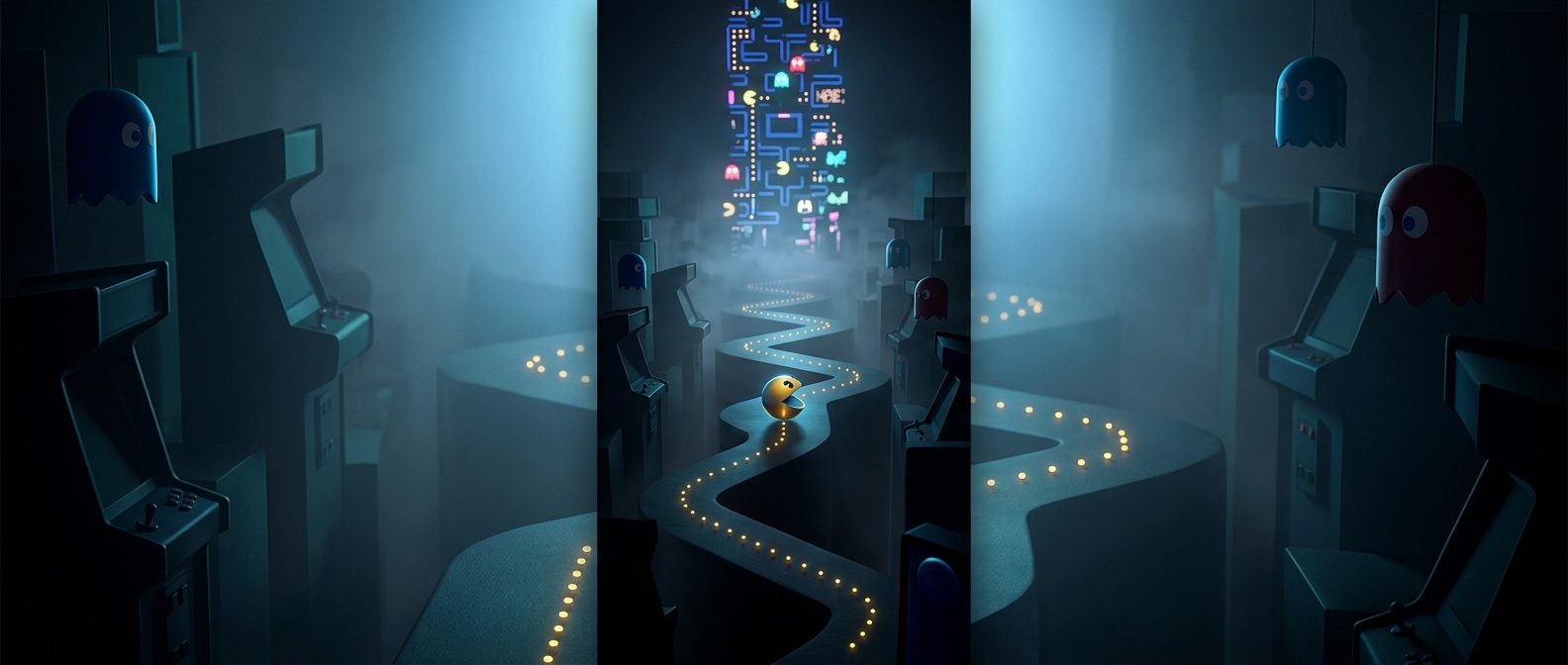
A hallway that loops around the screen
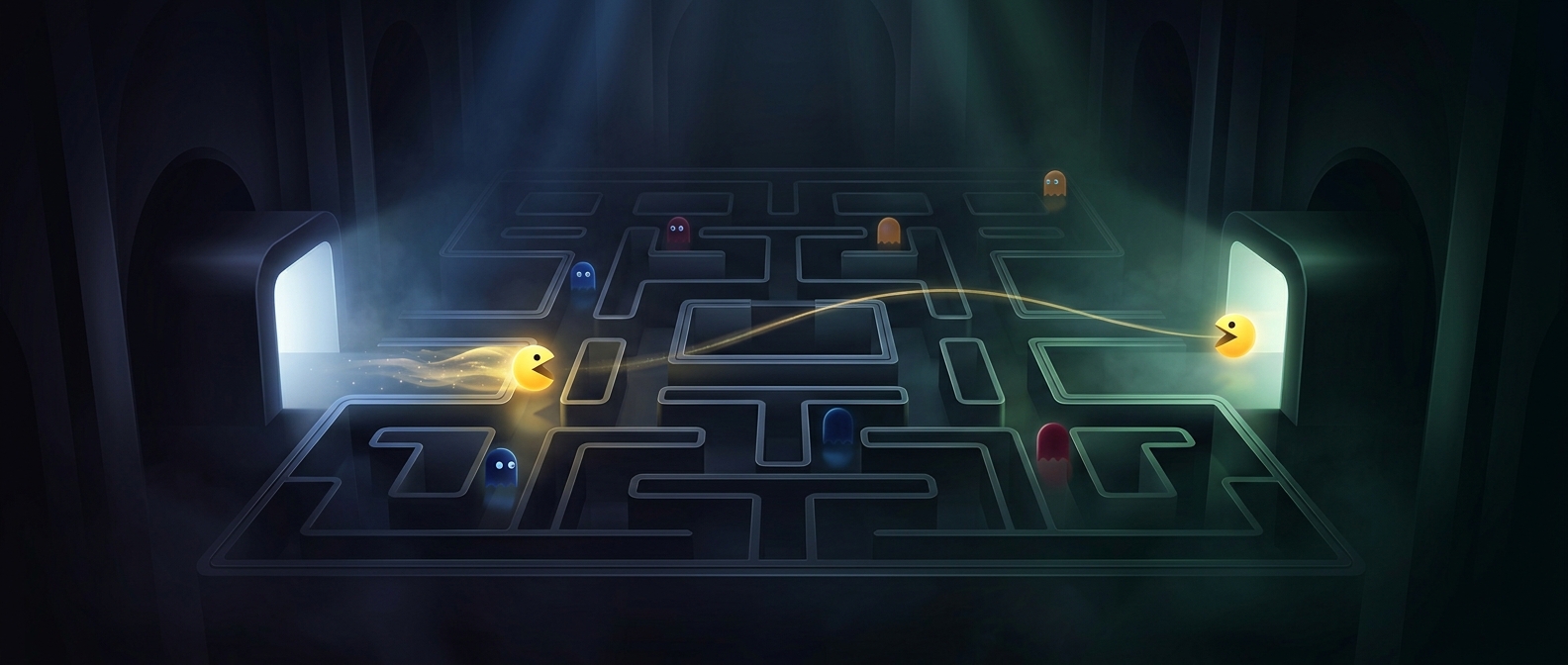
Pac-Man’s side tunnels make the maze behave less like a flat picture and more like a loop. Enter the opening at one edge and Pac-Man reappears at the other, continuing in the same direction. A ghost chasing from behind may have to travel through that same passage—or take a longer route through the maze—to catch up.
That shortcut changes the geometry of a chase. A ghost that looks close on screen may not be close along the available paths, while crossing the tunnel can put Pac-Man behind a pursuer or give him room to turn toward another corridor.
Why the tunnel can buy time
The passage is useful partly because the ghosts do not move through it as effectively as they do through ordinary corridors. Their movement slows there, so a ghost entering behind Pac-Man can lose ground. Their pursuit is also not a perfect, instant response to his position: they follow behavior rules that can leave a brief opening as he crosses or changes direction.
The tunnel is not a safe zone. A ghost can still follow Pac-Man through it, and entering at the wrong moment can trap him between danger and a dead end on the other side. Its value is that it offers a route the rest of the maze’s walls cannot: a short, risky escape that can turn a chase around.