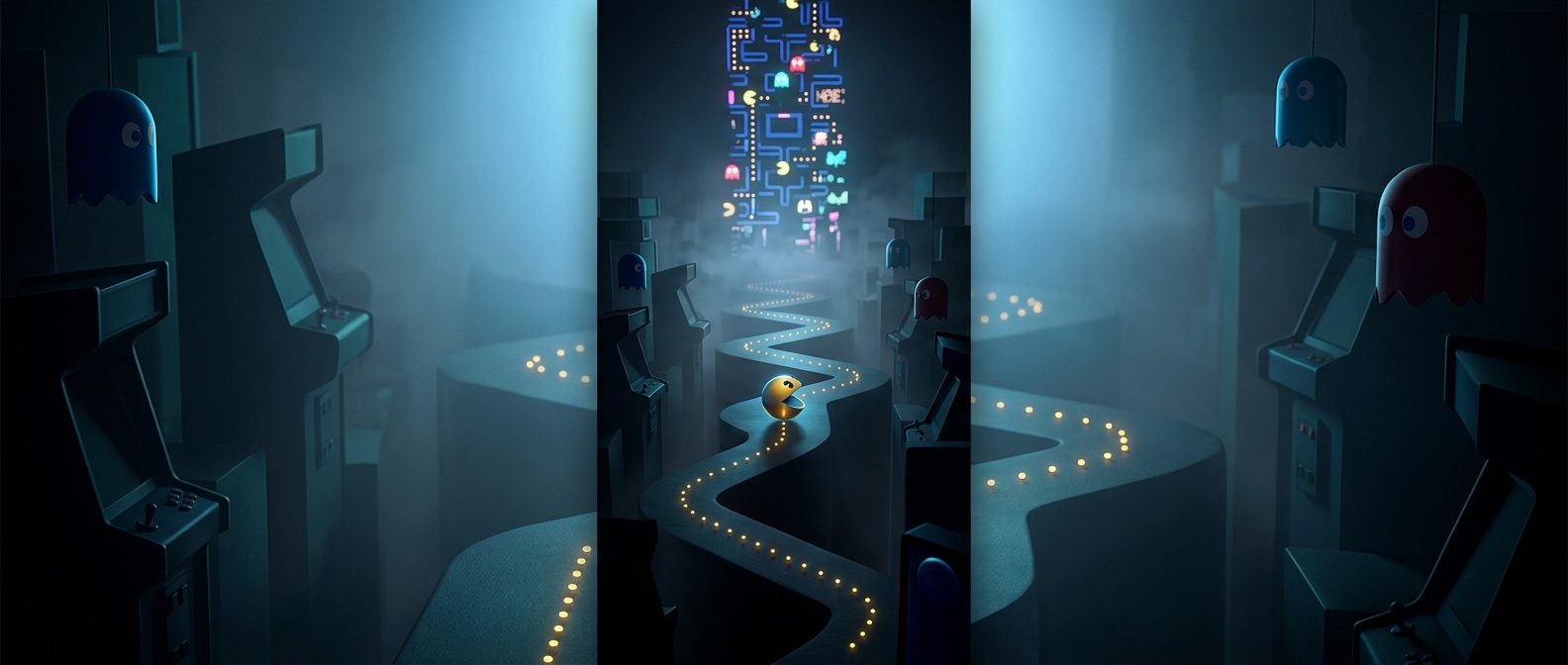
Pac-Man’s ghosts followed rules that felt like personalities
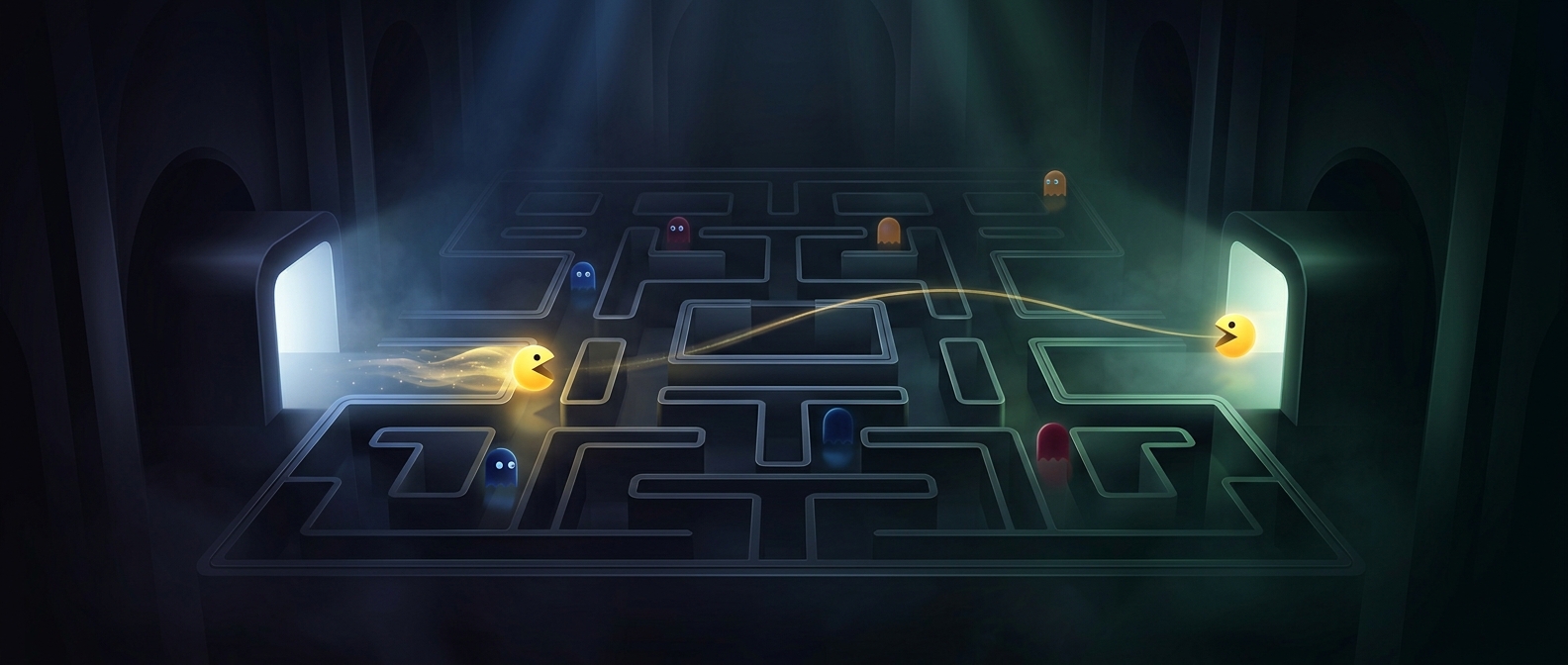
The ghosts in Pac-Man did not need humanlike thought to seem clever. Their movements were governed by simple, different rules—enough to make them look as if they were reading the player’s intentions. One tended to head toward Pac-Man’s current position; another aimed ahead of him, as if trying to cut him off. The others used different combinations of Pac-Man’s and the ghosts’ positions.
That distinction mattered. Four pursuers that all took the shortest route would feel like one obstacle repeated four times. Different targeting rules instead made the maze seem to contain rivals with individual temperaments.
The game quietly changed the pressure
The ghosts also alternated between two broad behaviors: pursuing Pac-Man and heading toward their own corners of the maze. These shifts were controlled by timing, not by a ghost deciding that the player had become too dangerous. The game did not announce the change; a ghost could break off a chase and veer away, then return to pursuit moments later.
That hidden rhythm gave players brief breathing room without making the danger disappear. The rules could also be learned through play: a turn that worked against one ghost might fail against another, while the shifting modes changed when a route felt safe.
A convincing illusion, built from constraints
This was a practical form of arcade intelligence: the ghosts seemed responsive because their simple rules produced different, readable patterns. Their behavior did not have to understand the maze as a person would. It only had to react consistently enough for players to notice patterns—and unpredictably enough that escaping still took skill.
The result turned a maze into a contest of anticipation. Players were not merely running from enemies; they were learning the hidden rules shaping each pursuit, often without knowing that those rules were there.