How Pac-Man’s Ghosts Give Away Their Heading
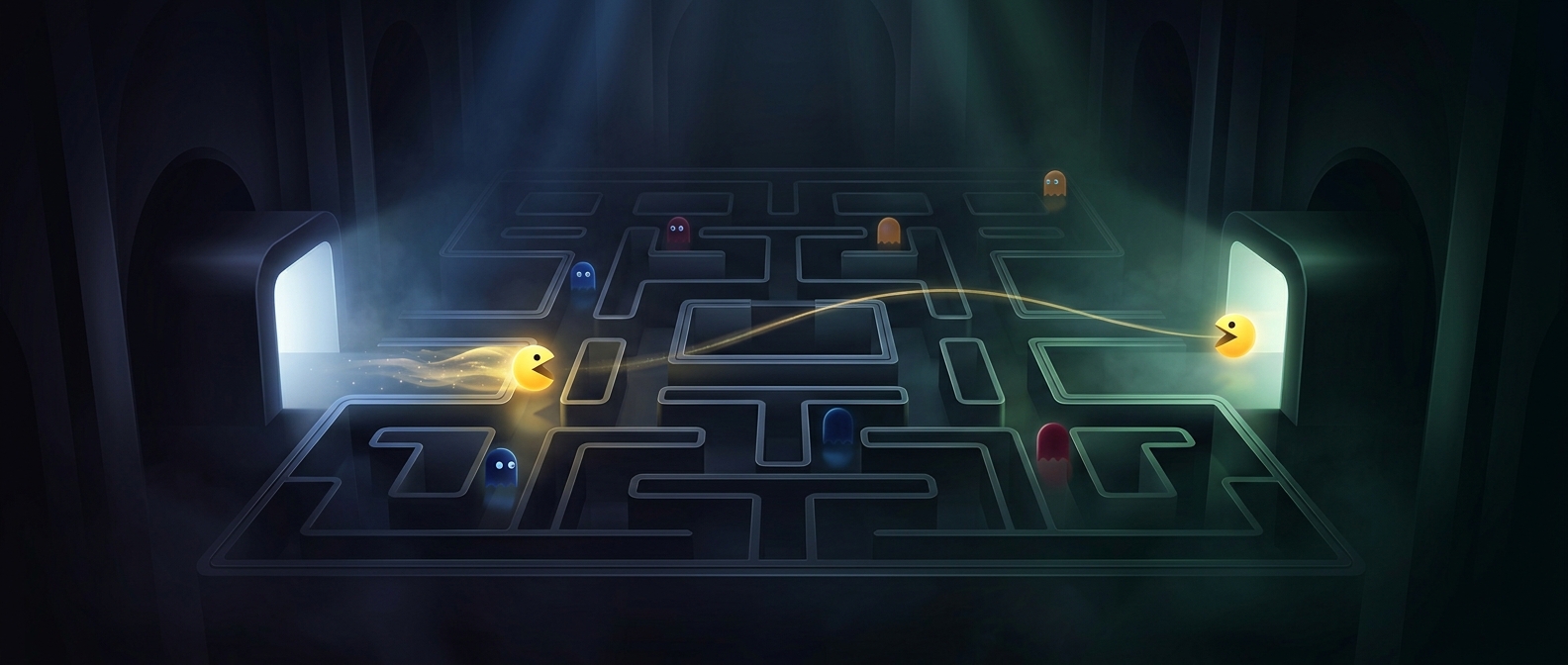
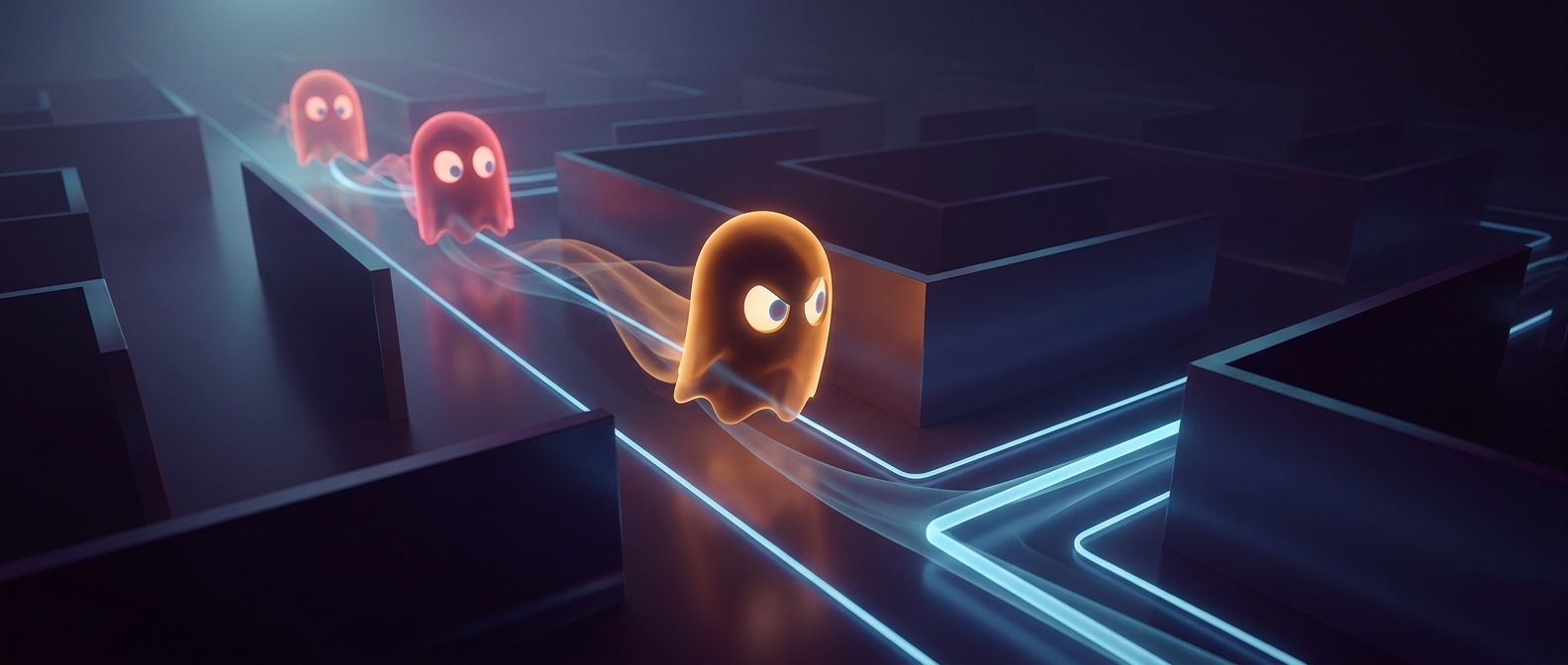
A ghost’s pupils are more than decoration: they show the direction its sprite is facing, which in ordinary play corresponds to the direction it is moving. That tiny visual cue lets a player read the chase without stopping to inspect the maze. If a ghost enters a passage with its eyes aimed left, it is heading left; the cue is especially useful when the sprite’s body is moving quickly or partly hidden by a turn.
A Clue, Not a Route Preview
The eyes reveal a ghost’s current heading, not a complete plan for what it will do at the next junction. The classic ghosts choose paths according to target tiles—positions in the maze their behavior is trying to reach. Their targets differ: one pursues Pac-Man’s position, while others use his position and direction, or their own relationship to another ghost, to choose a target. At intersections, those rules help determine which available corridor they take.
That distinction is what makes the eyes useful rather than magical. A player can combine the heading with the ghost’s location and the nearby corridors to anticipate likely movement, but the eyes alone cannot tell whether it will turn at the next corner. Some states, such as being frightened, also change how ghosts choose their routes.
A Small Signal With a Big Job
Pac-Man gives players limited information: the maze is visible, but the ghosts’ intentions are not. The pupils turn movement into a readable signal, helping players make a quick choice—keep going, turn away, or duck into a safer passage. In a game built around split-second navigation, a pair of tiny eyes can serve as a compact piece of interface design.