How the Arwing’s angular shape came to be
The original Star Fox made its ships from polygons: flat, straight-edged surfaces that a computer could position in three-dimensional space. The Super Nintendo was designed mainly for conventional 2D graphics, so Nintendo added the Super FX chip to the cartridge to help calculate and draw the moving 3D scene. That extra hardware made the game possible, but it had limited speed and memory compared with later 3D systems.
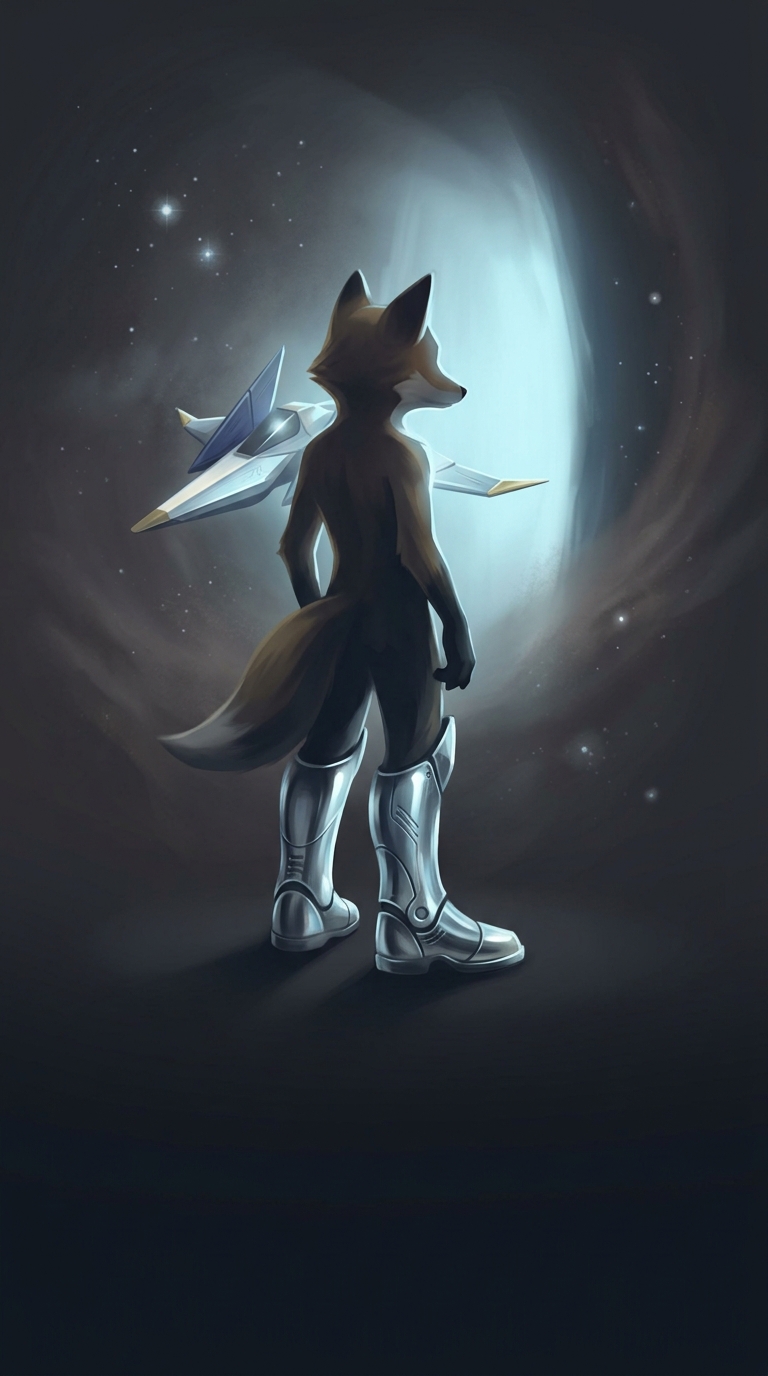
A rounded wing or curved canopy would have required many small polygons to suggest a smooth surface. More polygons meant more work for the chip on every frame. The designers instead used a small number of broad faces, so the Arwing’s silhouette breaks into crisp angles.
A technical limit became a visual style
The result was not simply a smooth fighter rendered badly. Its geometric construction was visible, and that became part of the game’s look. Large, uncomplicated shapes were easier to draw as the camera moved, while their changing angles helped make the ships and enemies read as solid objects in a world that would otherwise have been difficult to convey on the SNES.
Triangles are a basic building block of polygon graphics, but the Arwing was not just one triangle—or the least geometry an object can have and still exist in 3D. It was assembled from multiple faces to give it wings, a body, and a recognizable profile. The constraint was how much geometry the hardware could handle, not an inability to draw anything curved at all. Curves could be approximated; they simply cost more.
That compromise gave Star Fox a distinctive visual identity: the Arwing looked futuristic partly because its deliberately faceted surfaces made the limits of early console 3D easy to see—and memorable.