Why Pac-Man Kept Players Feeding the Machine
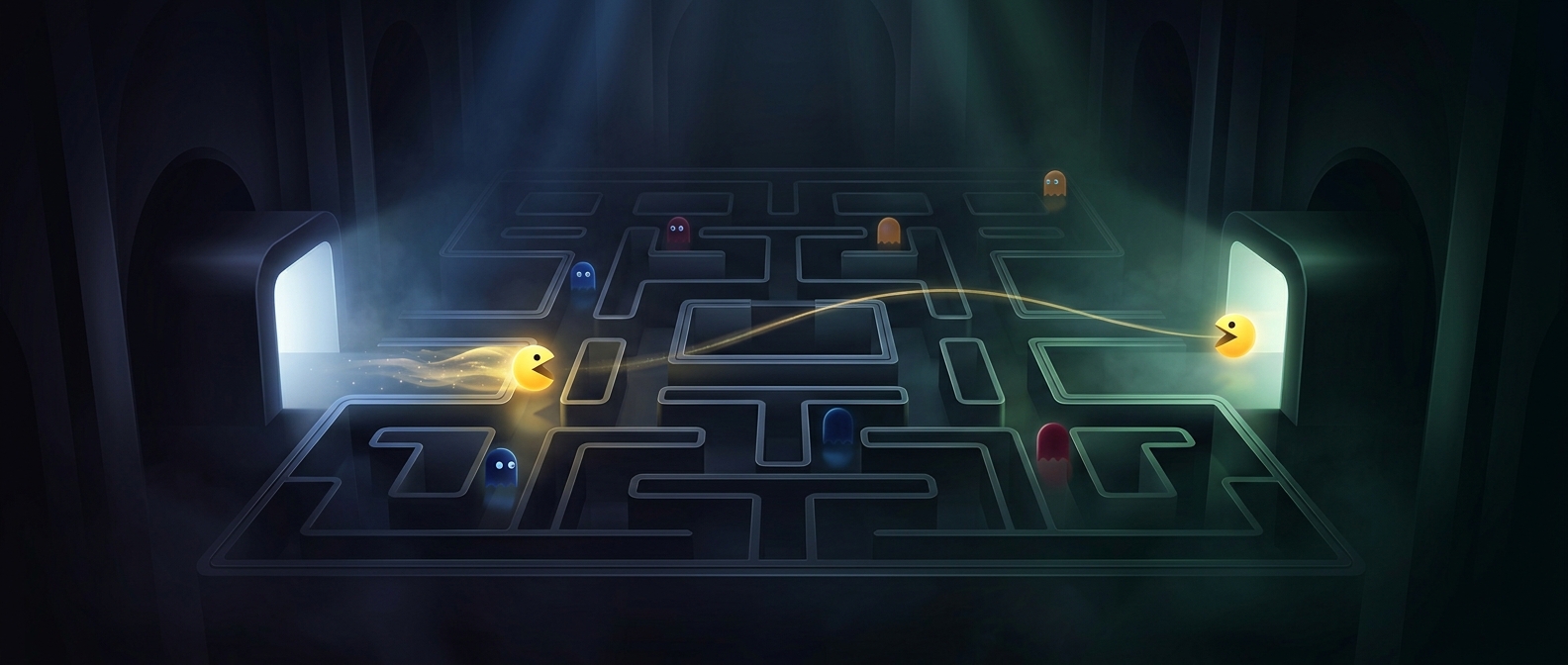
Pac-Man’s earnings came from a simple arcade bargain: pay for a turn, then try to survive long enough to get your money’s worth. The maze made that bargain unusually compelling. Players could see the routes ahead, but they had to choose quickly while four ghosts closed in. A mistake could end a run; a near escape made another attempt feel within reach.
A Loop Built for One More Try
Dots gave each maze a clear objective, while power pellets briefly turned the chase around, letting Pac-Man eat ghosts instead of fleeing. That reversal offered a burst of relief without making the danger disappear: the advantage was temporary, and the maze still had to be cleared. The cycle of risk, brief reward, and renewed pressure gave players a reason to try again as soon as a game ended.
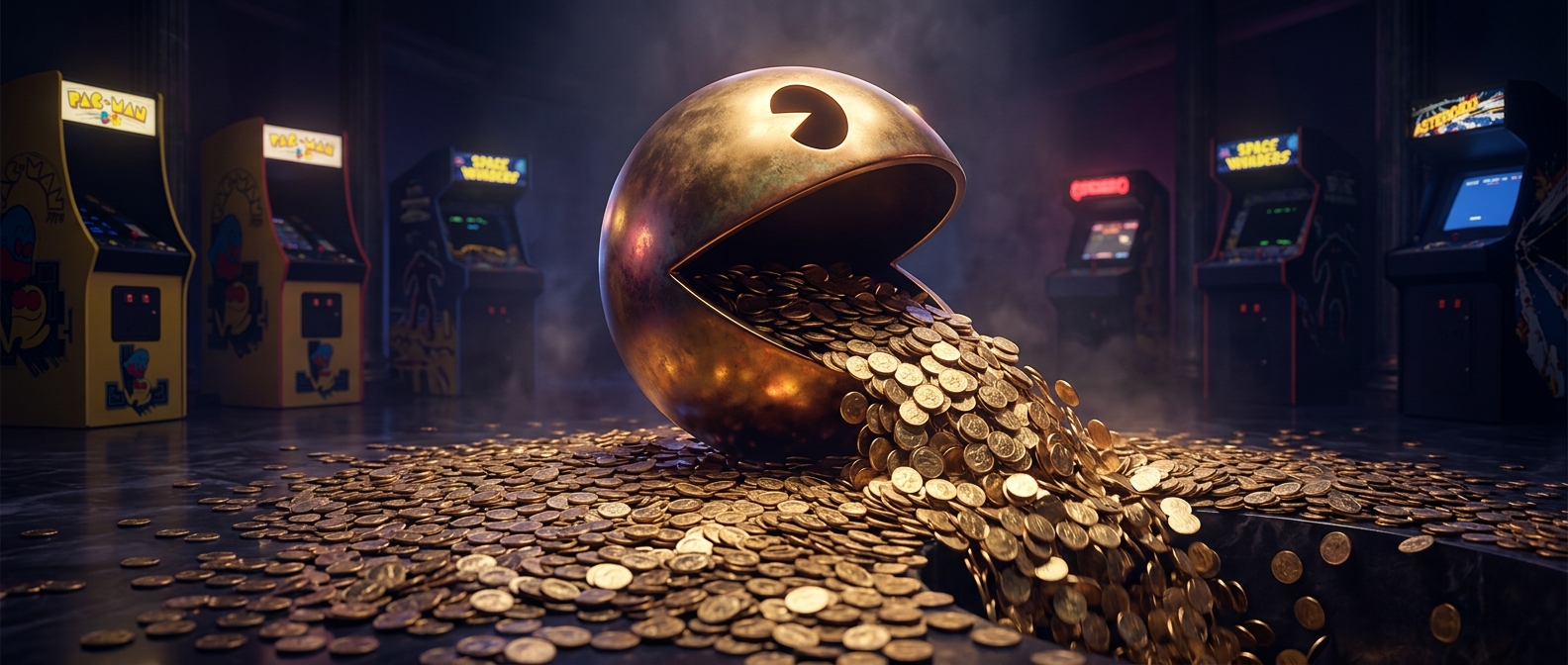
In an arcade, that replay loop had a direct economic effect. Each new attempt required another coin. A cabinet did not need to keep one player occupied for a long stretch; it could earn from many short turns, especially when people nearby watched, waited, and took their own shot.
What the Total Represents
The reported $3.5 billion is the money collected by cabinets by 1990—not a measure of profit, since operating costs and the shares taken by businesses are separate. It also captures something distinctive about arcade games: success was counted not only in players or popularity, but in repeated physical payments at the machine. Pac-Man turned a few minutes in a maze into a business model powered by the urge to get one more run right.