When an unintended impression became the premise
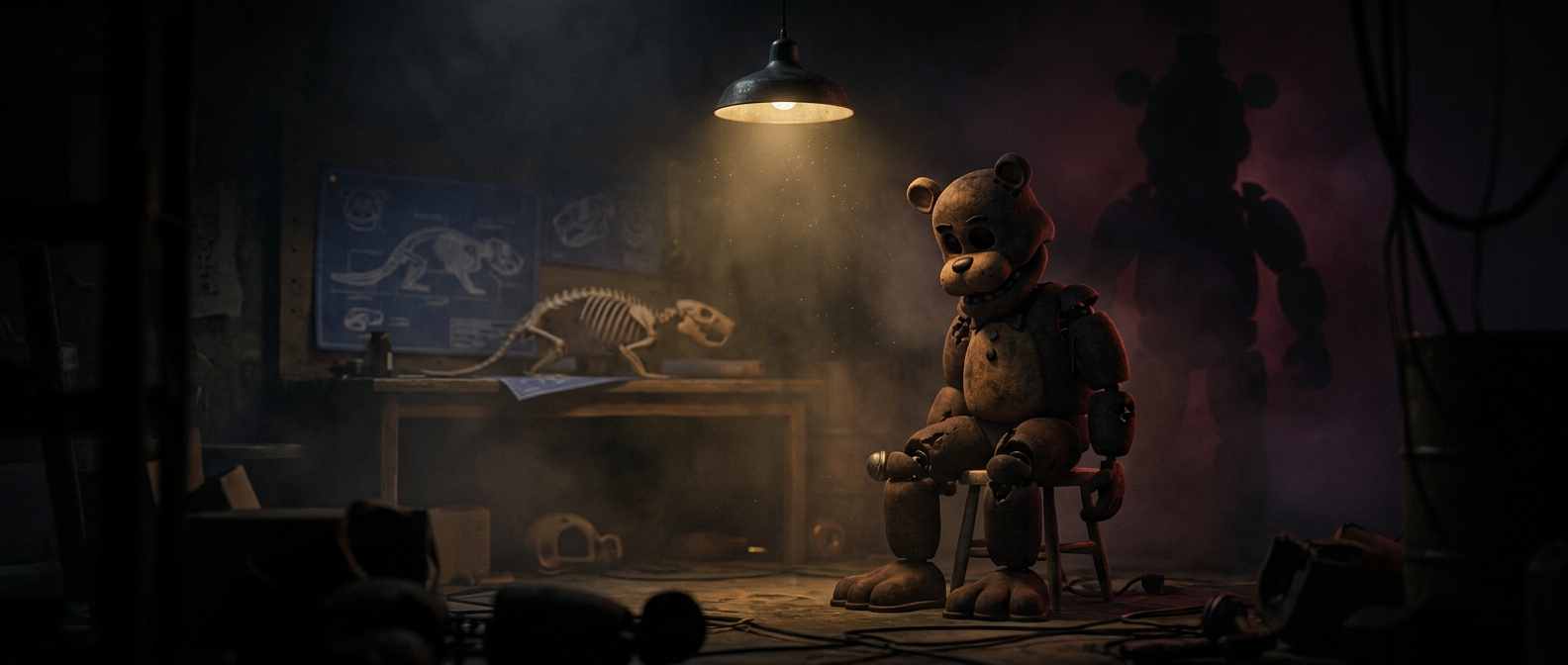
Scott Cawthon had designed the characters in Chipper & Sons Lumber Co. to seem friendly. But reviewers found them unsettling, comparing their appearance to animatronic figures—mechanical performers built to imitate living characters. The mismatch mattered: a face meant to feel cheerful can become eerie when it seems stiff or artificial.
Instead of treating that reaction as a flaw to smooth away, Cawthon used it as a design clue. If the characters already seemed like machines pretending to be alive, a horror game could make that unease intentional.
Turning awkward characters into a threat
In Five Nights at Freddy’s, the animatronics are no longer simply odd-looking characters. They are the danger. The player is a night guard confined to an office, watching the building through security cameras and trying to keep the figures away until morning.
That setup makes the design do more than provide a creepy visual. The player cannot freely explore or confront the animatronics; instead, they must monitor them from a distance and react with limited resources. A character that might have looked awkward in a friendly game becomes frightening when its movements suggest it is getting closer and the player cannot be sure what it will do next.
The useful mistake
The pivot was not just a change in genre. It was a change in what the characters’ artificial quality meant. In a family-friendly game, it had worked against the intended tone; in a horror game, the same quality could create tension. A failed attempt at friendliness became the central source of fear.