A moral choice needed a face
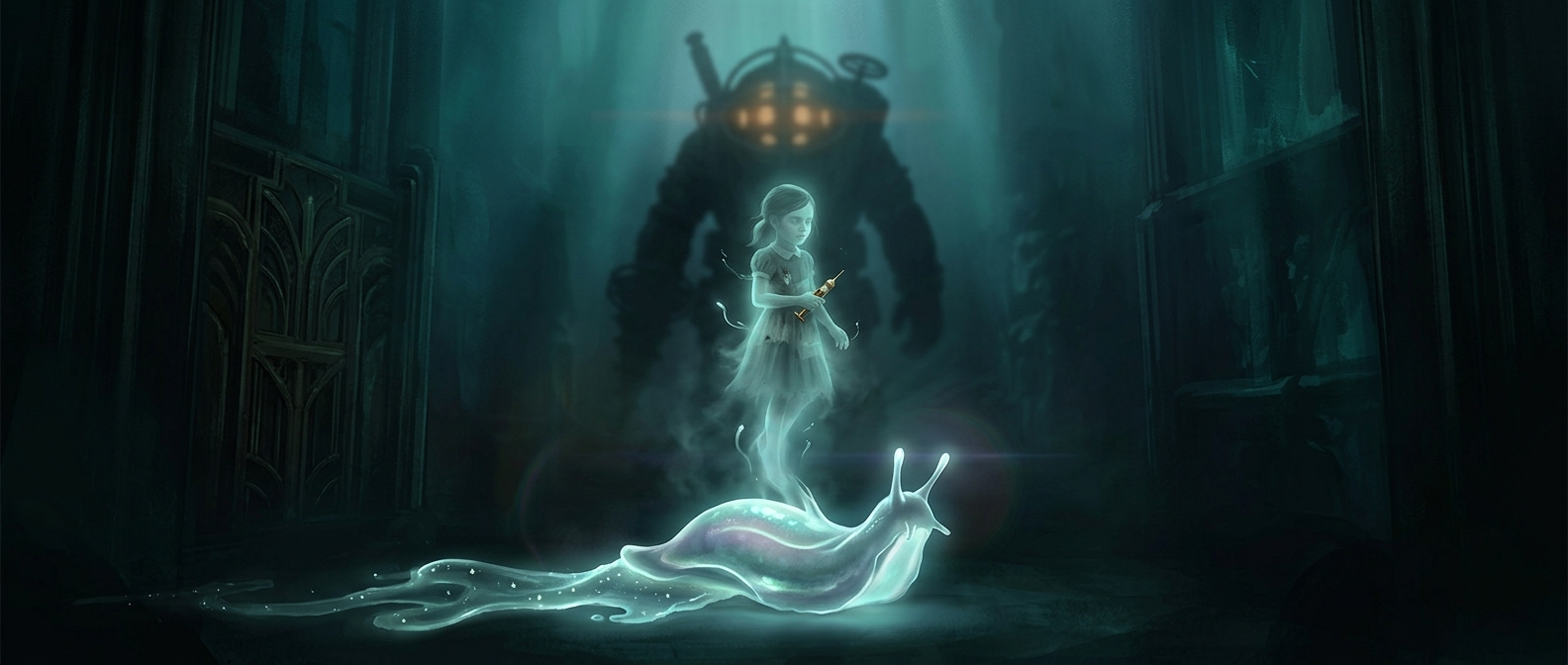
In BioShock, Little Sisters are not merely enemies or scenery: players encounter them while deciding what to do with the valuable substance they carry. The game’s designers needed that decision to feel like more than a calculation about rewards. A sea creature might make the harvesting mechanic strange or unsettling, but it would not naturally invite the same protective response as a child.
That difference matters because players read bodies before they read rules. A small, vulnerable-looking person can trigger concern even when the game presents a practical incentive to treat her as a resource. The character’s appearance therefore helps make the choice emotionally legible: the player is not just weighing outcomes but deciding how to regard someone who seems defenseless.
Design changes the stakes
Replacing the creature concept with a child did not, by itself, dictate how every player would act. It gave the choice a sharper human cost. Players could still pursue the game’s rewards, but doing so now meant confronting an image designed to make that action uncomfortable.
That is a powerful lesson in game design: a moral dilemma depends not only on what the rules let players do, but on whom those rules ask them to do it to. The Little Sisters’ final form turned an abstract resource decision into a moment players could feel.